


Iris Project’s latest exhibition, Silent Residues brings together a striking new body of work by Ammar Al Attar, one of the UAE’s leading contemporary artists.
Curated by Nasser Abdullah, the exhibition runs until 26 November at the gallery’s MiZa space in Abu Dhabi, and marks Iris Projects’ first solo collaboration with Al Attar.
Known for a multidisciplinary practice that bridges photography, video, performance, and installation, Al Attar’s new body of work focuses on abandoned and peripheral sites in the UAE, from agricultural ruins once alive with summer farms to industrial edges now left to decay.
“It’s not about recording or archiving,” Al Attar tells Maan Jalal at The Culturelist. “It’s about how, as an artist, I interact and then make something out of something abandoned.”
By placing himself at the centre of the work, Al Attar uses performance to reframe these spaces, creating gestures and interventions that leave behind only photographs and video as traces.
At the opening of Silent Residues, Al Attar spoke to us about the act of bringing new meaning to these forgotten spaces and the growth of performance art in the UAE.
Enjoy!
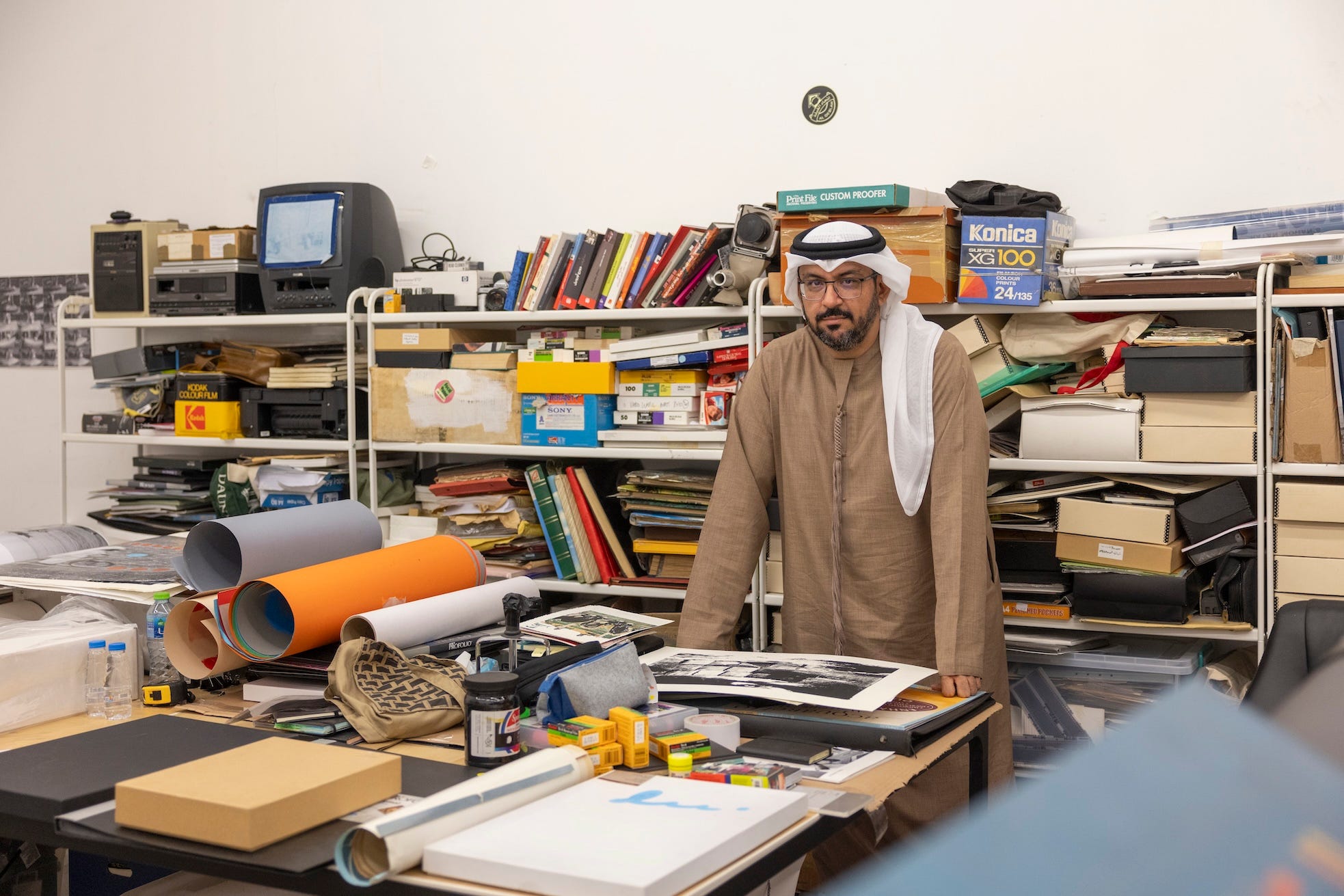
Maan Jalal: hi, Ammar, mabrook on your new exhibition. How are you feeling after creating all of this work and seeing it all together in one in one space?
Ammar Al Attar: It feels different, when you create it and then when you see it all together. But most of this work I created before I knew that it would be an exhibition. I always create works, whenever I have an idea, I create.
Maan Jalal: So with this body of work, specifically, you were really interested in the abandoned or the peripheral spaces in the UAE. Why were you attracted to these areas or spaces particularly?
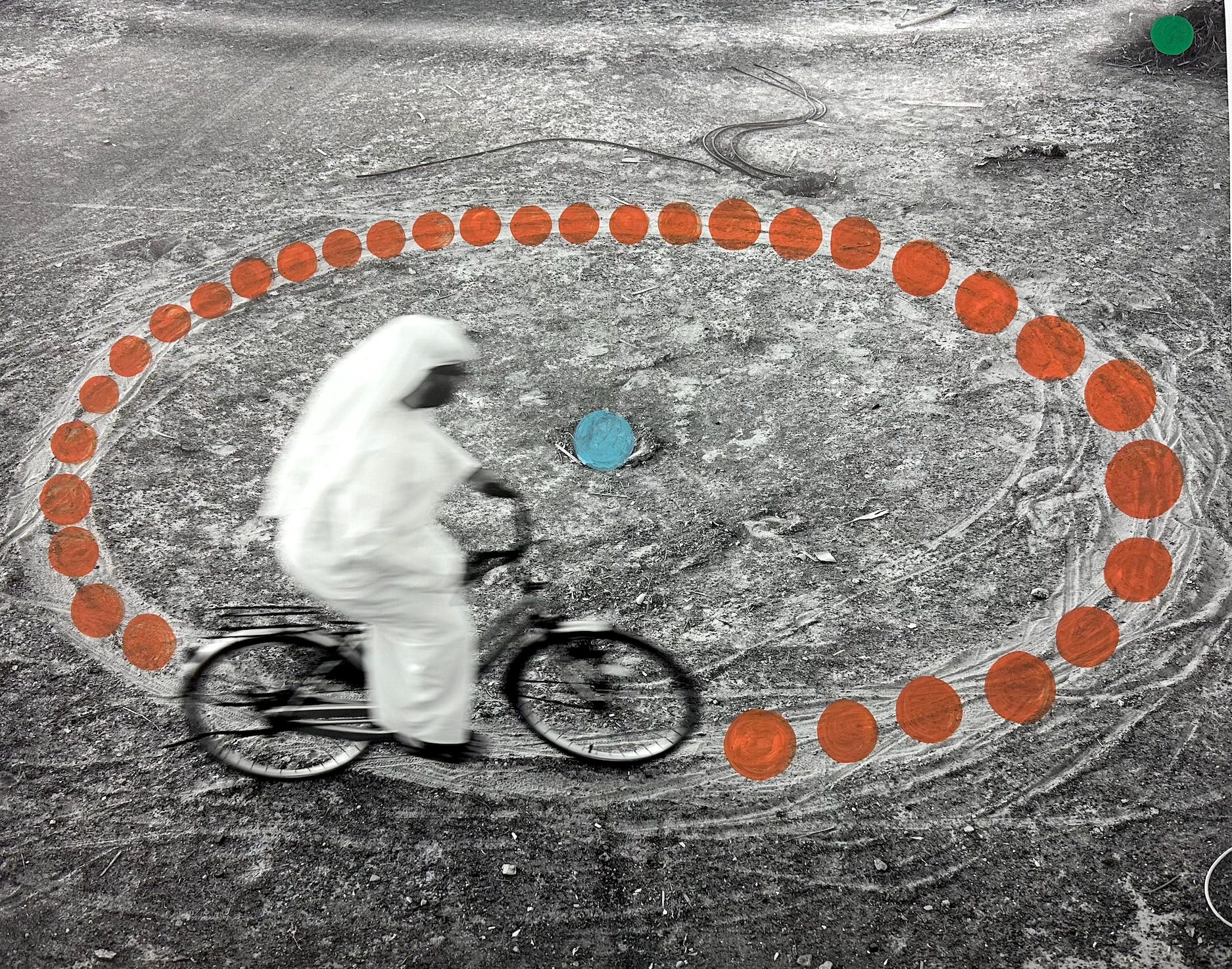
Ammar Al Attar: These spaces have always have this feeling of... it’s putting things from different people, the people who lived there, who had their spirit there. Especially in an area called Al Thait where there were a lot of farms in the 80s, 70s, when people used to go there in summer just to have different weather than in the coastal area in the middle of the UAE.
A lot of these farms got abandoned in the 90s and 2000s when water was scares there. So, I went there, I photograph, and then felt like doing a performance with the remains of the architecture and whatever is there. I do one thing, and then another idea comes based on my mood, my feelings, whatever I read.
Maan Jalal: Do you find these spaces are a bit, I don’t want to say the word sad, but did you feel like they were a little bit, because they were abandoned, they had to be somehow recorded or archived?
Ammar Al Attar: It’s not about recorded or archiving. It’s about how, as an artist, I go there, I interact, and then I made something, maybe out of something abandoned. I don’t want to say, bring it from death to life, I’m not giving life, but just to try to interact with something, and it became, for me, like, a way of maybe... going away from the city... also trying to express something from within, somewhere that is abandoned, that I record myself.
I’m trying to interact with it (the space) and trying, as an artist, to give it a life. It’s (also) a calling for people to come and see these spaces, because I record the location and areas where I do the performance also.
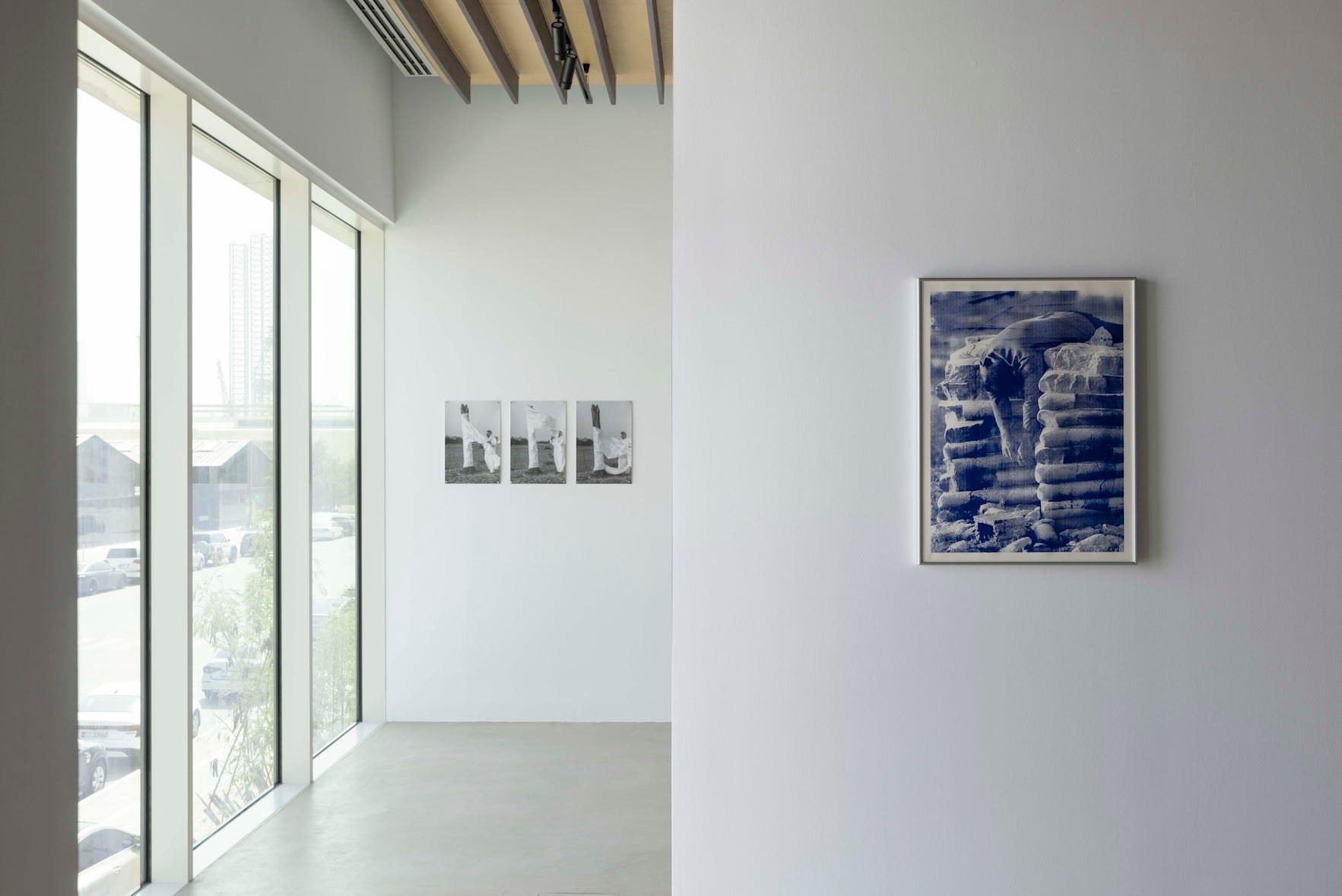
Maan Jalal: This is the first time that you are really using yourself in front of the camera, right? So, you’re part of the work itself. You are the subject matter in a way, and you’re also the medium, performing. How did that feel? Did that feel organic and natural, or was it a bit strange?
Ammar Al Attar: In the last four years, since early 2020 I tried to do performance. Before that, I used to do photography most of the time. But I have a work which is called Salah, about the prayer which was the first time I photographed myself, and it was an exhibition, but it wasn’t a performance, it’s actually as a ritual that Muslims do everyday.
But then I thought of doing something around performance. I thought about my daily life, repetition, maybe meditation, using our hands. A lot of thoughts came to my mind, and how I can express it beyond photography. That’s why I started to do these performances while using my photography skills.
Maan Jalal: What would you like people to leave with after they experience this exhibition? Or do you not really think about the audience in that way? Is it more about the work?
Ammar Al Attar: Most of the work, when I do it, I do it not thinking that I would exhibit it actually. But always when people come and see the work, I’m sure they will maybe ask questions about - why he used fabric to pull or to cover the pool or to cover the tree? These things, I’m sure they will intrigue them, tease them to think more, to question whether it is different subjects based on their cultural knowledge.
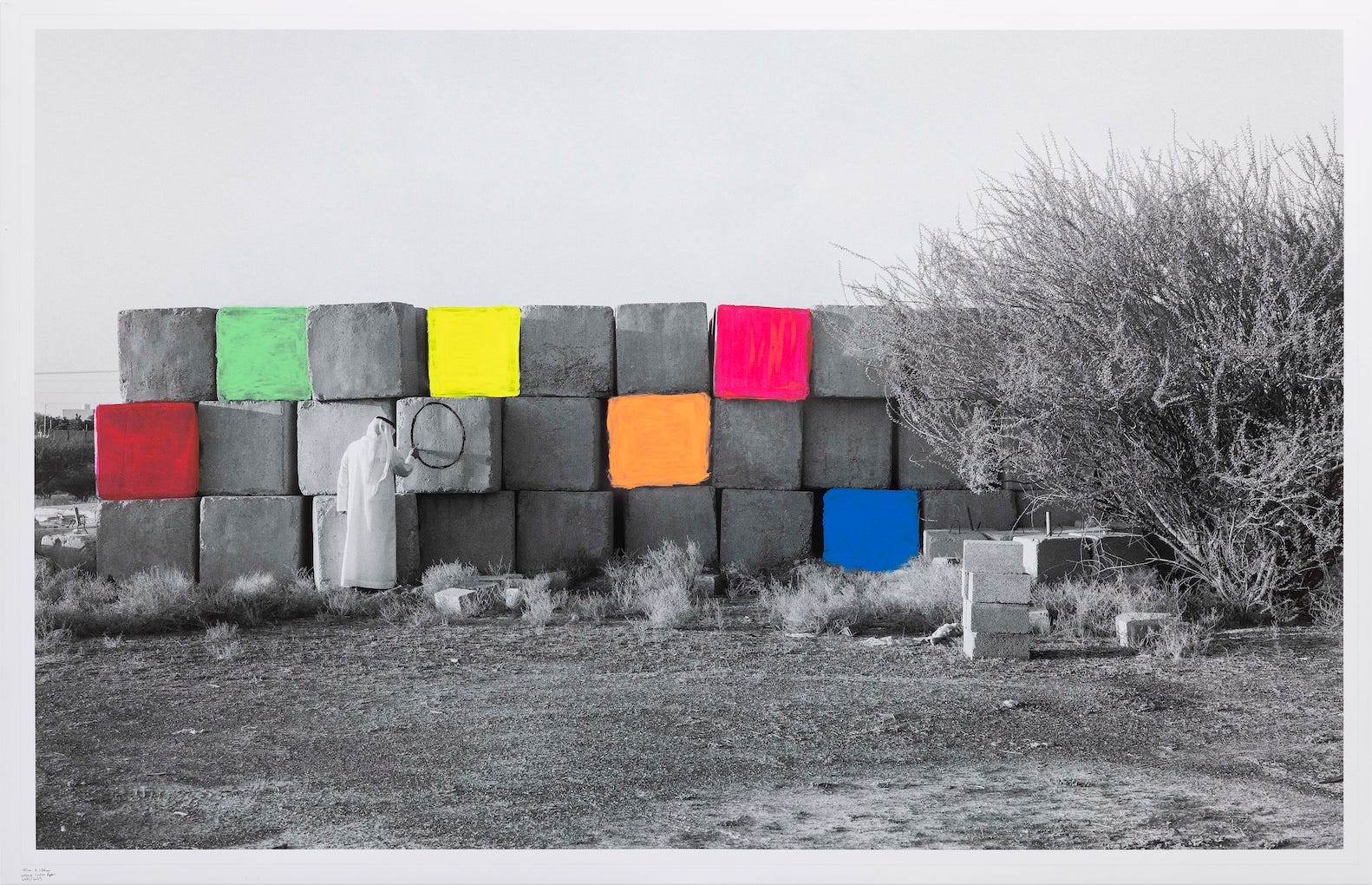
Maan Jalal: Performance art is like an underrepresented medium in the UAE. So for you how does it feel to presenting this work in Abu Dhabi in the UAE at this time?
Ammar Al Attar: Recently a lot of artists are experimenting with this medium. But I think it needs more thought, it needs more work, also to find ideas, the messages that you want to say or the feelings that you want to express. I don’t mind seeing how people react.
I have a lot of like critiques with different, specific people. I go to them and I see what they were thinking. Even people not in the art scene. People who are like my cousins or my uncle, my uncle he used to be Hassan Sharif’s friend.
Always when he see me put post something on Instagram, he would discuss it with me. Sometimes in a sarcastic way but sometimes, remembering his old friend, but it’s always like, nice to see what people think about it.