


Louvre Abu Dhabi has revealed a range of new pieces both acquired and on loan in its permanent galleries.
Ranging from paintings, sculptures, and ornamental objects of historical and culture significance, the artworks span centuries, cultures, and artistic movements.
A stroll through Louvre Abu Dhabi’s galleries has always been one that I’ve found particularly engrossing, because rather than a representation, it feels like a dialogue.
Artworks aren’t separated by region or chronology, which is more common in many Western museums, but the galleries are organised thematically. This the unique and clever curation reveals how various civilizations approached similar ideas: birth, religion, power, trade, beauty, and death.
The new works, now display, add to that cross cultural dialogue.
There is a stunning 1st-century imperial cameo and a 3rd century Christian sarcophagus, a 16th ceremonial gift made of ivory and a selection of exceptional paintings and modern works by Russian painter Wassily Kandinsky, Swiss sculptor and painter Alberto Giacometti, prominent Filipino painter, sculptor, and political activist Juan Luna to name a few.
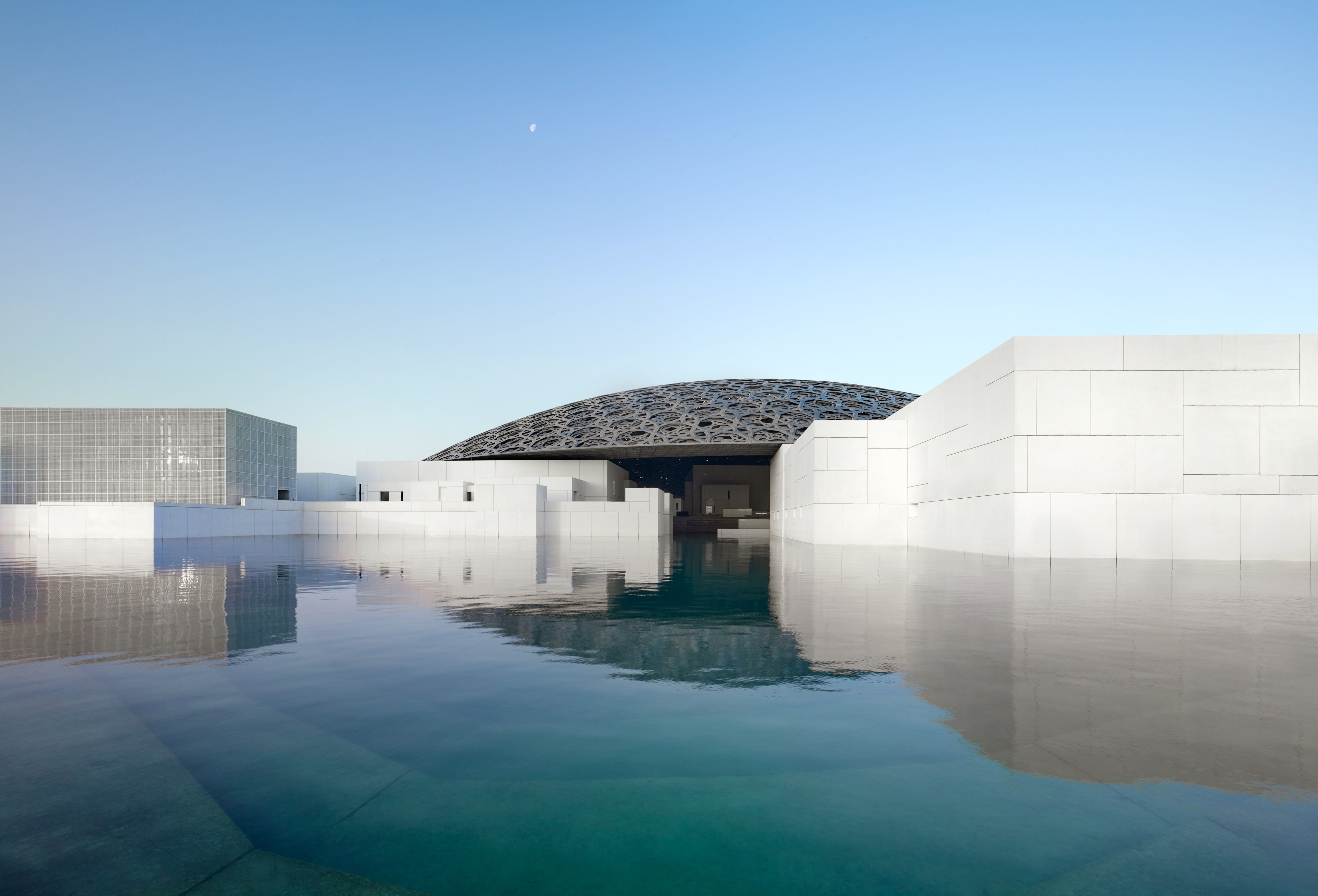
“To be able to pick in this great collection to create a narrative,” Jerome Farigoule, Chief Curator at the Museum, tells The Culturelist.
“As we are quite a young museum, we are also testing many things. The opportunity to have loans is important also to see what is working, what is the perfect story, to see what fits.”
I was lucky enough to be guided through the museum by Farigoule himself who gave an informative tour of the over ten new works each of which had an incredibly unique story and provenance.
From paintings, sculpture and incredible detailed cameo jewellery piece, here is the list of The Culturelist’s favourite pieces from Louvre Abu Dhabi’s new loans and acquisitions now on display.
Cameo possibly depicting Agrippa Postumus
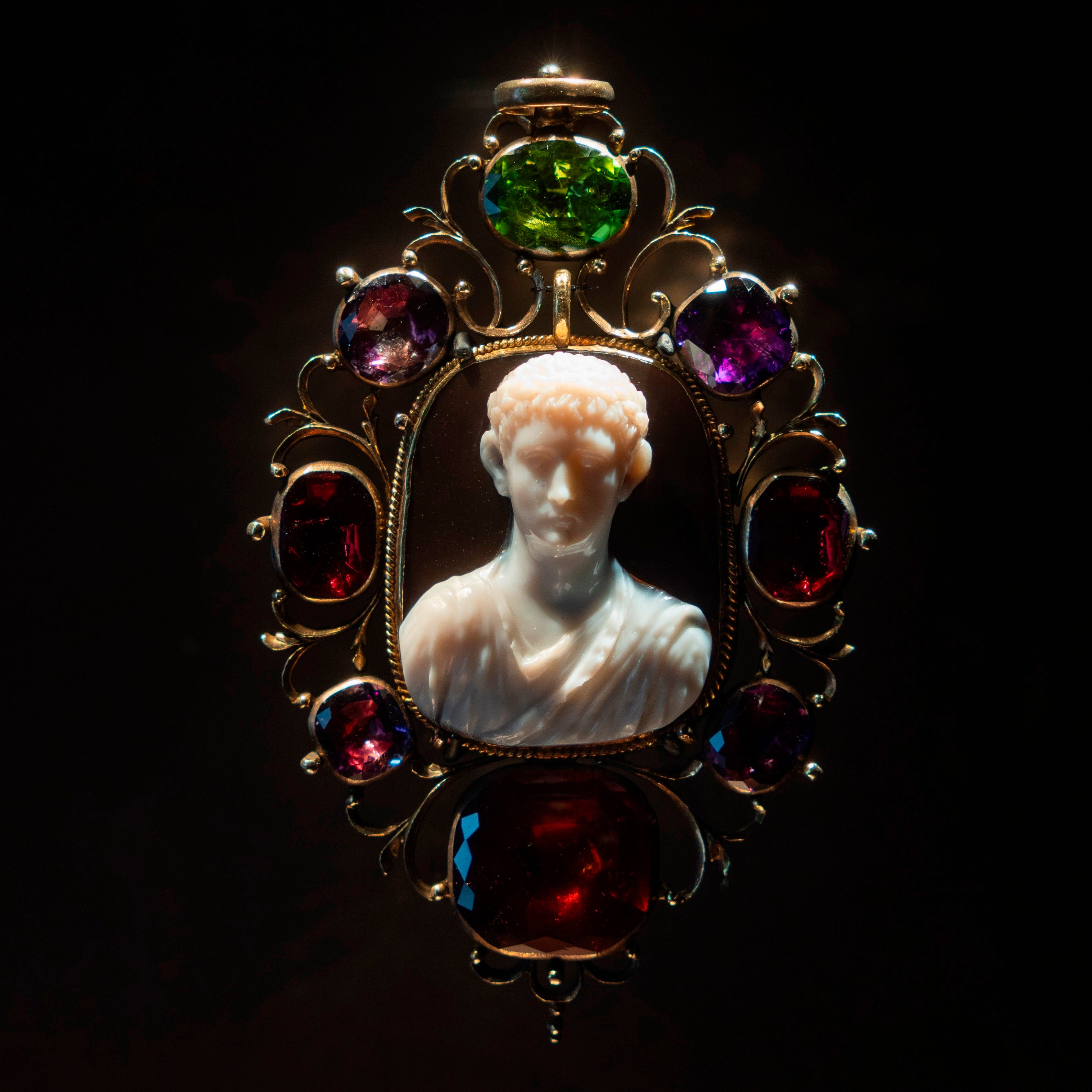
Carved during the Julio-Claudian period, around 37–41 CE, this finely detailed cameo may depict Agrippa Postumus, grandson of Augustus. He’s depicted in his youth with short wavy locks, dressed in a tunic and toga.
A cameo is a small piece of carved jewellery or art where a raised image is created by cutting into a material with layers of different colours. A cameo portrait such as this served as ornamental gifts worn as adornments or used to embellish furniture and precious objects and to show dynastic loyalty within imperial circles.
While the portrait itself dates back to ancient Rome, the mount decorated with semi-precious jewellery was added in the 18th century, reflecting later admiration for classical craftsmanship and the continued fascination with imperial Roman figures.
Agrippa Postumus was once a key heir to Emperor Augustus, making him an important figure in the early Roman Empire.
Casket, Kingdom of Kotte, Ceylon, 1543
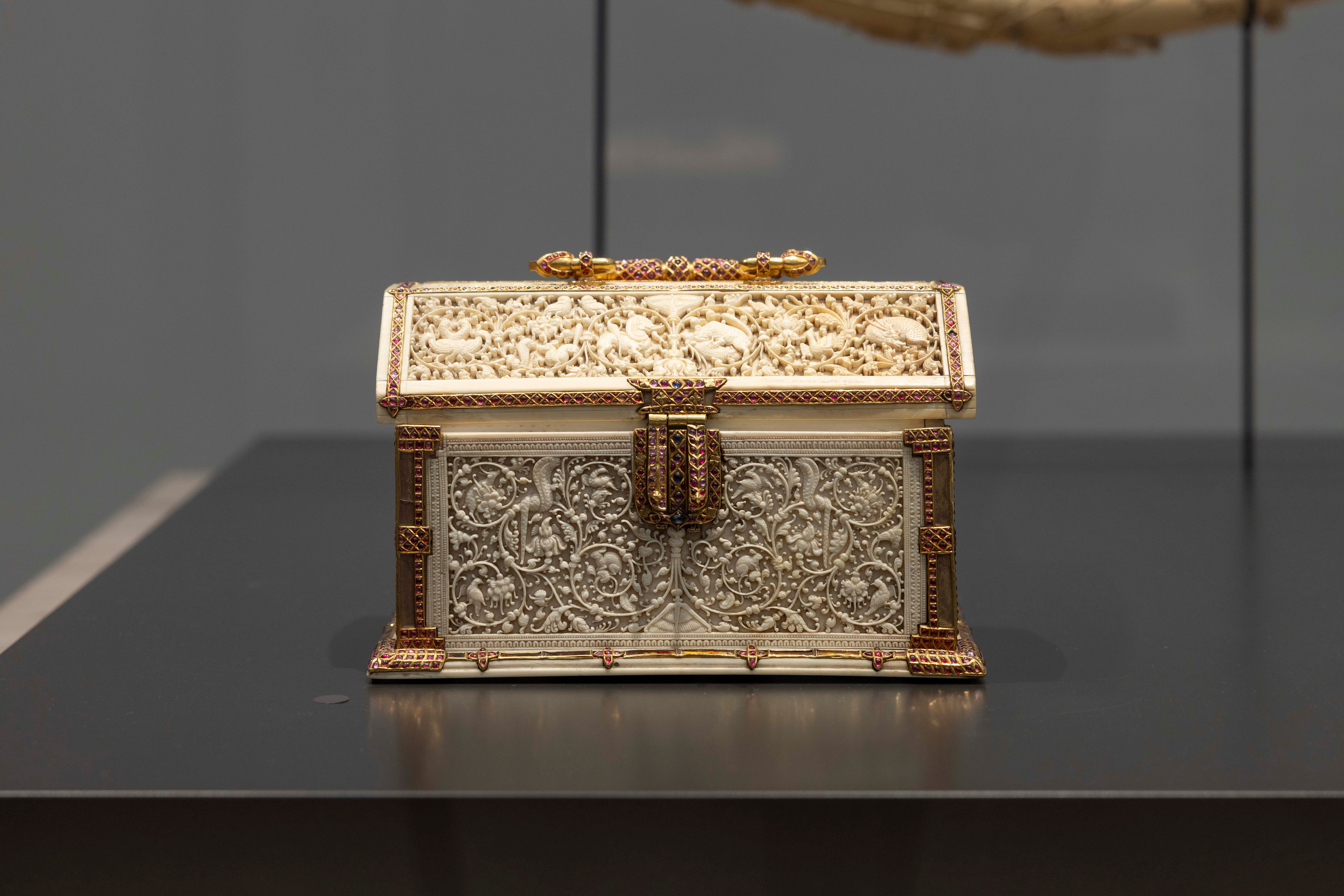
This small ornamental ivory casket was a gift to the King of Portugal and his wife in the mid 15th century from the Kingdom of Kotte, then part of India, now Sri Lanka. On close observation, one can see animals from the Indian continent such as elephants carved into the work with rubies and gold.
“It's a very exquisite artwork where we find the best ivory carving,” Farigoule says. “What we know about this casket is that the kingdom of Portugal were gifted a short number of these from the Kotte kingdom. There are ten and mostly all are housed in museums.”
Portrait of Kosa Pan by Antoine Benoist, 1686
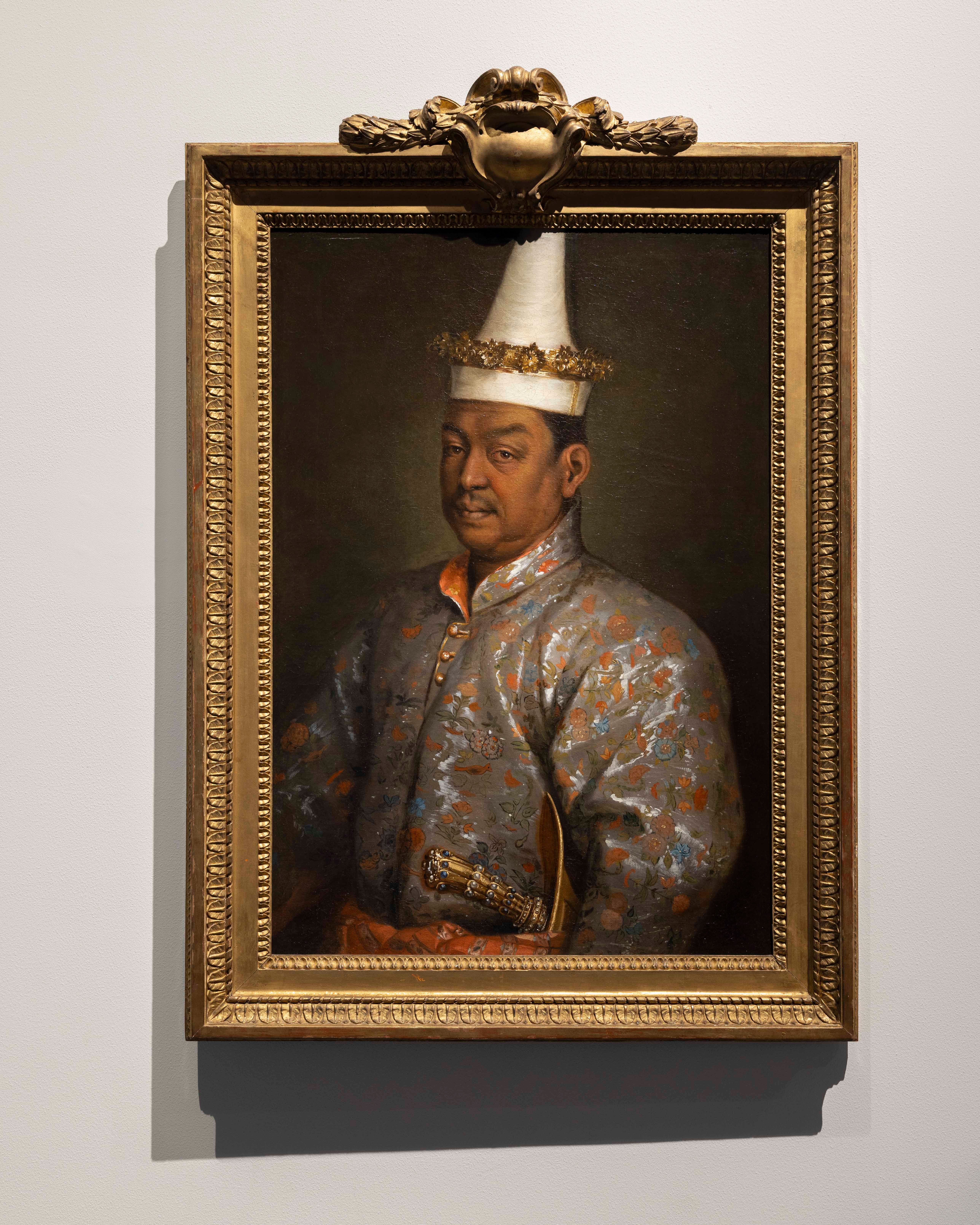
This first ambassador from Siam, present-day Thailand, to the French court of Louis XIV was a major diplomat for the Siam Kingdom. He arrived in Versailles with a lavish entourage and caused a sensation at the French court.
Benoist was a French court painter and sculptor best known for his wax portraits and miniature figures. He served as the official painter to King Louis XIV.
“It was more of a private vision for a portrait rather than an official one,” Farigoule says.
“Antoine Benoist did it for himself, it's kind of a more intimate portrait. It's also a very typical way of painting portraits at the time with a lot of brushstrokes. It's quite expressive.”
The Farewell of Telemachus and Eucharis by Charles Meynier, 1800
Drawn from François Fénelon’s 17th-century novel Les Aventures de Télémaque, this neoclassical painting captures the tender moment of parting between Telemachus and Eucharis.
Telemachus is the son of Odysseus, the hero of Homer’s Odyssey who has disappeared after the Trojan War. While searching for his father, Telemachus meets Eucharis, a nymph who falls deeply in love with him. However, he must leave her to continue his quest and the painting captures this tension between personal feeling and heroic destiny.
“What's very interesting is in this painting is in a way it's very delicate,” Farigoule says. “Usually there is a more masculine vision of neoclassicism - it's warriors, fighters, but this one is very delicate, with the way he represented all the fabrics and the clothes and the way they are draped and the different characters of the painting. It’s all very well balanced."
Una Bulaquena by Juan Luna, 1895
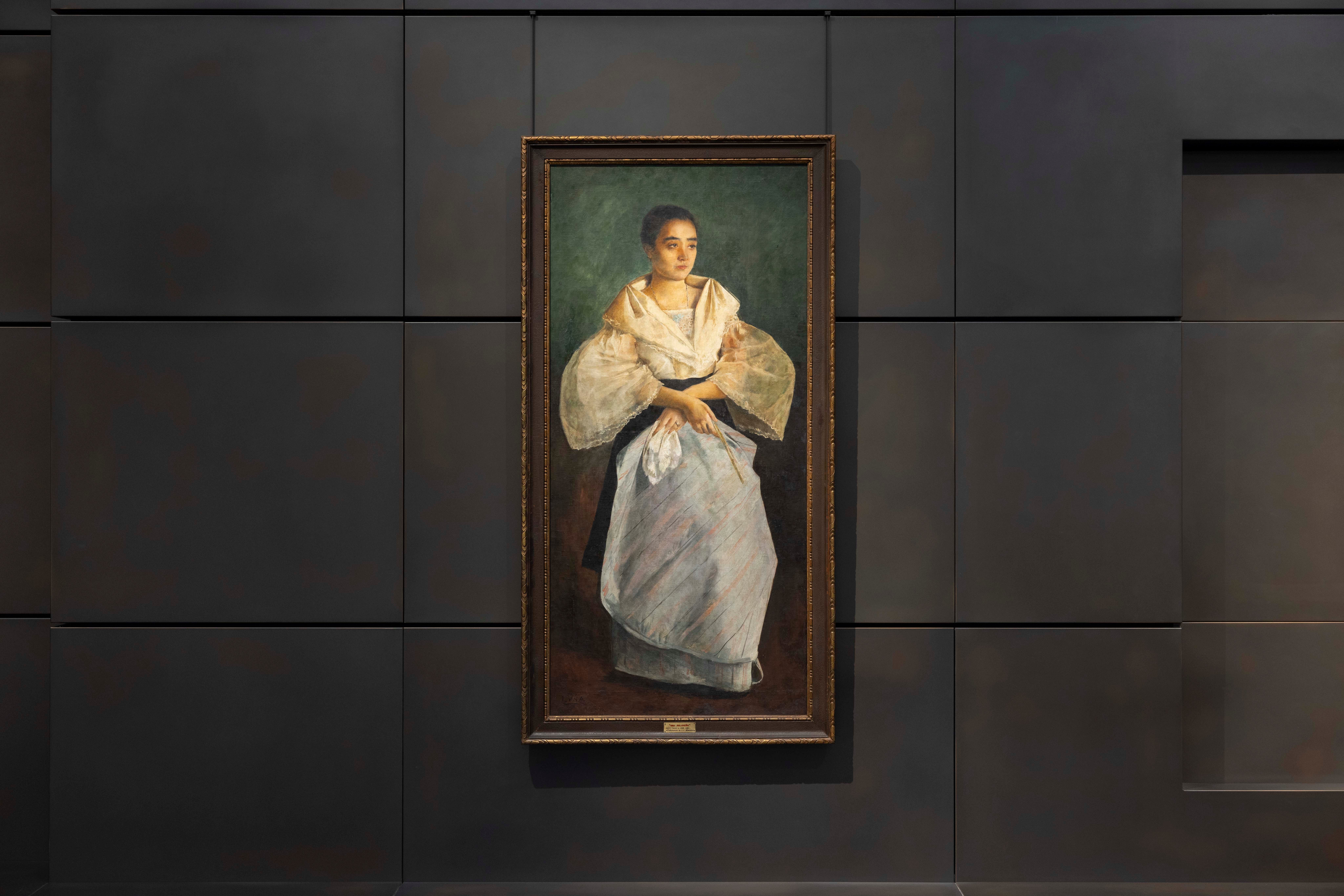
Painted during the Spanish colonial period, Una Bulaquena was named a National Cultural Treasure in 2008. It's admired for both its technical skill and quiet symbolism.
“This painting really highlights and represents the Philippine lady,” Farigoule says. “For the Philippines it's an important painting because it's not only the face of a lady but also the portrait of a country.”
The sitter, believed to be from Bulacan, represents an idealised vision of the Filipina woman, elegant, composed, and proud. The work was painted at a time when national identity and the call for independence were beginning to take shape.
Woman of Venice by Alberto Giacometti, 1956
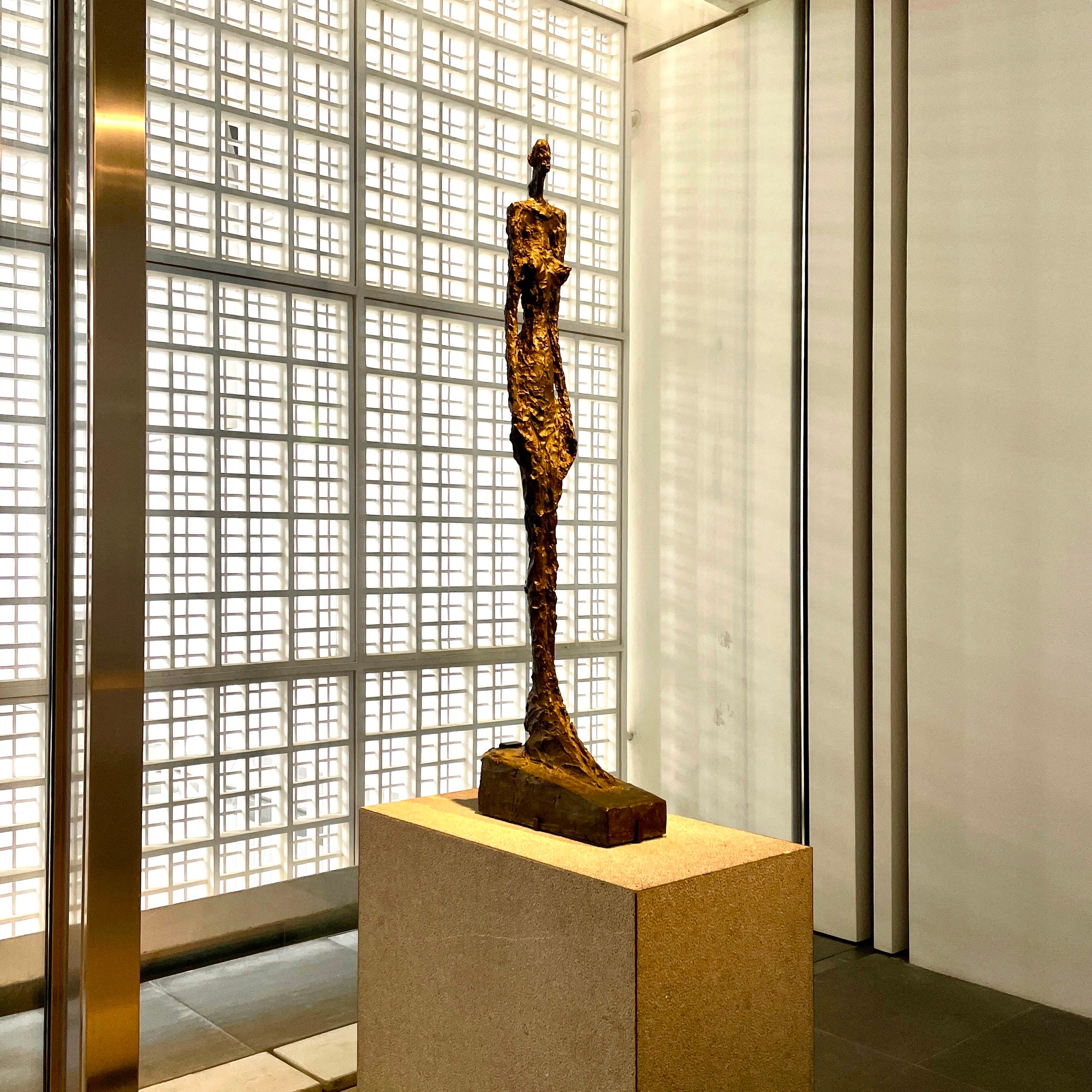
A tall, slender figure evokes both strength and vulnerability, part of Giacometti’s 1956 series exploring the human condition.
“This is a very elevated sculpture. It was very famous,” Farigoule says. “It’s from a huge series with variations of the human figure made with a very thin, elongated figures, a bit sad and melancholic vision.”
Cast in textured bronze, the form feels fragile and distant, a vision that reflects the artist’s existential outlook in postwar Europe.
White Oval by Wassily Kandinsky, 1921
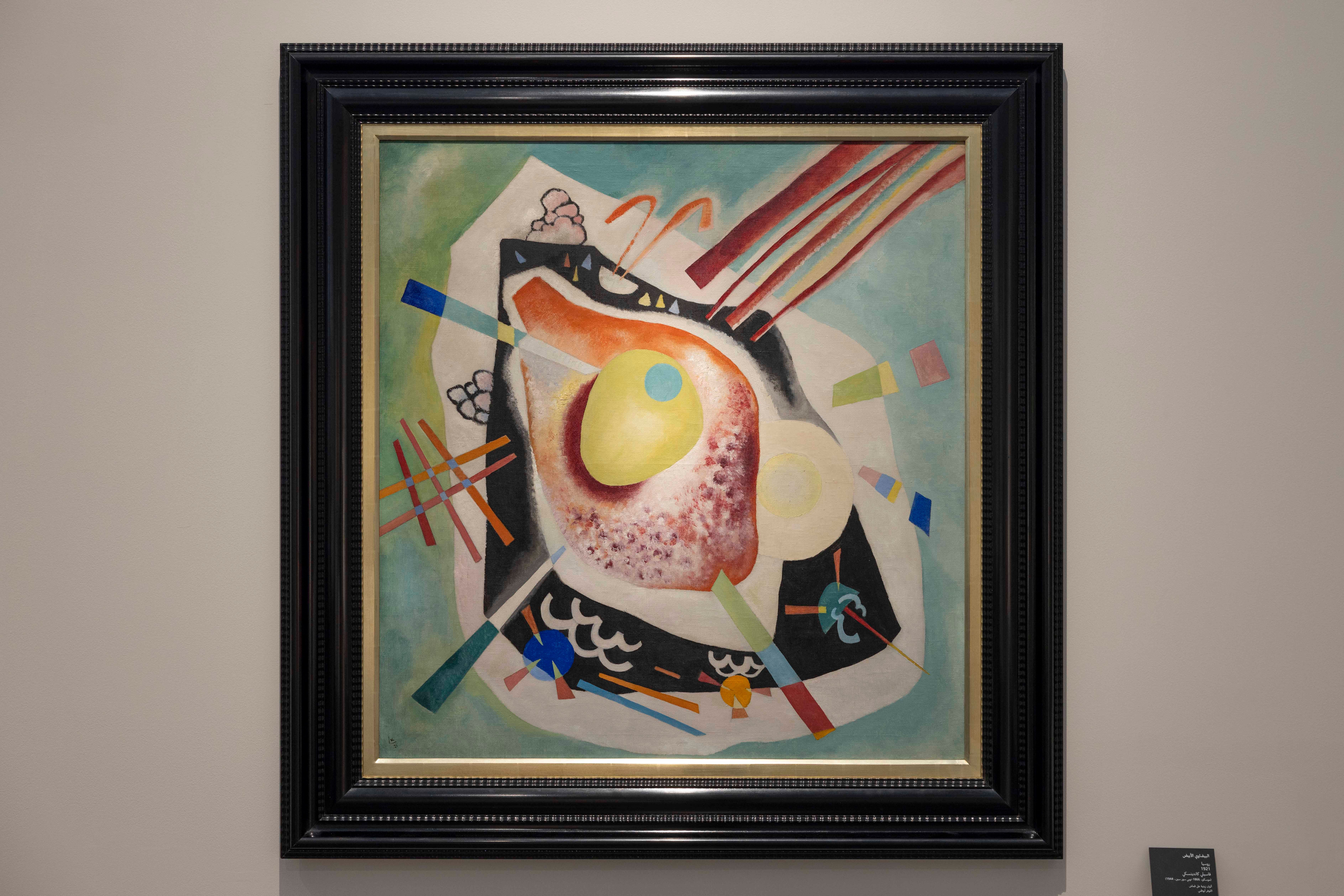
Floating shapes, sharp lines, and a weightless white form come together in this 1921 composition by Kandinsky that reflects his shift toward geometric abstraction.
“We had the great opportunity to acquire this Kandinsky and it's a key artwork,” Farigoule says. “Spirituality is very important for him, and we see here his change from this kind of expressionist style to a more Bauhaus art, modern style.”
The work balances chaos and control, as Kandinsky explored how colour, shape, and space could express spiritual and emotional harmony without using figures.
Lovely read!!!