


You know Hassan Hajjaj’s work. Everyone does, whether they’re aware of it or not.
Photographer, designer, and filmmaker Hajjaj has been a pioneer in helping to create and popularise a very particular visual language where elements of Arab visual culture has fused with the hip-hop aesthetic.
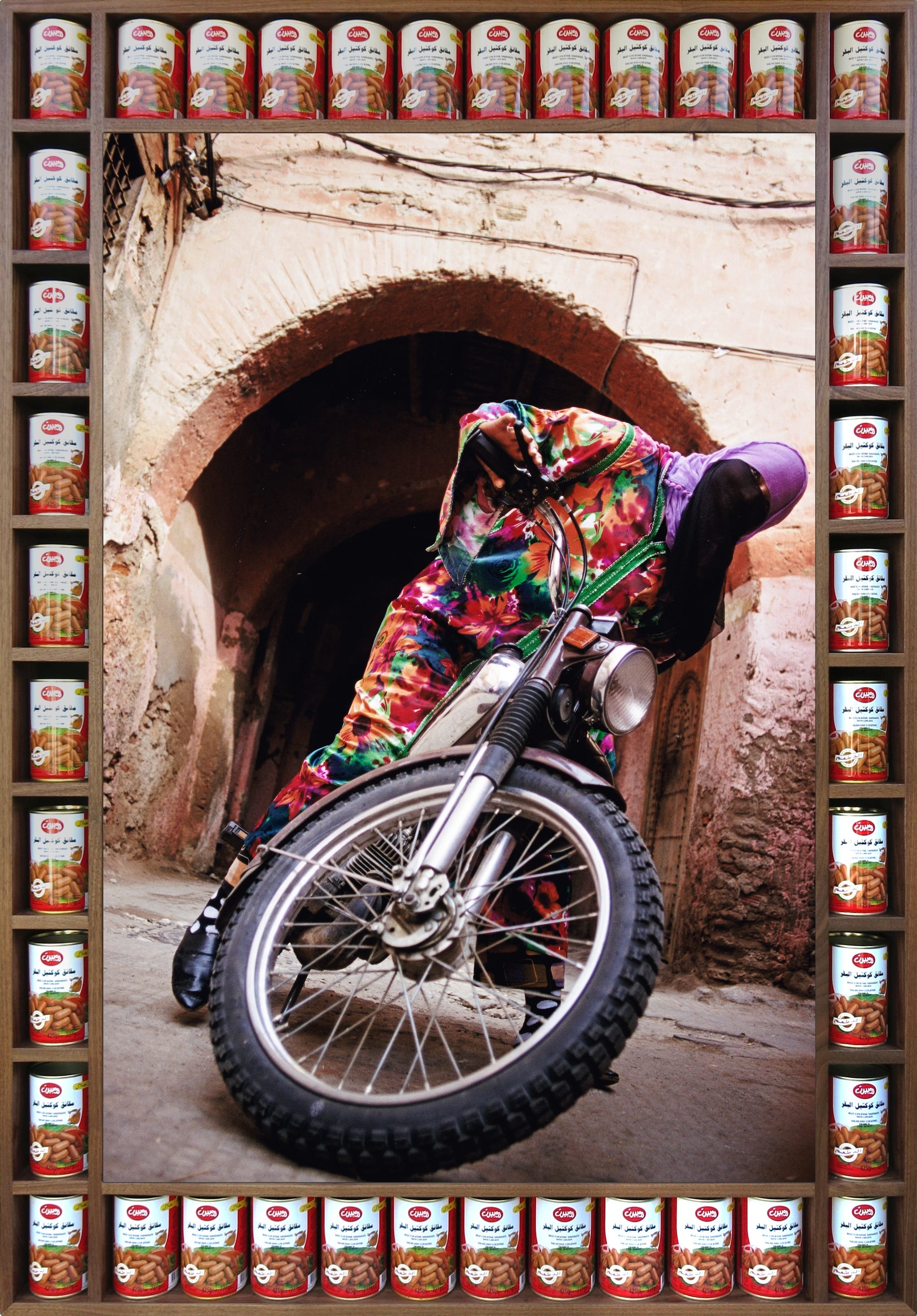
This maximalist approach, which also takes inspiration from the height of pop art, has over the years found a firm place in the visual canon of the region and the diaspora. Graphic, poster, or furniture design, film, painting, and digital aesthetics, Hajjaj’s influence is undeniable.
Hajjaj was one of the first to take Moroccan culture, a world already rich in recognisable and bold pictorial elements, and fusing it with the urban energetic ambiance of hip-hip.
Through photography in particular, Hajjaj created a unique, some might even call it eccentric, style of character portraits.
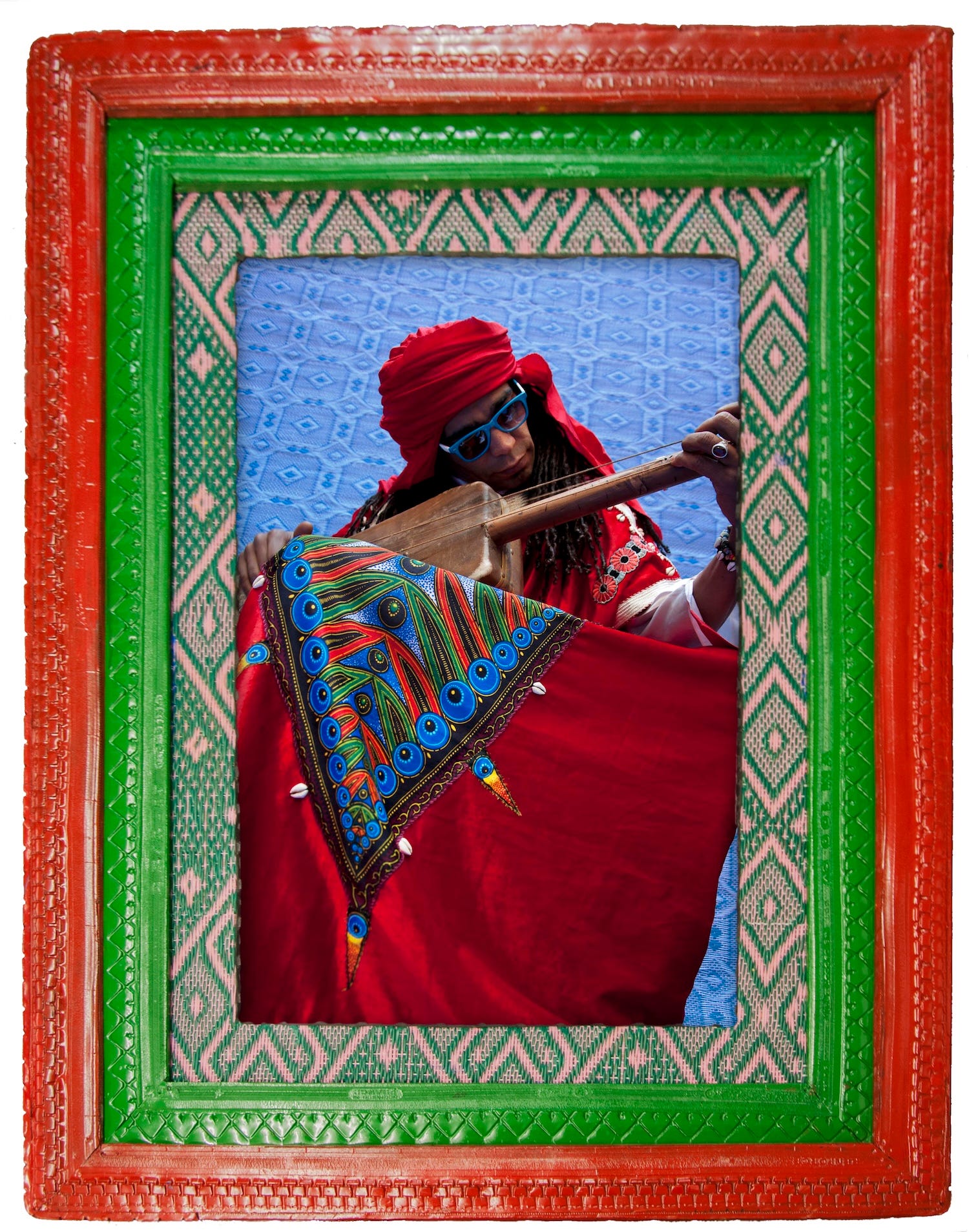
His subjects are photographed as exaggerated versions of themselves, as seen through Hajjaj’s metaphoric and literal lens. The work is then framed ornately with everyday items which can be found in grocery stores and markets.
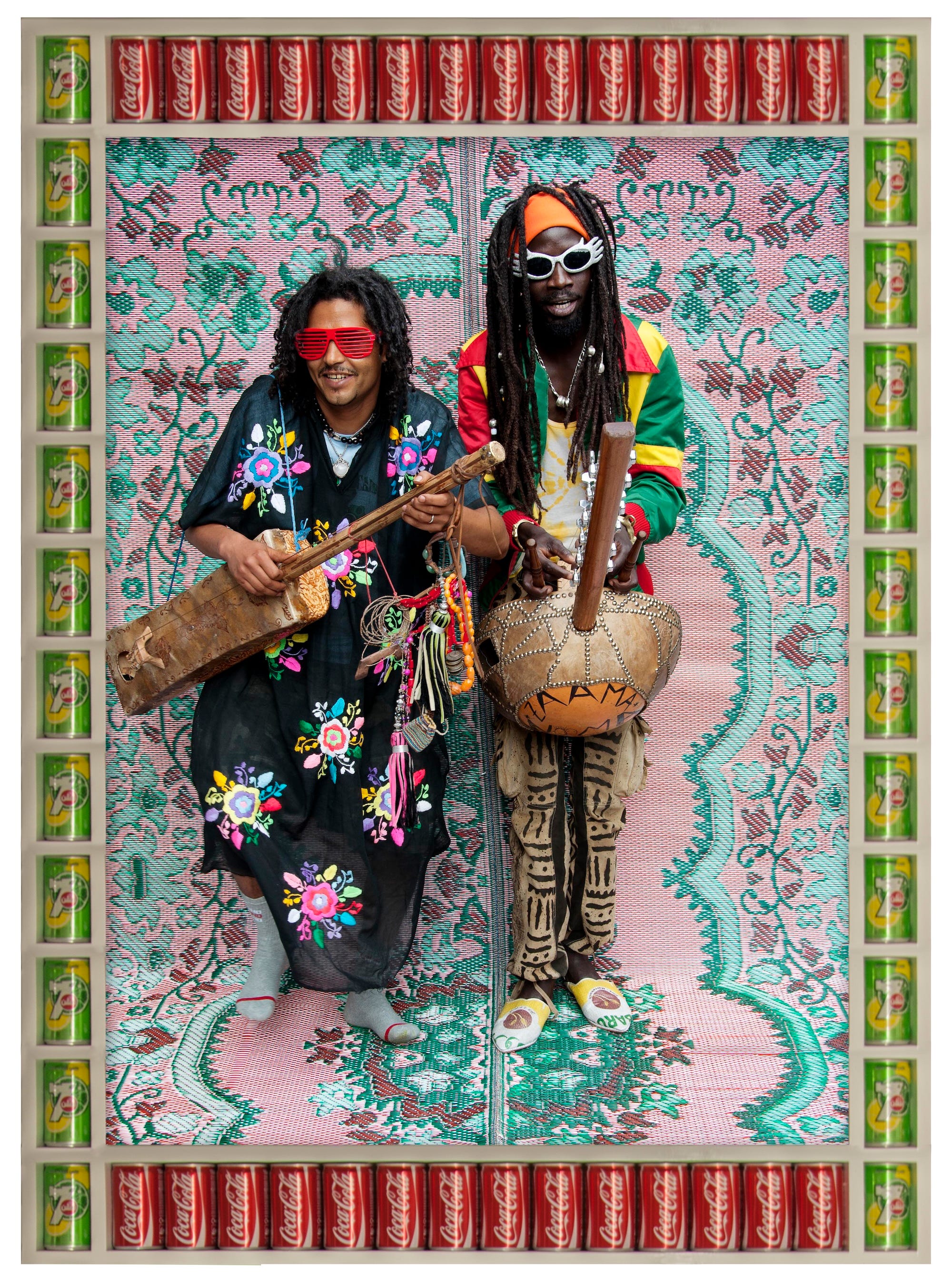
From cans of regionally branded tomato sauce or sausages to the globally recognisable branding of soda drinks such as Coca Cola and 7Up, the bright corporate language, the products themselves are transformed into art accessories simply by being placed within the frames that border Hajjaj’s photographs.
Aside from being visually compelling, surreal, and instantly recognisable, Hajjaj’s work is strangely universal.
When asked how he knows that a work is finished, Hajjaj’s response was quite obvious, “When I decide what cans go around the frame.”
All of Hajjaj’s answers for this week’s Great Big Questions were direct and economical – a pleasure to edit to be honest. This was fascinating to note for an artist whose work is multilayered, opulent and yet whose approach is fairly straightforward.
What’s easier, starting or finishing a project?
Finishing the work.
How do you know a work is done?
When I decide what cans go around the frame.
What is your biggest distraction from creating work?
The rain is the biggest distraction, as all my shoots are done outdoors.
What do you do when you feel stuck?
When the sun is out, it means I can do my shoots.
If you could own any artwork in the world which one would it be and why?
Horace Ové. He was a friend, pioneer, and a very important artist, the first Black filmmaker in the UK.
Which creative person would you most like to have dinner with?
With my friends, Zak Ové and Blaize.
WORK WITH THE CULTURELIST
For editorial collaborations, commissions, brand partnerships and more…
Where do you think ideas or creativity comes from?
Imagination, as well as what I grew up on and around.
What is the best advice you received about art, creativity, or the process of working
To see hip hop in my work as told to me by Fab 5 Freddy.
About Great Big Questions
What does it really mean to be an artist? Where do ideas come from? Can creativity be taught? The Culturelist’s artist interview series, Great Big Questions, asks every artist the same eight questions, revealing surprising similarities, striking differences and the deeply personal philosophies behind a life devoted to making art.