


Sliman Mansour’s name has become synonymous with contemporary Palestinian art and a people’s visual identity and culture.
Through a career spanning more than five decades, Mansour has documented the history, struggles, and identity of the Palestinian people through powerful imagery from now viral works such as his panting Camel of Hardship, to expressive landscapes and his dedication to the symbolic nature of the olive tree.
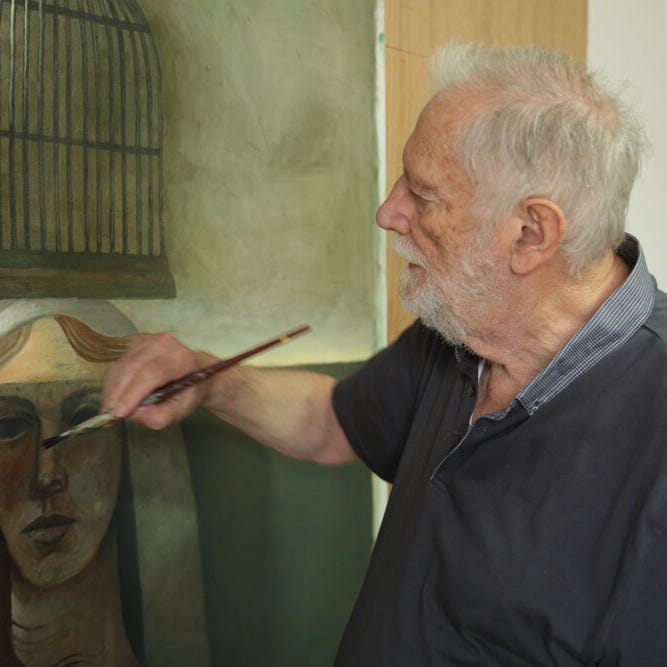
Mansour has also been incredibly influential in establishing important Palestinian artistic institutions as well pushing the boundaries how people can make and experience art. From using locally sourced materials in his work to leaning into the viral nature his images have taken over the last few years, Mansour continues to push his ideas and approach to art and being Palestinian through traditional and contemporary means.
In this, the first edition of Great Big Questions, Mansour tells The Culturelist how he knows a work is finished, respecting the viewer as a participant of the work, and why creativity is more than a burst of inspiration.
What’s easier, starting or finishing a project?
Finishing the project.
How do you know a work is done?
The inner feeling tells me so; it’s like a feeling of satisfaction just like getting full after eating. Simply, it’s when the result feels aesthetically pleasing and successfully conveys the idea I want to express.


What is your biggest distraction from creating work?
Distraction varies by time, now my biggest distraction is my medical condition and the pain it carries. Previously, the quarrels with artists, and long time ago girls were the major distraction.
What do you do when you feel stuck?
When I feel stuck in a certain artwork, I simply leave it and work on a different one. However, if I’m stuck as an artist, I change the technique and start a new adventure.
If you could own any artwork in the world which one, would it be and why?
If I were to own any artwork in the world, I would choose one of Paul Gauguin’s works painted in Tahiti, because it reflects a deep appreciation for colour and form. It also carries a sense of mystery through the interplay of light and shadow. Also, it is compelling in its exploration of themes and human relationships such as love and sexuality.
Which creative person would you most like to have dinner with?
I would like to have dinner with El Greco. He lived in Toledo and his artistic world was shaped in part by the Andalusian cultural environment.
Where do you think ideas or creativity comes from?
Creativity and ideas come from thinking deeply in a topic for a long period of time.
What is the best advice you received about art, creativity, or the process of working?
The best advice I’ve ever received concerning art, is to respect the viewer wherever they are and regardless of where they come from.
About Great Big Questions
What does it really mean to be an artist? Where do ideas come from? Can creativity be taught? The Culturelist’s artist interview series, Great Big Questions, asks every artist the same eight questions, revealing surprising similarities, striking differences and the deeply personal philosophies behind a life devoted to making art.