


Intentional, intuitive, and mesmerising. Iraqi artist Vian Sora’s works pulsate with energy that feels present and yet echoing facets of the past.
Her intricately applied layers explore themes of fertility and decay, memory and anticipation, and the balance of life and death. Fascinating for me when I experienced her work during her solo exhibition House of Pearls at Third Line Gallery was the fusion of tension and union in each painting.
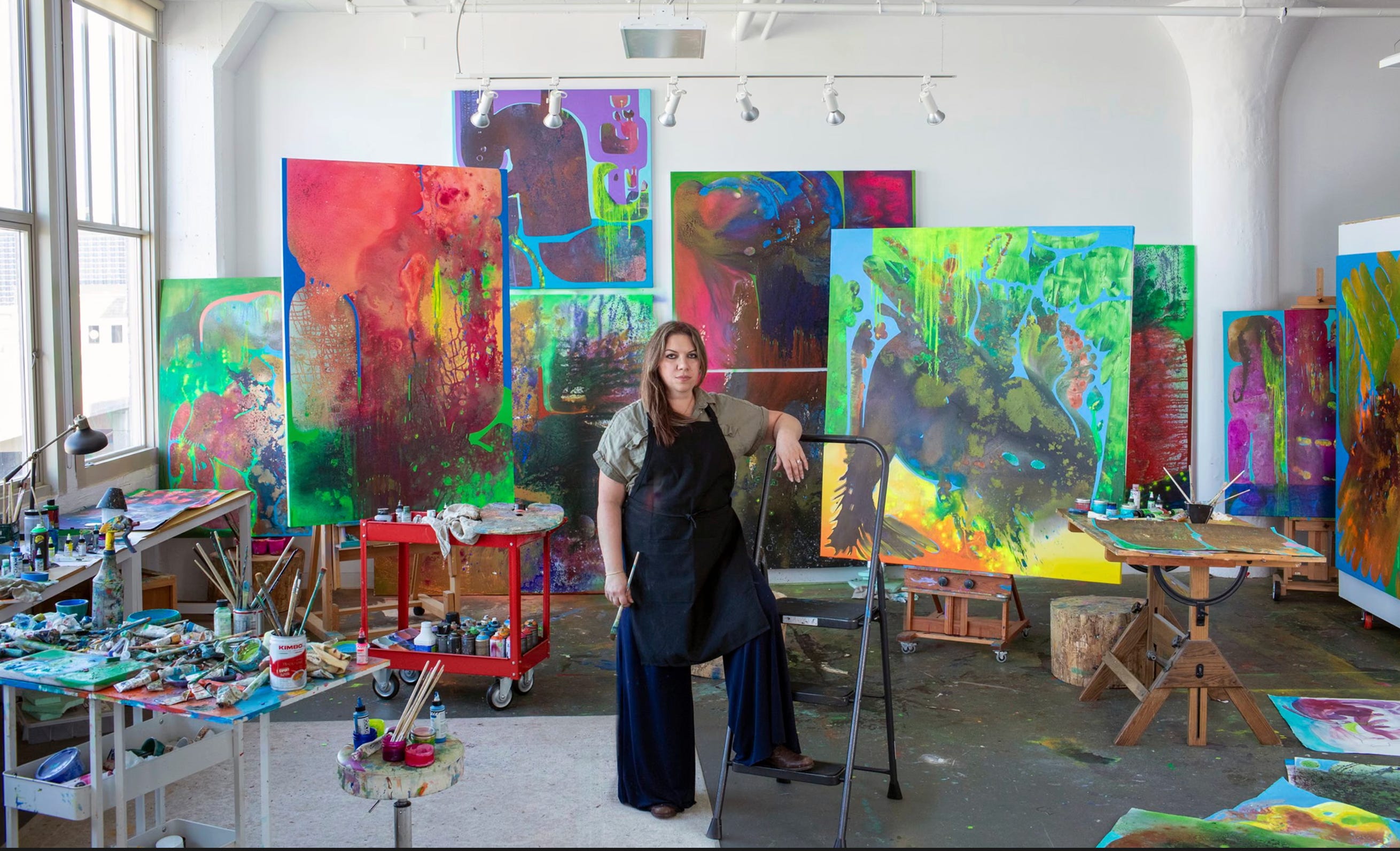
Somewhere between abstraction and figuration, the organic and the cosmic, Sora has developed a unique visual language of vibrant colour and complex compositions that simultaneously reference the histories and mythologies of both the ancient and contemporary world.
This makes sense when Sora told me that she doesn’t believe that “ideas arrive fully formed.” For her ideas are cumulation of a multitude of things including memory, conversation, travel, history, science, and mistakes.
In this week’s edition of Great Big Questions, Sora discuses not fighting the feeling of being stuck, the less glamourous side of being an artist, and which cultural figure would leave her with more questions than answers after their fictional dinner.
What’s easier, starting or finishing a project?
Starting. A painting begins with possibility. Finishing asks for restraint. The hardest part is knowing when the work has stopped asking questions and starts repeating itself.
How do you know a work is done?
Usually when I can no longer tell whether I’m looking at the painting or the painting is looking back at me. At some point it develops its own internal logic, and my role becomes listening rather than insisting.
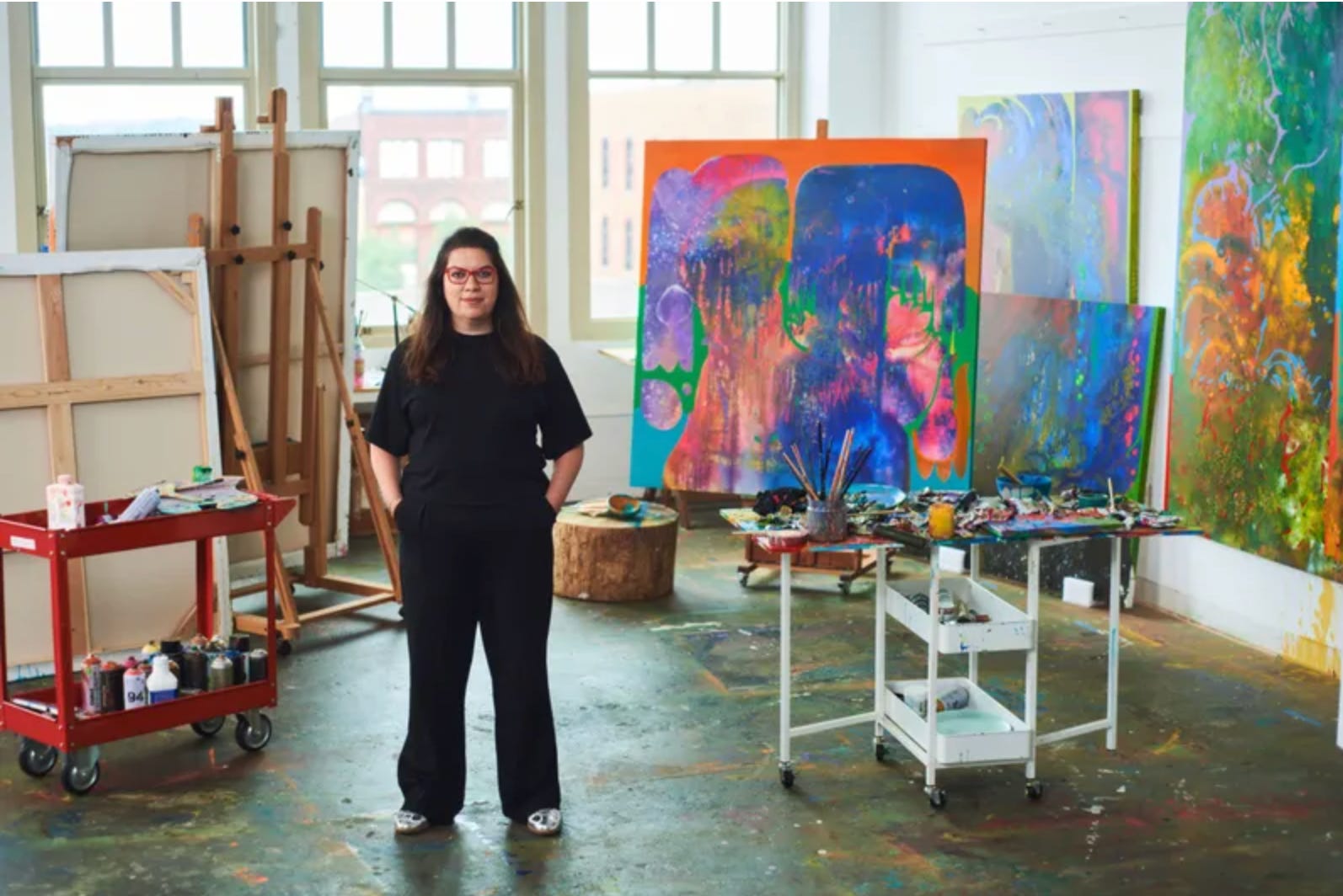
What is your biggest distraction from creating work?
The administrative side of being an artist. It’s necessary, but it asks for a completely different kind of attention than painting does. I try to protect long stretches of uninterrupted time in the studio because the work needs a slower rhythm than the rest of life.


What do you do when you feel stuck?
I don’t try to fight it anymore. Sometimes I travel, sometimes I read, and sometimes I simply practice stillness. I’ve learned that feeling stuck is often part of the process rather than an interruption to it. A painting needs time to breathe, and so do I. Stepping away lets me return with fresh eyes.
If you could own any artwork in the world, which one would it be and why?
Reborn Sounds of Childhood Dreams I by Ibrahim El-Salahi. Every time I stand in front of it, I discover another rhythm, another figure, another conversation unfolding beneath the surface. It’s one of those rare paintings that never seems to stop revealing itself. I could live with it for a lifetime.
Which creative person would you most like to have dinner with?
I’m torn between John Berger and Etel Adnan. Berger for the way he taught us how to look, and Adnan for her extraordinary ability to move effortlessly between painting, poetry, storytelling, and writing about the work of other artists with such generosity. If I had to choose one, it would be Berger. I imagine I’d leave with more questions than answers, and that’s my favourite kind of conversation.
Where do you think ideas or creativity come from?
I don’t think ideas arrive fully formed. They accumulate through memory, observation, conversation, grief, travel, history, science, and mistakes, often things that don’t seem connected until years later. In the studio, I’m working through those fragments physically, layer by layer, until they begin to find relationships I couldn’t have predicted.
What is the best advice you received about art, creativity, or the process of working?
No single piece of advice changed me as much as realizing that the painting usually knows before I do. The studio has taught me that certainty closes a painting far sooner than curiosity ever does.
About Great Big Questions
What does it really mean to be an artist? Where do ideas come from? Can creativity be taught? The Culturelist’s artist interview series, Great Big Questions, asks every artist the same eight questions, revealing surprising similarities, striking differences and the deeply personal philosophies behind a life devoted to making art.