


At Tabari Artspace in Dubai, Talal Al Najjar’s exhibition Mesh & Mayhem, curated by Salem AlSuwaidi, opens like a fever dream of the internet age. Screens, simulations, and sculptural fragments collide in a world where digital architectures and local memory are caught between collapse and cohesion.
Across paintings, 3D-printed forms, and CGI renderings, Al Najjar builds a vocabulary for what it feels like to live inside the mesh, the networked, overstimulated landscape of 2025.
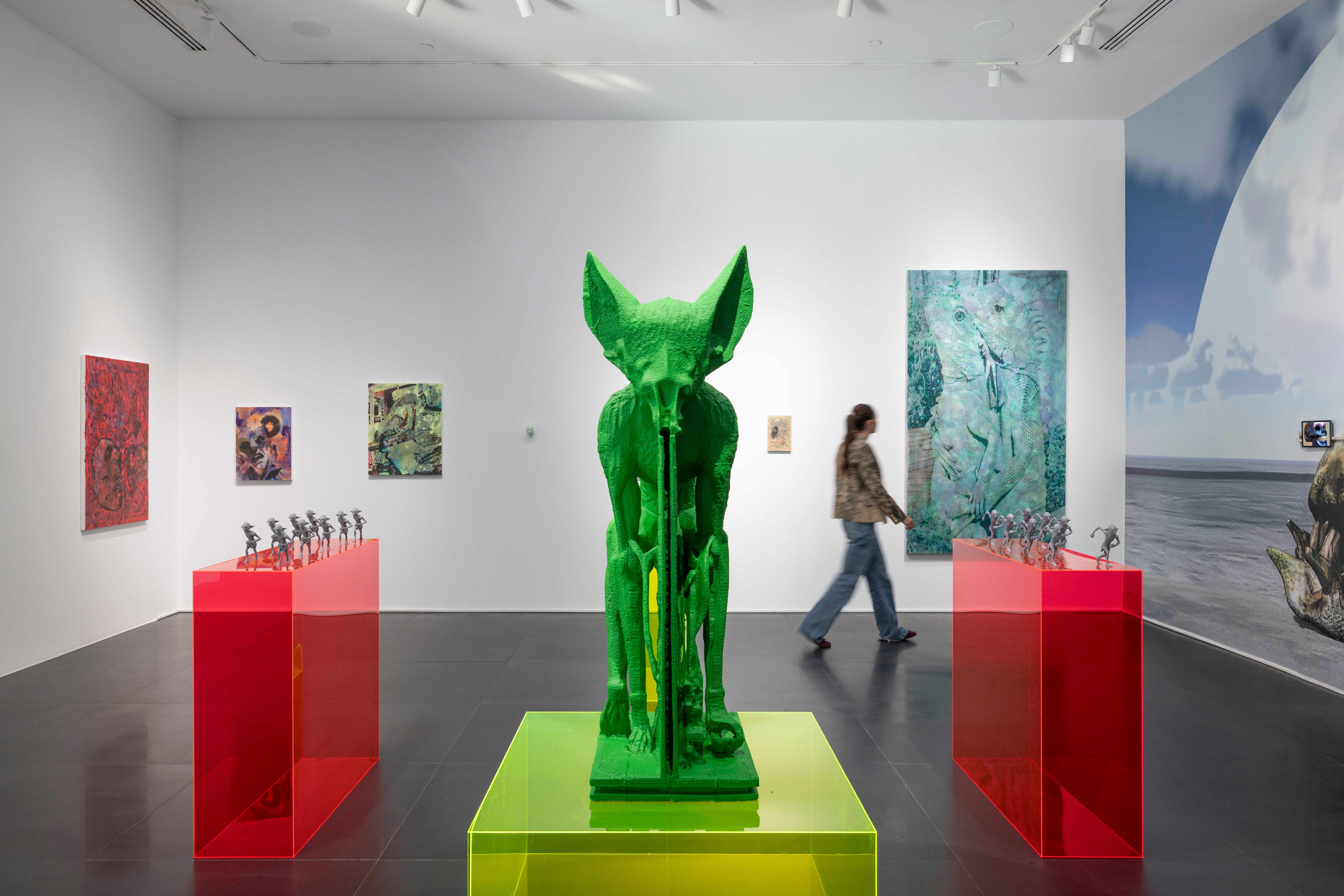
“The mesh, for me, is both literal and metaphorical,” Al Najjar tells The Culturelist.
“Every virtual object is made of triangles and polygons, but it’s also a mix of things that shouldn’t belong together contradictions that somehow hold.”
That tension defines the exhibition. Al Najjar’s work oscillate between digital precision and physical disorder, sometimes literally scorched. Canvases bear burn marks, sculptural surfaces are coated in industrial material, while his digital renders and animation feel both pristine and strangely human.
“I like breaking the tech, showing the flaws of it,” he says. “Even when I work digitally, it always comes back to something messy and human.”
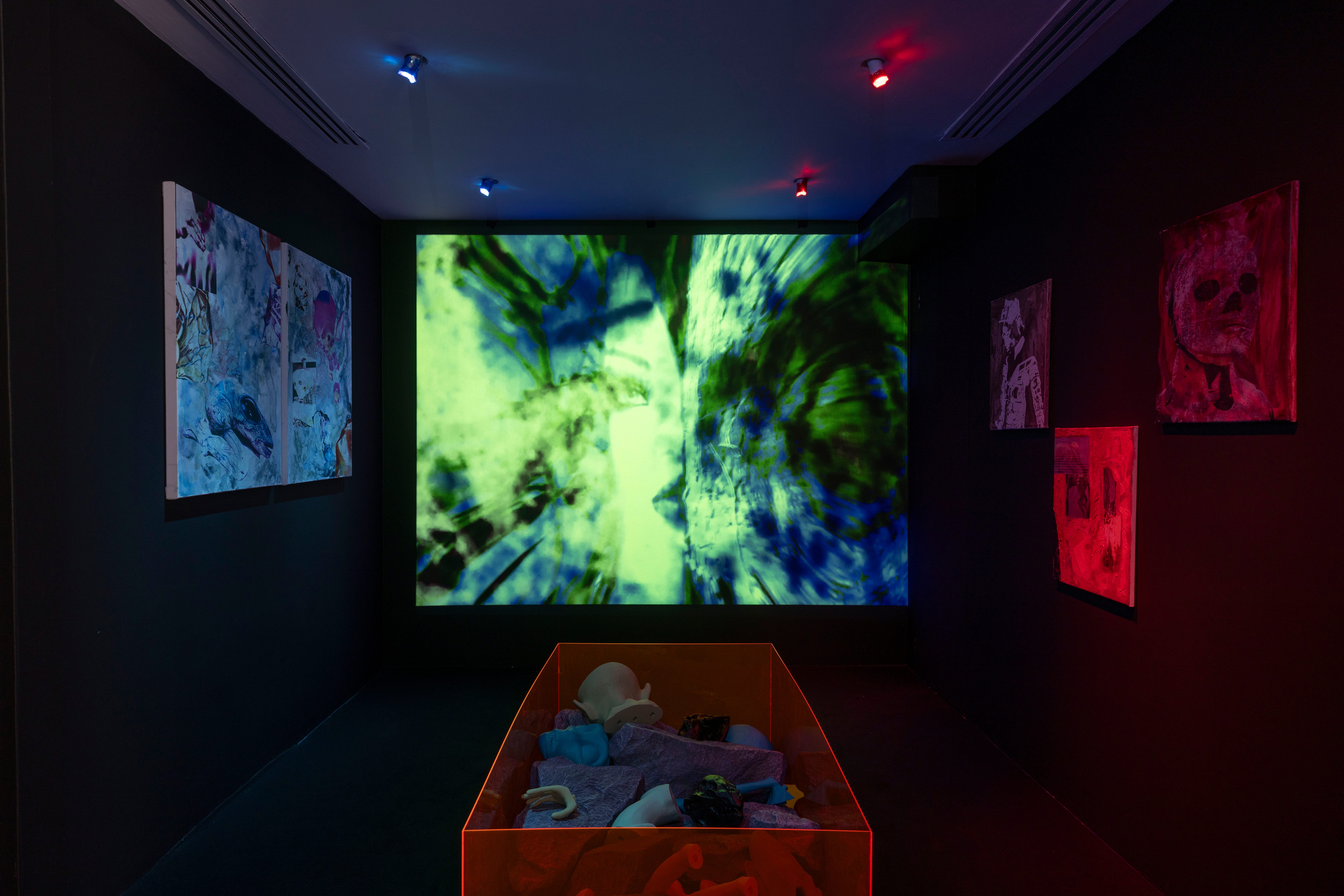
Al Najjar’s interest in “translation and mistranslation” animates the dialogue between physical and virtual space. By intentionally distorting images as they move from screen to sculpture, he exposes the slippages that occur when data becomes matter. His process embraces error, what he calls “encouraging mistranslation”, as a way to reveal how technology shapes and distorts perception.
Among the exhibition’s recurring motifs is a sequence of small figures Al Najjar calls The Rat Race: a parade of goblin-like runners cast mid-stride.
“I’ve always loved the goblin as a character,” he says. “It’s mischievous, ancient, a little absurd. It’s persisted from mythology to video games, and now it’s a kind of mascot for burnout culture.”
The figures, half-mythological and half-digital, embody Al Najjar’s fascination with how old archetypes evolve in contemporary visual language.
Repetition, too, runs through the work, not as duplication, but as accumulation.
“When you repeat something, it’s never just the same,” Al Najjar says. “Each iteration distorts the last. I think repetition stamps the idea in, it challenges what individuality even means.”
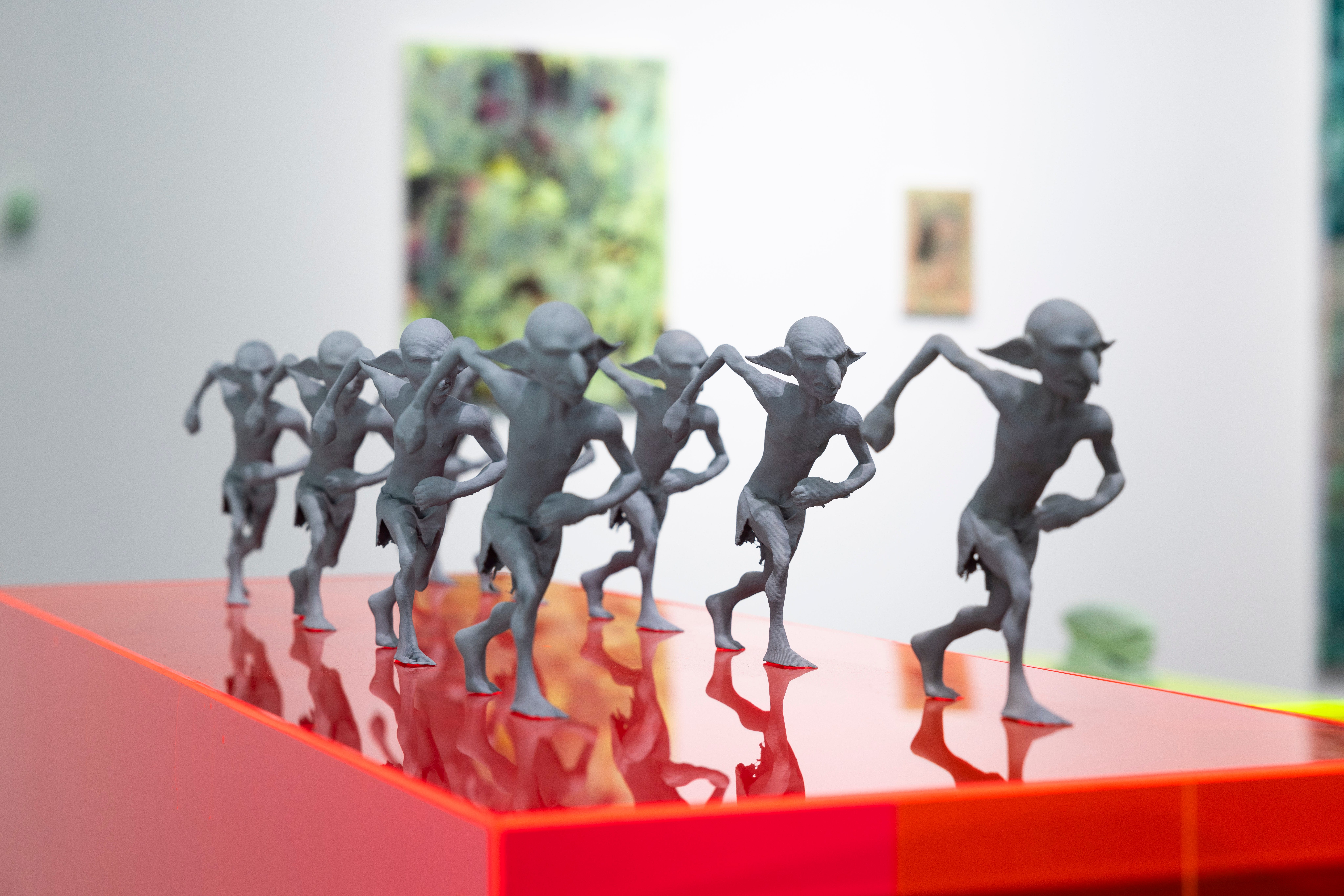
This recursive rhythm connects his looping video fragments, modular sculptures, and layered images into a single meditation on excess, the way meaning fractures when everything is endlessly reproduced.
Despite its conceptual density, Mesh & Mayhem resists any sombre or dystopian notes. There’s humour in the chaos, irony in the overload. Al Najjar’s world is one where fantasy, memory, and metadata coexist, where heritage becomes code, and where technology’s glitches can be read as human or even tender.
But mostly, Al Najjar’s work carries questions about how we balance life between the physical and digital realms.
“I want people to rethink how we consume images, what lasts, what disappears, and what it means that machines now decide that for us.”