


Nadine El Roubi’s music has always been honest, but now she’s delving into new new terrain.
The Sudanese singer and rapper, known for her lyrical precision and genre-blurring sound, opens her next chapter with Dream Girl, the haunting lead single from her sophomore EP Love As A Gun, out later this year.
If her 2022 debut Triplicity floated through liminal moods and internal dialogues, this new project cuts deeper.
“This is the first time I'm delving into the theme of love and romance and relationships in my music,” she tells me at The Culturelist.
“Love As A Gun, to me, is exploring the dichotomy between vulnerability and violence.”
Produced by Palestinian sonic architect Smokaholic, recorded at Empire Studios in New York, and mixed and mastered by Dubai’s TAC, Dream Girl is ghostly, seductive, and unsettlingly composed.
El Roubi’s voice flickers between falsetto and whisper, confession and warning.
Where Triplicity lingered in introspection, Love As A Gun arrives with a sharper edge. It’s a seven-track cautionary tale about intimacy turned obsession, about how closeness can bruise as much as it soothes.
Despite her growing visibility online, El Roubi remains an independent artist navigating the music industry on her own terms. This has so far brought her a stellar feature in Rolling Stone and singer-songwriter SZA, sharing one of El Roubi’s tracks.
But being an independent artist isn’t without it’s challenges El Roubi points out.
“I know a lot of people like really advocate for the independent route, which I completely understand and respect,” she says.
“But I think for me my dream situation is to work with an independent label who believes in my music and who are willing to fund it, because honestly, sometimes, what you really need to blow up is somebody backing you.”
El Roubi’s creative process, she says, is less about strategy and more about being loyal to the story she’s telling and surrendering to feelings – a process that’s made her music strike a chord with a diverse audience.
“I think everything comes through you - that’s why it’s called creativity, creation,” she says.
“I think there’s a higher energy that you channel. And depending on where you're at in life, you channel things differently — but it’s the same energy source.”
El Roubi sat down with me for a candid conversation about being an unsigned, self-managed artist, the meaning behind Love as a Gun, navigating Arab identity as a global performer, writing without self-censorship and her career milestones and dream projects.
Watch our conversation or read an edited version below.
Enjoy!
Maan Jalal: So happy to have you here, talking with us at The Culturalist. I’m a big fan of your work, I've been following you for a while, and I was looking forward to listening to your new single, which came out last week. I think it was Friday, wasn't it?
Nadine El Roubi: Almost a week, yeah, almost a week.
Maan Jalal: How are you feeling? How has the response been since it's been out?
Nadine El Roubi: I feel great. First of all, thank you for having me. I was so flattered that you reached out and I'm excited to speak with you. I like your writing a lot, so this was really cool.
I'm very grateful. I'm an independent artist. I'm not signed to anybody. I don't have a label. I mean, there's a label that distributes my work, but that's by no means similar at all to having a label backing you and I don't have management. So this whole journey has pretty much been solo, dolo - obviously, with the support of some incredible people, but with all those things considered, I'm very grateful for the response. Everything has been super organic. Everybody's been so supportive, I feel like I've been the most consistent that I've ever been in promoting a piece of work that I've made. So, all in all, it feels successful to me. I'm grateful.
All in due time. I believe in God very strongly, and I believe like things are will work out the way that they're meant to.
Maan Jalal: It's really intense being an independent artist, because you don't have the luxury of just being like, ‘right, I'm just going to work on my music and my lyrics and my album and my sound,’ It's also thinking 360 in terms of marketing and money and all that stuff. I'm sure you didn't make that choice lightly to decide to be fully independent.
Nadine El Roubi: It's not a choice. I would honestly rather be signed. I know a lot of people who really advocate for the independent route, which I completely understand and respect. But for me, I mean, my dream situation is to work with an independent label who believe in my music and who are willing to fund it, because honestly, sometimes what you really need to blow up is money or somebody backing you. It helps to have a strategist.
It helps to have somebody who is an expert in social media on your team. It helps to have an in house videographer who is always available to shoot content for you. A lot of the artists that you see blowing up have those teams, it appears as though they've blown up organically, but really there's a lot of work going on behind the scenes to help propel them. And that's not to say that you can't do it on your own.
There's many people who have which is incredible. But yeah, so it wasn't so much, of a choice as I don't think anyone's been interested yet.
Maan Jalal: That's insane to me. You have such a unique, interesting sound. You have really important things to say. So to me, it's a missed opportunity.
Nadine El Roubi: I appreciate that. That's very kind. Yeah, I don't know what it is. All in due time. I believe in God very strongly, and I believe like things are will work out the way that they're meant to.
And I mean, the perks of it, is I definitely have full creative freedom and control over everything that I'm doing which I love. I love that I have to kind of just like, listen to myself. It's kind of being an entrepreneur. I'm sure you know this. You have your own working hours, you have to get yourself up out of bed and do the things you need to do. And no one's going to tell you what to do or not to do. So although there's freedom in that, it's a double edged sword, and there's obviously, a lot of responsibility. But I enjoy rising up to the challenge.
Maan Jalal: So let's talk about your new single Love as a Gun. That’s such a loaded title, right? It's violent. It's romantic and violent all at once. And I'm wondering for you, what was the emotional territory that you were trying to map with this track, it being the first single from your next body of work.
Nadine El Roubi: Thank you. So Dream Girl is is the title of the single and Love as a Gun is the title of the project. And I love that question. Thank you for touching on that, because this is like, the first time I'm really delving into the theme of love and romance and relationships in my music. I've kind of touched on it before, here and there, but this is the first time I'm going in.
And Love as a Gun is exploring the dichotomy between vulnerability and violence. And I don't mean violence in the literal sense of the word as in like hitting and mean words more so the energy of it. The energy of toxicity and having your guard up and feeling very defensive, and also feeling just like, projecting a lot, you know what I mean? That's something that was a pattern in relationships that I had. There was a lot of defense mechanisms and coping mechanisms and a lot of projection of fears and insecurities also intermingled with like heavy infatuation and deep love and unconditional love and caring.
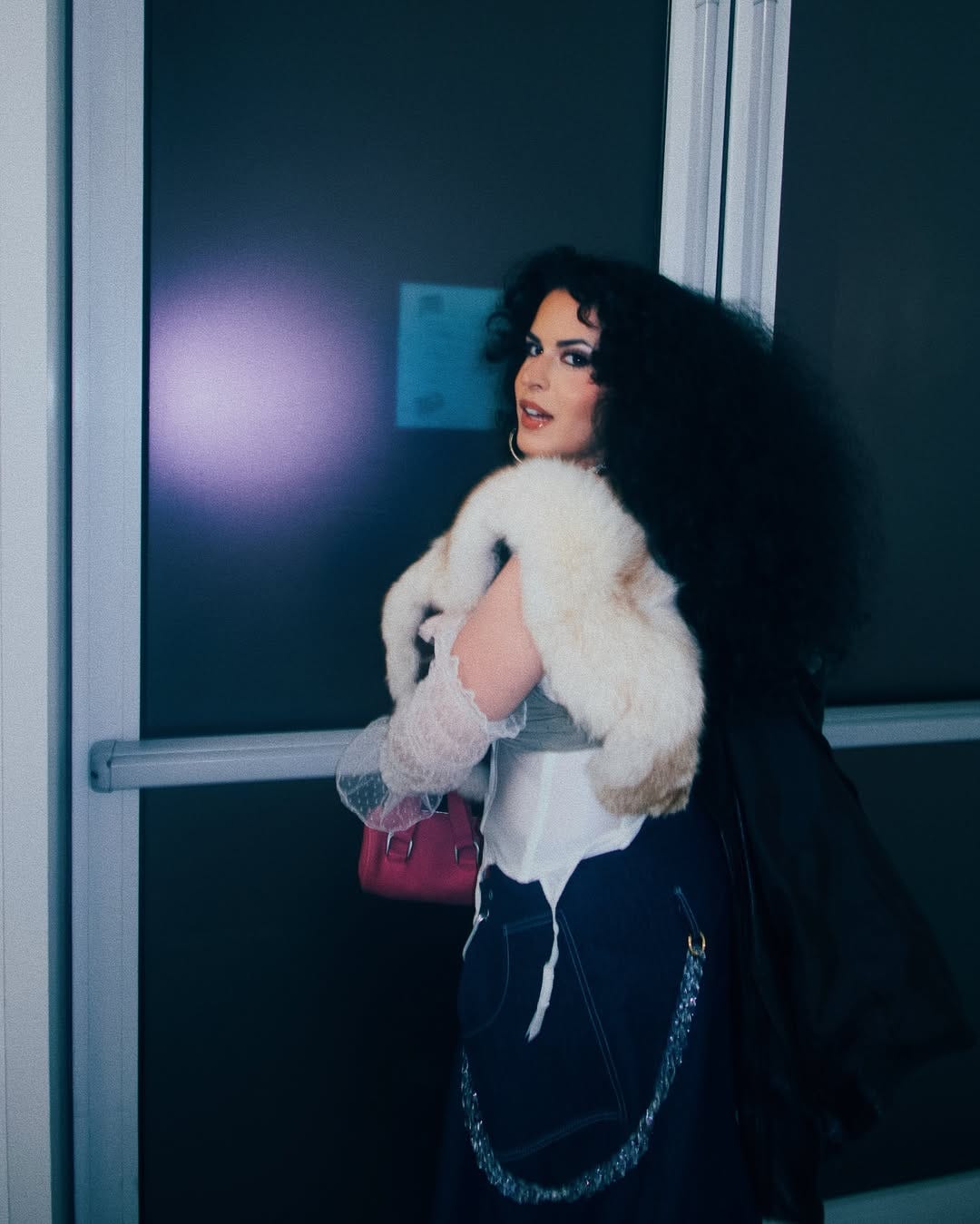
It's in very interesting place. And anybody who's been in a very toxic relationship can tell you that the highs are very high and the lows are very low. This is what that project is exploring. And Dream Girl, the first chapter of it is... as I've said, like an introduction to the protagonist of that story.
Dream Girl is a woman, a girl, a person, a being, who, however the listener relates to that character, has everything going for her but still feels lonely and still feels like she needs something more outside of herself. And I think that's where a lot of toxic relationships are born, and feeling like not enough and just completely submitting to somebody else, regardless of how that affects you.
Maan Jalal: That's such a great way to put it, the way you say that it's a chapter to the bigger story, and also the fact that this character, heroin - the way you describe her as having everything, but she still feels she wants more - I think that's so interesting. It's a very common theme for people in our generation who no matter where you live, you know, the West or in the East, most of us are very privileged, but there's still this feeling that we're not enough, or that there needs to be more. And I think it's probably magnified with women, right?
Nadine El Roubi: Yeah, absolutely.
Maan Jalal: For you challenging is it that as an artist? That you're writing this song and it's coming from somewhere, from personal experiences, but also you want to make it universal? How do you balance those two in a single, so that it feels authentic to you, and it's also, received by lots of different people. What is that process like?
Nadine El Roubi: That's a really good question. I'll be honest. I haven't, I don't really... and this is perhaps why I'm like not exactly where I'd like to be yet, but I don't really think about making things accessible to other people or relatable to other people. I'm diving deep into my own experiences, and whoever relates, relates. And the only reason I function that way is because I feel like if the second I start thinking about how someone else is going to relate to this or receive it, all confidence in like my own creative ability goes out the window. Because I'm overthinking every line, I'm overthinking every melody and every structure.
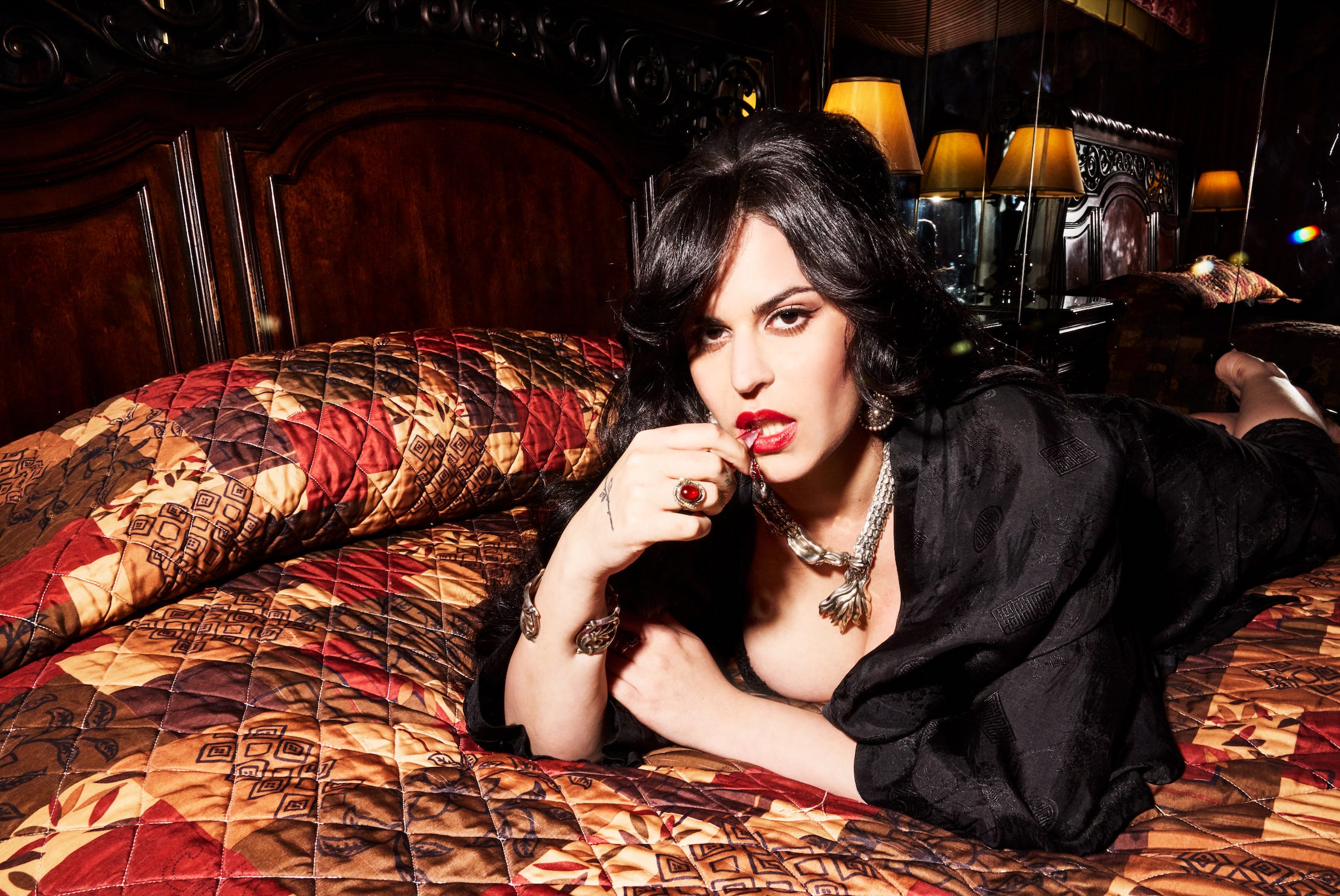
Dream Girl is a woman, a girl, a person, a being, who, however the listener relates to that character, has everything going for her but still feels lonely and like she needs something more outside of herself.
Maan Jalal: When it comes to that storytelling do you ever self censor? Are you ever like maybe I should disguise this part a bit more, or do you just lay it all bare?
Nadine El Roubi: No, I lay it all bare, and it's really… it's kind of scary. Also transparently in this project, I make a lot of illusions, and there's a lot of double entendres… and it all points to being very transparent with intimacy. And as a Muslim, Arab woman, that's scary territory to be in. Because first of all, in our culture, it's almost taboo to even openly have a relationship, let alone openly being intimate and being okay with sharing that.
So I don't censor myself, because the way that I see it is, if I'm telling myself I can't say something to uphold traditional values, I'm almost buying into the shame around those topics and the shame around being comfortable with yourself as a woman and having autonomy as a woman. And if I'm doing that, how can I tell a younger girl or somebody who's listening to me, how can I look them in the face and tell them be yourself if I'm not practicing that. So I don't censor myself and I may regret it one day, but right now, that's what feels right.
Maan Jalal: This is always an interesting conversation I have with Arab artists, the ones that who grew up in the West, and even the ones that who grew up in the Middle East, where they're just like, ‘look, I am Arab’ but they just don't want to be known as just as that. I'm wondering how you approach that? Do you do you like the label? Do you like the box? Do you not see it that way? What's your approach with that
Nadine El Roubi: That's an amazing question. For me, personally, I don't like it at all. Only because I just hate being boxed in. Regardless. If somebody was to call me just a rapper, I'd hate it, if they were to just call me a singer, I'd hate it. It's like any label that limits me, I rebuke, I reject. I don't want it. I'm very proud to be Sudanese. I'm very proud to represent it in any shape, way, or form, the culture, and I'm very proud to be part of that community. So proud of my peers. But I don't want a solely Arab audience. I want to travel. I want to tour the world. I want all humans from all walks of life to be able to listen to my music and relate. I want to be a household name, not just in an Arab household.
And for me, it's it's just about like being a bridge. I don't find it interesting to speak on what I know to people who already know that experience, only. It's cool because it's like, we both get it. I think it's also cool to speak on my experiences to people who don't understand at all, and maybe now, because they listen to my music. They know a little bit more about Sudan, or they know a little bit more about the Arabic language or the culture. In the last few years, everyone's been telling me, like, focus on the Arab audience, focus on the Arab audience. And like, I see definitely... the strategy in that, but I just don't know if it's conducive for my art story.
Maan Jalal: I really commend you for that. It's easy to get bogged down with these... not bogged down. It's easier to see yourself in the prism of how others see you, I think, especially if you're living in the West and as a person of colour, an Arab person. Yes, you are that, and you're also more than that. We all are, right? So I think it's great that you are looking outside of that.
Nadine El Roubi: Everybody contains multitudes, and like social media and the algorithm has made us feel like - because that's what the algorithm is, right? It categorizes. And so it makes us feel like we have to fit into categories and fit into certain niches to reach those audiences. Social media has definitely negatively impacted, the way we create, because now we feel like we need to create in boxes. If my song is not multilingual and a specific genre or two that I can point out, then it's not going to do well, and I'm not going to understand how to market it.
Maan Jalal: What I really like about you, and what I've noticed about you is your work ethic. And I think when it comes to social media, it's doesn't matter how many labels people try to put on you, it's about consistency. And I feel like you're a very consistent person. You're always posting, and you're very like, approachable. So I want to know, what is it that drives you? Why is it that you are doing this all the time, every day, you're going on there, on social and what is it that drives you with your msuic?
Nadine El Roubi: I'm trying to get out the hood. I'm trying to make a living off of my music. I'm trying to be worldwide like, and you don't get that. And thank you. By the way, I think that's, like, a very high compliment, and I'm so flattered. I don't see it. I actually think I'm like, so okay, no, I don't want to, like, reinforce negative affirmations,
Maan Jalal: Manifestation, you know.
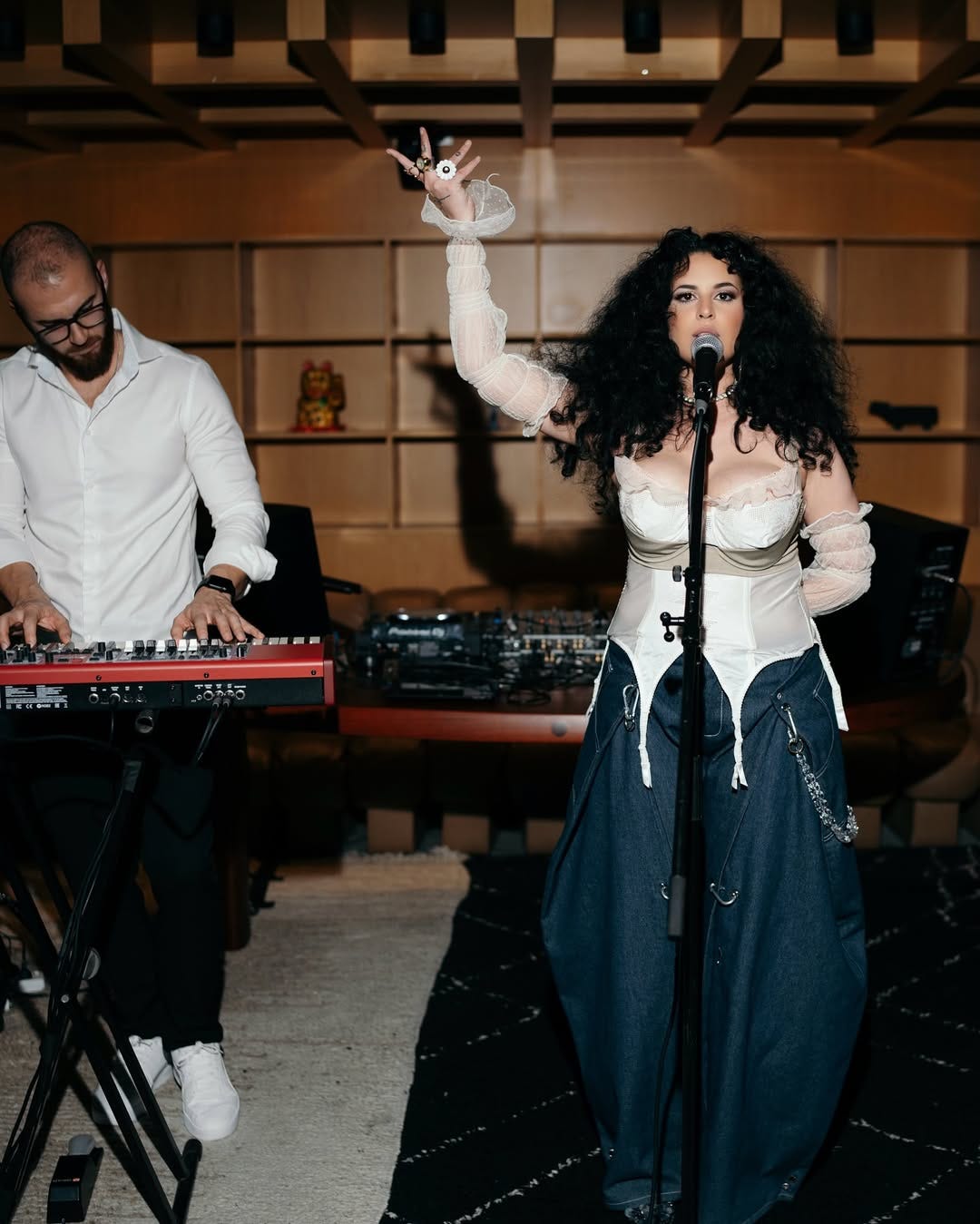
Nadine El Roubi: I know. I can be, I could be doing more, and I'd like to be doing more. I am the most consistent I've been ever so far, which I'm proud of. But there's more work to be done.
Maan Jalal: When does it feel right to rap versus when it feels right to sing? When you're when you're writing lyrics?
Nadine El Roubi: That's an incredible question. It's really just the energy, the moment and the beat. I don't know it's like, it really just happens in the moment. It's not like a decision. It's not like, I sit down and I'm like, right now I'm gonna write a rap song - well, sometimes I do to be fair. Sometimes I'm like, I want to rap, and then I will find, like, the grimiest beat, and like, try to rap on that. But mostly it's what's calling me here?
Maan Jalal: So it's like instinct and something that's not really explainable.
Nadine El Roubi: For sure, but also that being said, there's been times where, I've written something and it's been rap, and I look at it and I'm like, nah, I should sing this, and I'll just take out a bunch of bars, and then it becomes, a song, and I'm singing it instead.
This is what I love about creating. You're a writer, you know, I'm sure. I'm sure you relate. You sit down and you're not, like okay, I'm going to start with a short sentence or a long sentence - whatever it calls for, happens, and then it's either like, wow, this is amazing. It's like, you know what? This is cool, but I'm going to edit this.
Maan Jalal: I definitely think that sometimes the thing you're creating just has a life of its own. You look back and think what the hell? Did I really make that up? Or did it just come through me from somewhere else. It's really interesting.
Nadine El Roubi: I think everything comes through you. I think, Subhanallah, that’s why it's called creativity, creation. I think there's a higher energy that you channel. And depending on where you're at in life or like, you channel things differently, but it's the same energy source.
The List
Maan Jalal: I'm going to ask you a couple of questions about lists. I love lists. So first one, can you list three albums that shaped you as an artist?
Nadine El Roubi: Ultraviolence by Lana Del Rey, Damn by Kendrick Lamar and Ctrl by SZA.
Maan Jalal: List three songs that make you feel like wow - someone actually wrote this.
Nadine El Roubi: Didn't Cha Know by Erykah Badu. I'm always like, bro, every time I hear it, I'm like, now that's a song, but that's my fucking tune. I hear Snooze by SZA, and I'm like, ya5rib baitich SZA, it's so good. It's like, insane. And then what's another one? Oh, Agora Hills by Doja Cat. Like, that song makes me mad because I'm like, how do you even come up with those melodies, like the different character voices that you had. It's just such a good song. Yeah, don't even get me started.
Maan Jalal: List three moments in your career so far that felt like a turning point. They don't have to be big milestones, just some three moments where you're like, Yeah, this is where I'm supposed to be. This feels right.
Nadine El Roubi: Releasing my first EP Triplicity in 2022. When I got the Rolling Stone feature in, like 2023 or 2024 that was like a huge moment. And that was the same year that SZA reshared one of my songs - put those two in one, and then, um, I would say, getting booked at Soul in Dubai, I think 2024, yeah, last year was also a big deal.
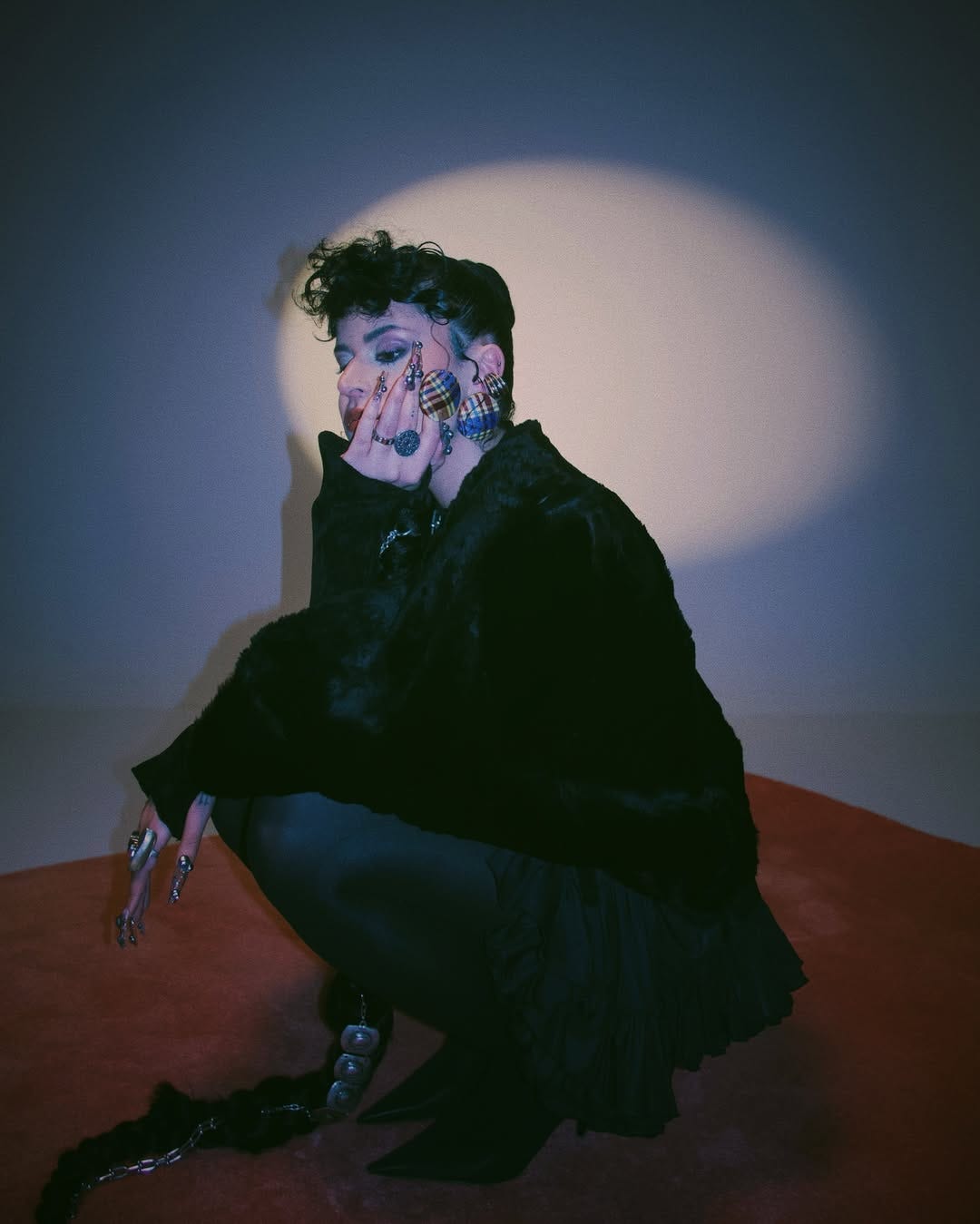
Maan Jalal: Cool. Can you list three contradictions that you hold close, that you think you know are okay?
Nadine El Roubi: Hmm, incredible. How do I put this? As long as you're honest with yourself, it's okay to not be the most honest. Obviously, that's different in different situations, but that's like something I think of often.
It's okay to want to be better than other people, and it's also not okay to want to be better than other people. And then, um, yeah, that's all I got. The two that I live by.
Maan Jalal: List three places in the world that feel like a version of home.
Nadine El Roubi: God, I love that so much. Cairo for sure, New York and London, obviously. This is all outside of Khartoum my actual home, but those feel like versions of home, because just like memories tied to them and stuff.
Maan Jalal: List three dreams that still feel just out of reach, but they're not impossible.
Nadine El Roubi: Acting. Being in a movie or like a TV show is, by the way, my ultimate dream, and I keep telling people cast me, but, and it's like, it's so frustrating, because I've almost been in so many things and, like, I've almost had so many opportunities, and they slip away, and I'm like, oh, but one day… me and the screen, I have faith.
Maan Jalal: I believe it. I can fully see it. I can fully see, yeah, I can really appreciate that. What else?
Nadine El Roubi: Writing a book. Always wanted to write a book. Still plan to. It's going to take time, but I'm going to get there and having my shit together.
Maan Jalal: That’s everyone's dream.