


I am a man who loves Pride and Prejudice. I am also a man who has placed himself squarely in the middle of many heated debates on which adaptations of Jane Austen’s works are more superior to others. In fact, I have also found myself in debates on whether some of Austen’s works should even be adapted – again.
Enter, the announcement that Netflix was planning a “faithful” adaptation of Pride and Prejudice by Dolly Alderton, starring Emma Corrin as Elizabeth Bennet and Jack Lowden as Mr Darcy. I am firmly for the adaptation. Every generation deserves a good Austen adaptation – even two.
Adapting is an art form. I have always been adamant in that belief but within reason. While novels and their film counterparts are different beasts, there must be core tenant in the storytelling and character development that should be translated faithfully. If not, the film is no longer an adaption but a reimagining, which is a different way to retell a story that requires a separate set of rules.
The teaser trailer for the series was released a mere 24 hours ago and has already accumelated over half a million views on YouTube. Two centuries on, and we are still excited (or sceptical) to return to Longbourn.
Generally, if the comments are anything to go by, people are weary or unimpressed by the teaser trailer. I am, on the other hand, very excited. The concern, and very rightfully so, was that Netflix would do with Pride and Prejudice what they did with the epic failure that was Persuasion. A film that I have blocked out of my memory.
The 36 second teaser trailer did exactly what it was supposed to do – tease. It also showed me just enough to know that writer Dolly Alderton and director Euros Lyn, really understand the source material.
After watching the teaser trailer a handful of times, here are my thoughts on the upcoming Netflix adaptation of Pride and Prejudice.
Pride and Prejudice Iconography
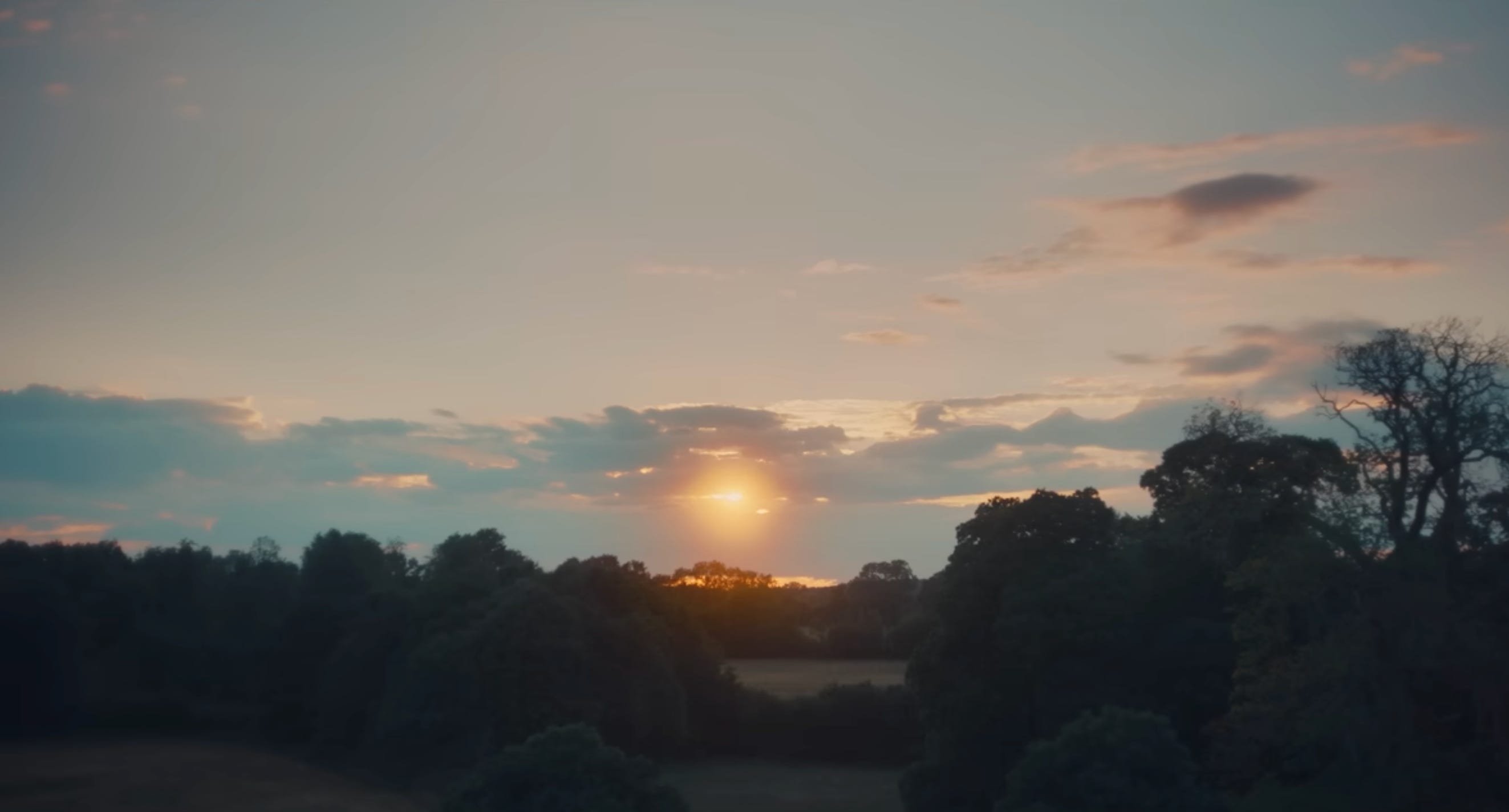
The trailer opens with the sunset. The light touches the edges of clouds, and a dense line of trees form a dark silhouette. Birdsong drifts through the air as the camera closes in slow on Elizabeth sitting on the roof of her home. The grandeur of nature, the picturesque countryside, and people experiencing it, has been a core part of the visual storytelling of Pride and Prejudice and many of Austen’s works on the screen. It’s only natural, since so much of her work is connected to the concepts of village life, class and land ownership.
It’s reassuring to see that this tradition continues here. It’s also a delight to see that Alderton and Lyn are not trying to appeal to Gen Z through gimmicks outlandish costumes or a jarring contemporary score. While that may work in other period dramas (Bridgerton), and is comical in others (Withering Heights), it wouldn’t work here.
Sensory Details
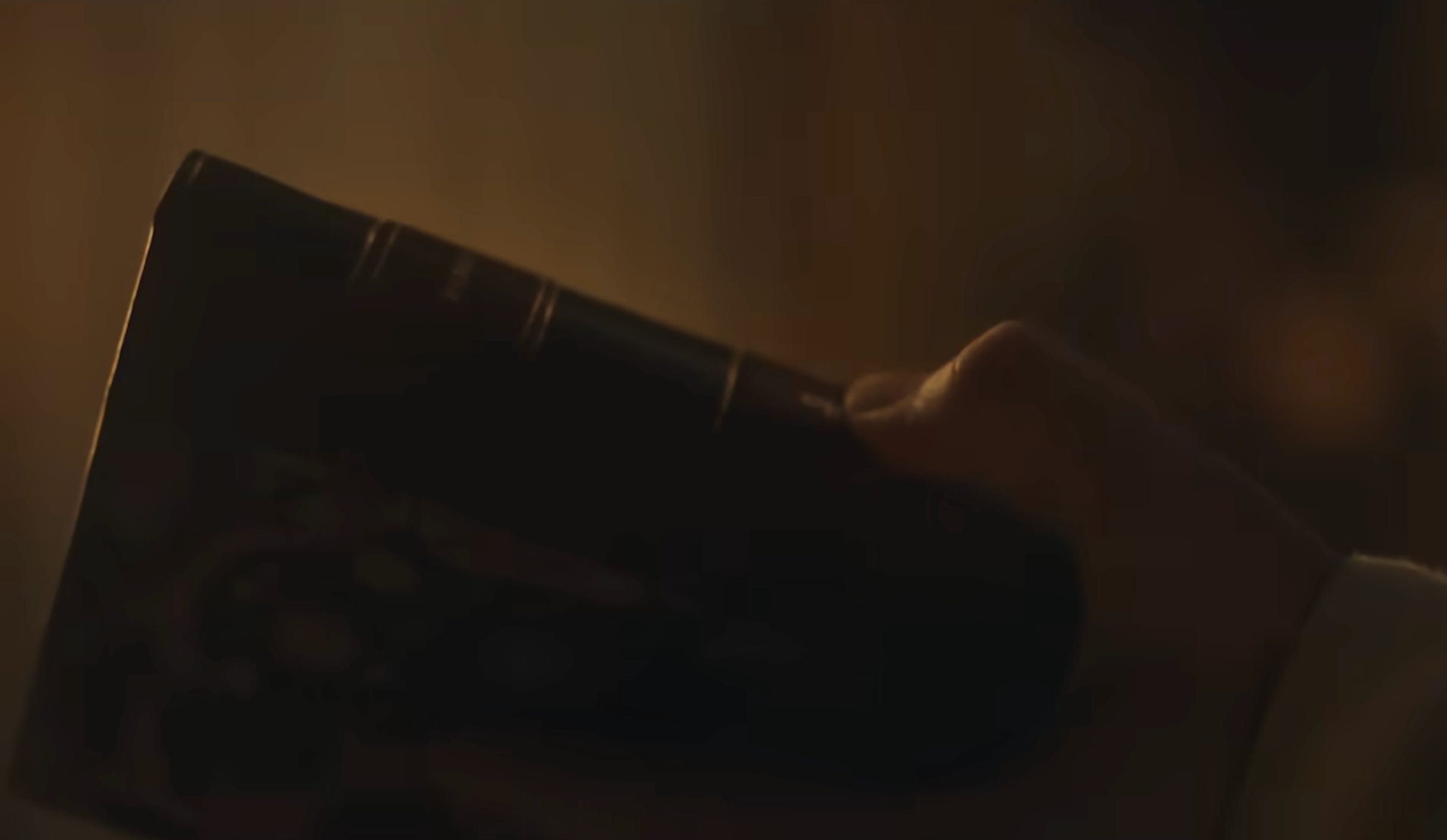
The teaser includes small sensory details – Elizabeth’s finger tracing over Darcy’s name on a letter he signed, her hands touching flowers, Darcy’s thumb caressing over the spine of a book, the delicate lace resting against the curve of Elizabeth’s uncovered shoulder etc.
The series is exploring the sensual, intimate aspects of Elizabeth and Darcy’s interiority and the psychology of their dynamic through tangible, thoughtful storytelling – footnote to the iconic tensing of the hand in the 2005 film (if you know, you know). Woven in with some epic images of nature and the countryside, there is real potential for this adaptation to take us on a visual and sensory journey that feels fleshed out.
Elizabeth Bennet on the Roof
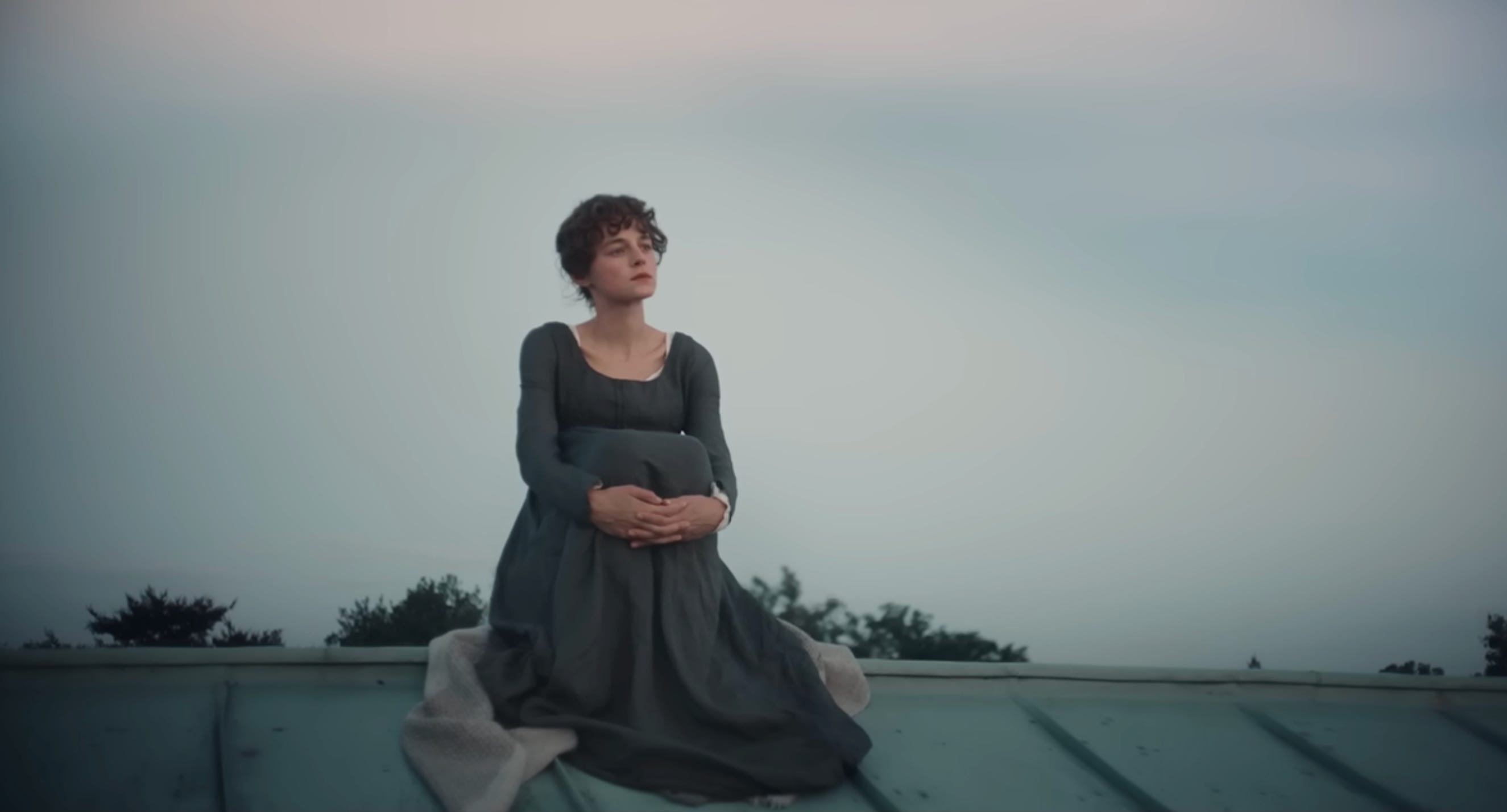
Elizabeth Bennet is on the roof, of what we can assume is Longbourn. As she looks out contemplating the sound of galloping horses breaks through her trance. The scene then cuts to a series of images, almost like flash backs, with some details and her observations and glimpses of Darcy.
I suspect that the teaser trailer starts with the very last scene of the film. Elizabeth has retreated to be alone after the visit from Lady Catherine de Bourgh who has accused her of being secretly engaged to Darcy, or at least circulating the rumour that she was, before insulting her family. Then as she hears the sounds of horses approaching, obviously Darcy, and she recalls their journey together building up to this very moment. Just a theory of mine, but if true than this teaser trailer is very clever.
I’ve seen a lot of negative comments in regard to the choice having Elizabeth sitting on the roof - “Elizabeth Bennet on the roof? Austen would never.” But I like it. A lot.
Elizabeth is looking out toward her world and beyond, observing, analysing, contemplating. She is literally above the drawing rooms, above polite conversations, and the conventions of society, placing herself in a position of advantage. If we think of Longbourn as a representation of stability, lineage, and limitation, by climbing and sitting on top of it, Elizabeth is symbolically rising above the structure that define her prospects.
Is Darcy Darcying?
The ultimate point of contention in the comment sections. Is Darcy Darcying? Too soon to tell but here’s what I noticed.
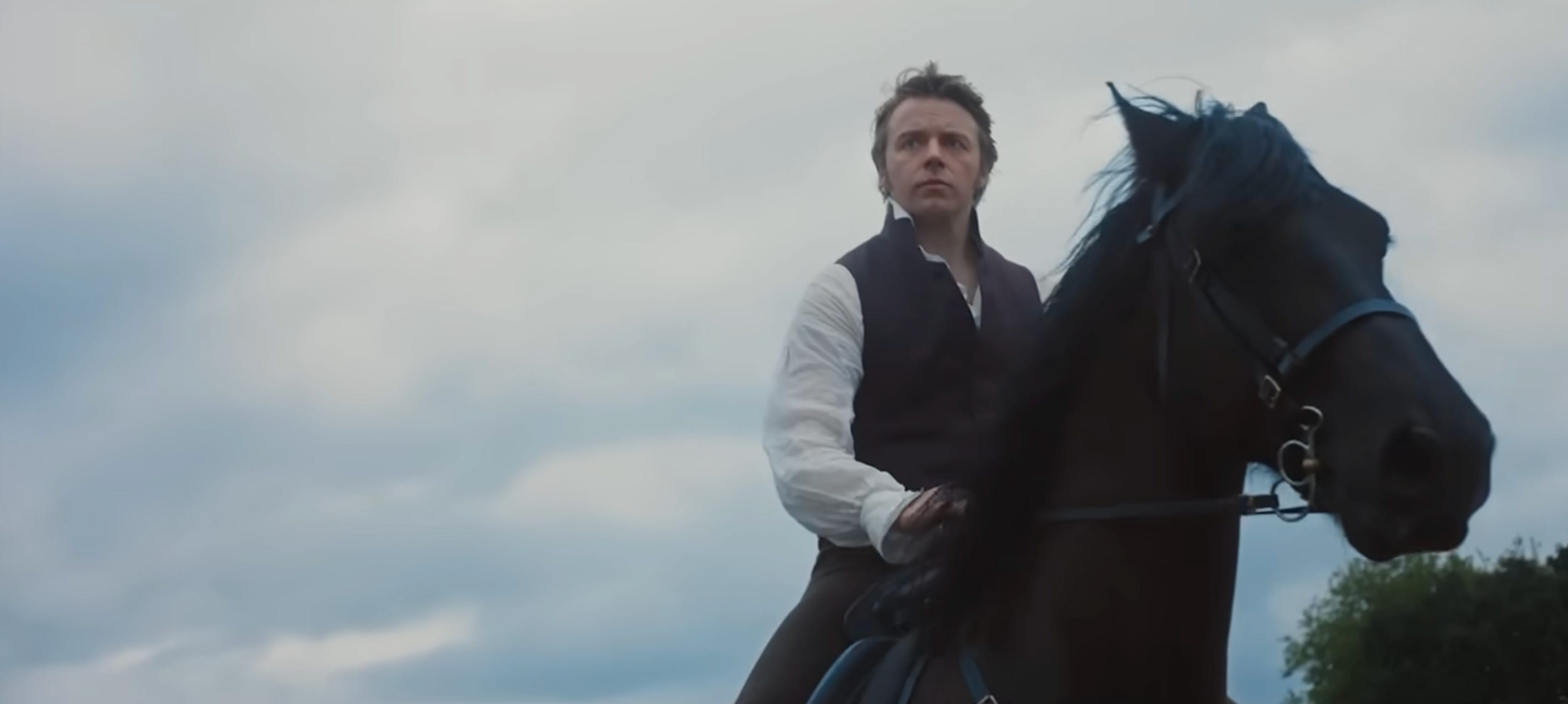
Darcy appears seven times in the teaser trailer, all but the last, in glimpses. His thumb rubbing the spine of a book, his hand squeezing two pebbles, a view of him through the back window of the carriage standing in front of what I suspect is Netherfield Park (possibly the scene after Elizabeth and Jane depart from Netherfield, after Jane’s cold), a glimpse of him looking through a slightly open door (maybe the scene when Elizabeth is visiting Pemberley and bumps into Darcy), a close up of his eyes looking down, then he and Elizabeth gazing at each other as they dance, (probably at the Netherfield ball) – and then, finally, at the very end of the trailer, the closest view of Darcy, on horseback looking ahead.
The low-angle shot, looking up at him against a wide, clouded sky, elevates him into something almost monumental – culturally, narratively.
Interesting that in our first clear shot of Darcy, his clothes read more relaxed than the strict button up Regency era formality we are used to seeing him in. The open collar, soft white shirt, dark waistcoat without a visible cravat, the dark horse, the muted light, the wind in his hair, it all feels more intimate, brooding, dare I say even a little wild for Darcy.
This Darcy is more romantic but restrained in a contemporary way, which I don’t mind. Because it might not be the typical Darcy we think of but while the costume softens him, makes him approachable, the camera angle elevates him, makes him formidable. That tension there is so very Darcy and I’m so here for it.
Concerns…
The teaser trailer, (and yes I haven’t forgotten my own words – emphasis on the teaser), puts sole focus on Elizabeth and Darcy. Yes they are the story in many ways, but I’m curious, and slightly concerned that this might turn into a love story where chemistry and sexual tension is the main driver.
The 1995 BBC series starring Colin Firth turned Darcy into a brooding romantic ideal, and audiences loved that, but he was also aloof, socially awkward, and wounded by his own pride – Firth was so good at merging all that together. While Jennifer Ehle played Elizabeth with wit, intelligence, and a grounded emotional clarity that made her feel principled rather than a know it all or annoying.
The 2005 Pride & Prejudice film starring Keira Knightley and Matthew Macfadyen, gave us windswept yearning and a muddy-hem intimacy that felt almost modern. Both Knightley and Macfadyen, through the genius vision of Joe Wright and the brilliant writing of Deborah Moggach, were able to perfectly balance sexual tension, vulnerability and intelligence in a light, effortless way.
The thing is, lest anyone forgets, or is unaware (if you’re reading this and haven’t read the book, I don’t judge you, I implore you to read it – now) Austen’s Pride and Prejudice has often functioned or been positioned culturally, frustratingly so, as a story of great romance – a particular kind of romance. This false, very broad assumption, has often stripped away the riches of the novel, from Austen’s wit to her sharp observations on society, the study of money, and the negotiations women make within constrained systems.
Netflix, Alderton, Lyn and the whole cast, now step into that lineage with the full weight of Austen fans watching side eyed, anticipating a single slip up,
We should be beyond the question of who owns Elizabeth, Darcy, and their story. No one does and we all do. The question is what does this version believe about love, class, and female autonomy in 2026, will it deliver the very cleaver messages that Austen has instilled in the novel in a way that feels faithful to the values of the story she was telling?
I believe this very critical point is what will make the series a success or a Persuasion.