


The recordings came first. Long before the cyanotypes, the reconstructed chair, or the layers of fabric and printed text, it was the sound of her grandmother Omaya’s voice that shaped the core of Syrian-Lebanese artist Ranim AlHalaky’s new exhibition Of Liminal Threads at Tashkeel Studios. Those voice notes, captured during summers in Damascus, became the source from which the entire project grew. They were, in her words, the catalyst for understanding how personal memory might be translated into visual form.
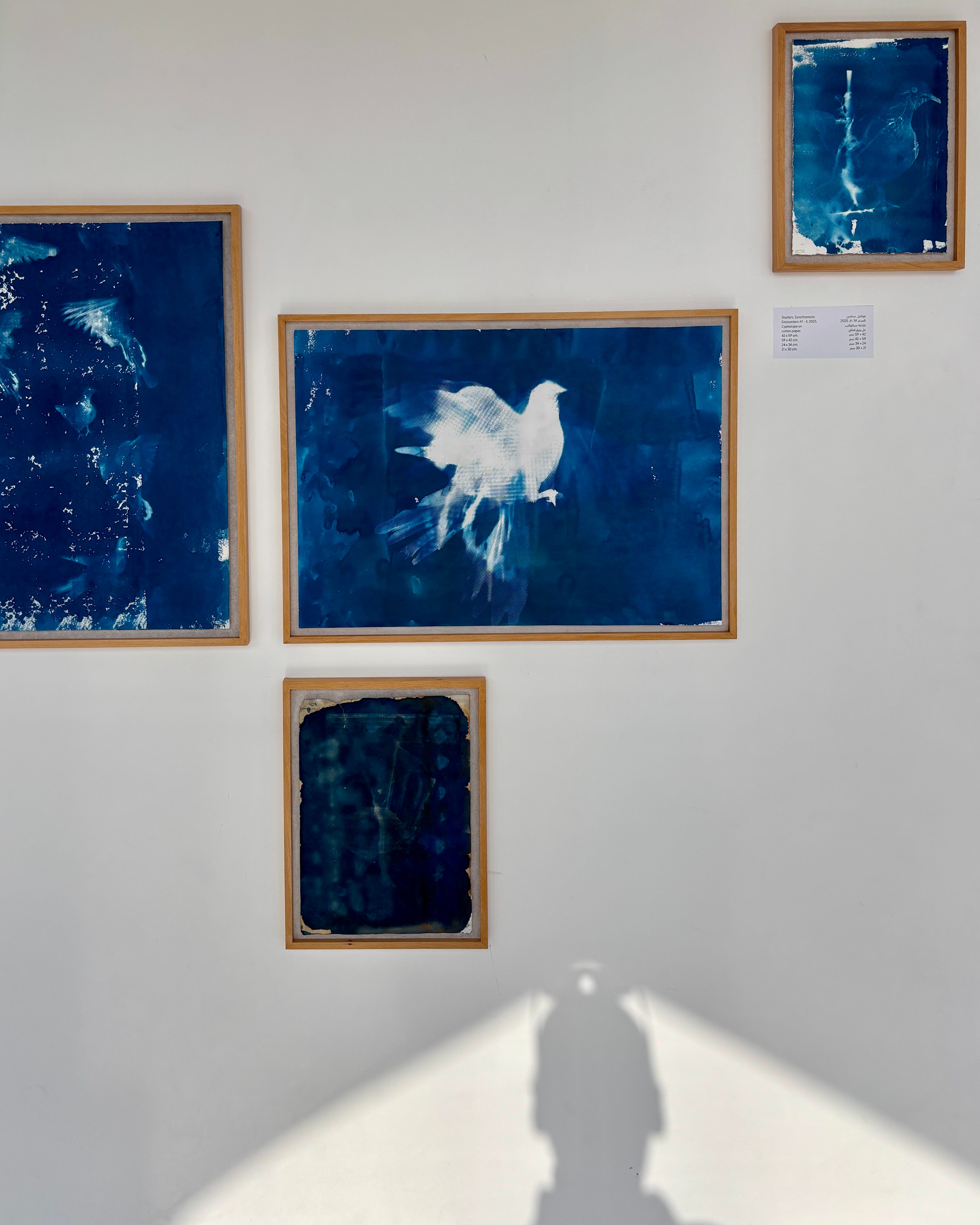
“When I recorded these voice notes and her storytelling, and when I was hearing them in my earphones, I realised somehow the periphery gets out,” AlHalaky tells The Culturelist. “You focus a lot on her voice, and you stop hearing the surrounding noises.”
It was in that narrowing of attention that the works began to take shape. The stories carried texture, pauses, and a depth that felt both intimate and expansive, and she saw a path to transform that sensory experience into something visual.
What emerged is a body of work that treats memory as a multi-sensory system, one where the everyday holds as much weight as the symbolic. AlHalaky moves across photography, text, sculpture, sound, and found objects, using details from her grandmother’s home as a starting point.
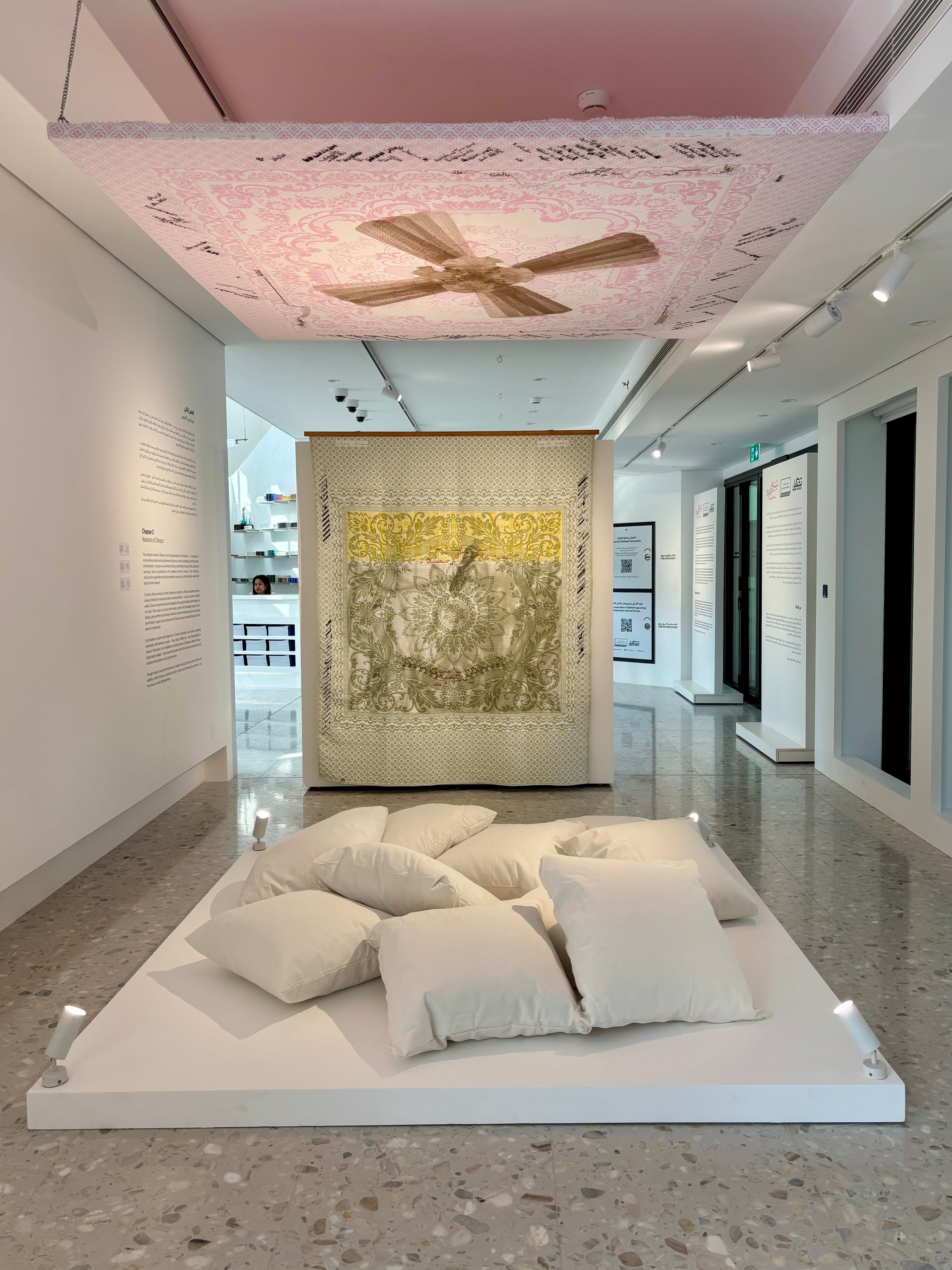
“Memory comes in different forms, it’s multi-sensorial,” she says. “I keep talking about the fan in the right corner of the storytelling image, or the touch of the blankets. Everything is in different forms.”
These small elements became anchors as she built the exhibition. Across the show, the idea of home acts as both a question and a shifting premise. Migration, familial distance, and generational storytelling run through every chapter, yet the works resist nostalgia. Instead, they treat belonging as something in constant motion, shaped by adaptation rather than certainty.
“The whole story starts with how we are adapting to everyday changes that are happening in our surrounding, in our life,” she says. “This whole notion of trying to understand our origins, our home, our belonging, keeps changing every day.”
This sense of flux is reflected in her use of everyday domestic materials. Much of the work draws from objects found in any family’s home: fabrics, textures, household items, things worn by use.
“The mediums that are based on everyday objects and everyday findings made sense to me,” she says.
These materials carry an emotional charge, not because they’re precious, but because they are ordinary. They form the backdrop of family life, the details that shape memory even when we’re not aware of it.
The exhibition’s structure, divided into chapters, mirrors the fragmented way her grandmother’s stories lived in her memory. Nowhere is this more apparent than in Chapter Three, built around a replica of Omaya’s chair, the seat from which she told her stories.
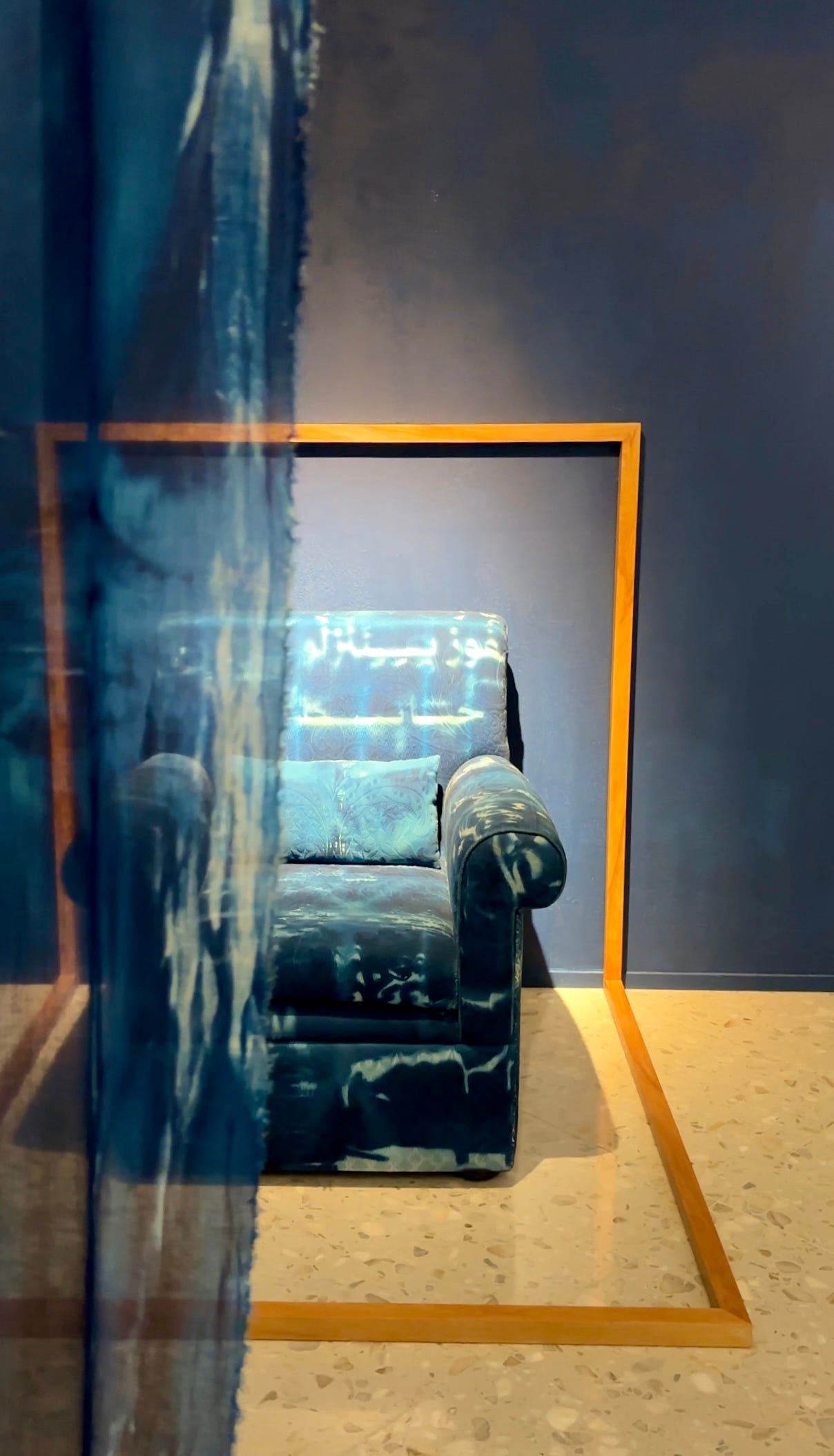
AlHalaky chose to frame the chair rather than allow visitors to sit on it, creating a quiet but deliberate distance. “
The framing of the chair was a decision to tell you to look at it and not to actually sit on it,” she says. “This chair carries her stories. Until this day, no one sits on this chair. It’s always left empty because it’s her chair.”
For AlHalaky, the process of making Of Liminal Threads changed her own understanding of what home means.
“I think my sense of home expanded,” she says. “I started with one question working on this exhibition, and now I ended up with five questions. My understanding of home definitely changed… is it really a place, or is it the mother’s touch or the mother’s embrace?”
In the end, the exhibition is a tribute to her grandmother, but also an invitation to consider the threads that shape our own histories.
“Yes, it’s a personal experience, but it’s a collective story,” she says. “Recording and keeping these stories is a way of preserving our culture and resisting erasure.”