


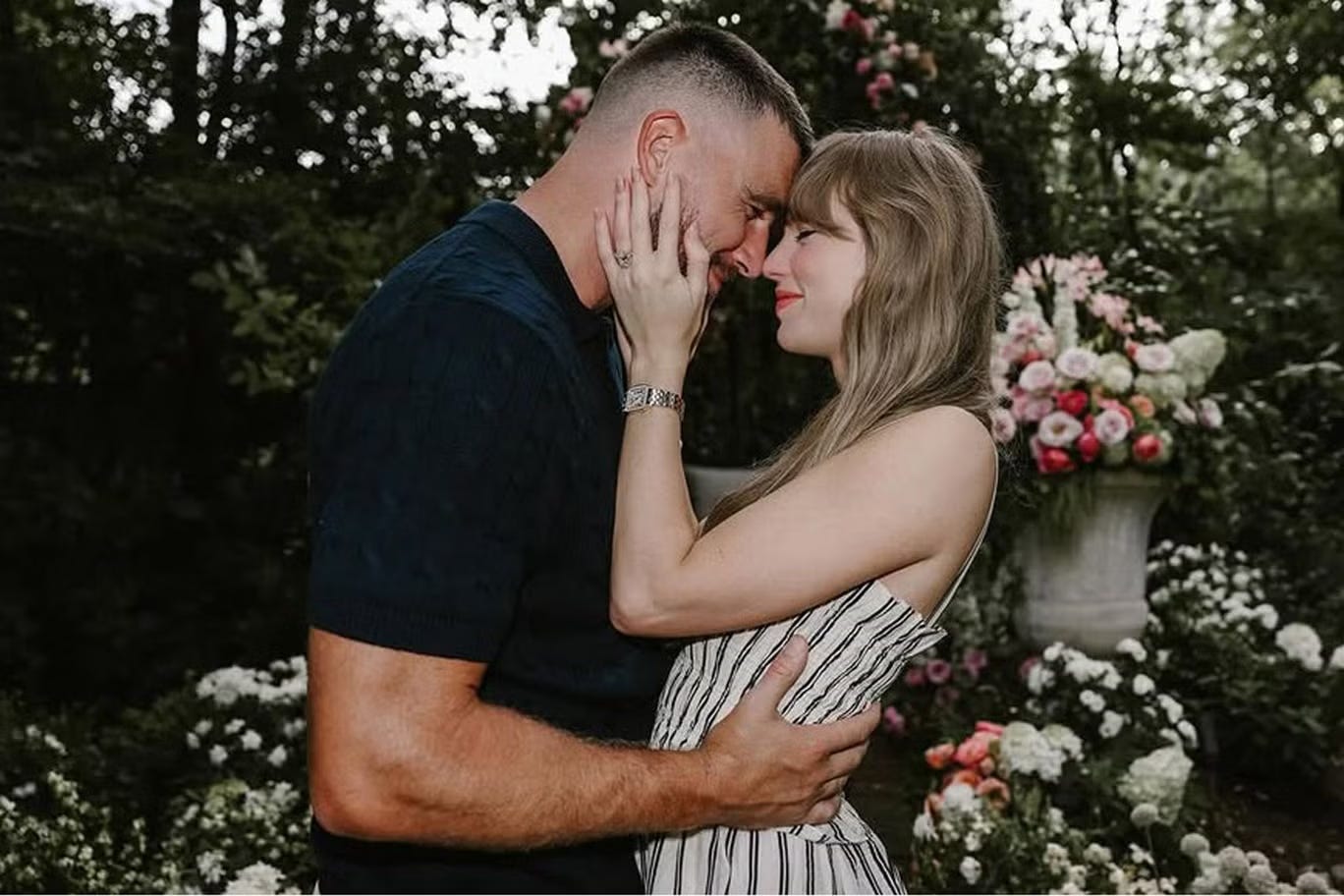
Not sure if you’ve heard but Taylor Swift got married. And despite all the headlines, it’s still shocking that there was someone else involved in this wedding too, her now husband, Travis Kelce.
On 3 July, Swift and Kelce were married at New York’s Madison Square Garden. This was one of the biggest, public, private weddings that no one was allowed to know about as it took place in the middle of one of the busiest cities in the world. There were 1,000 guests which included Hollywood stars, musicians, athletes, filmmakers, business leaders, and other influential figures gathered inside one of the world’s most well-known sports arenas.
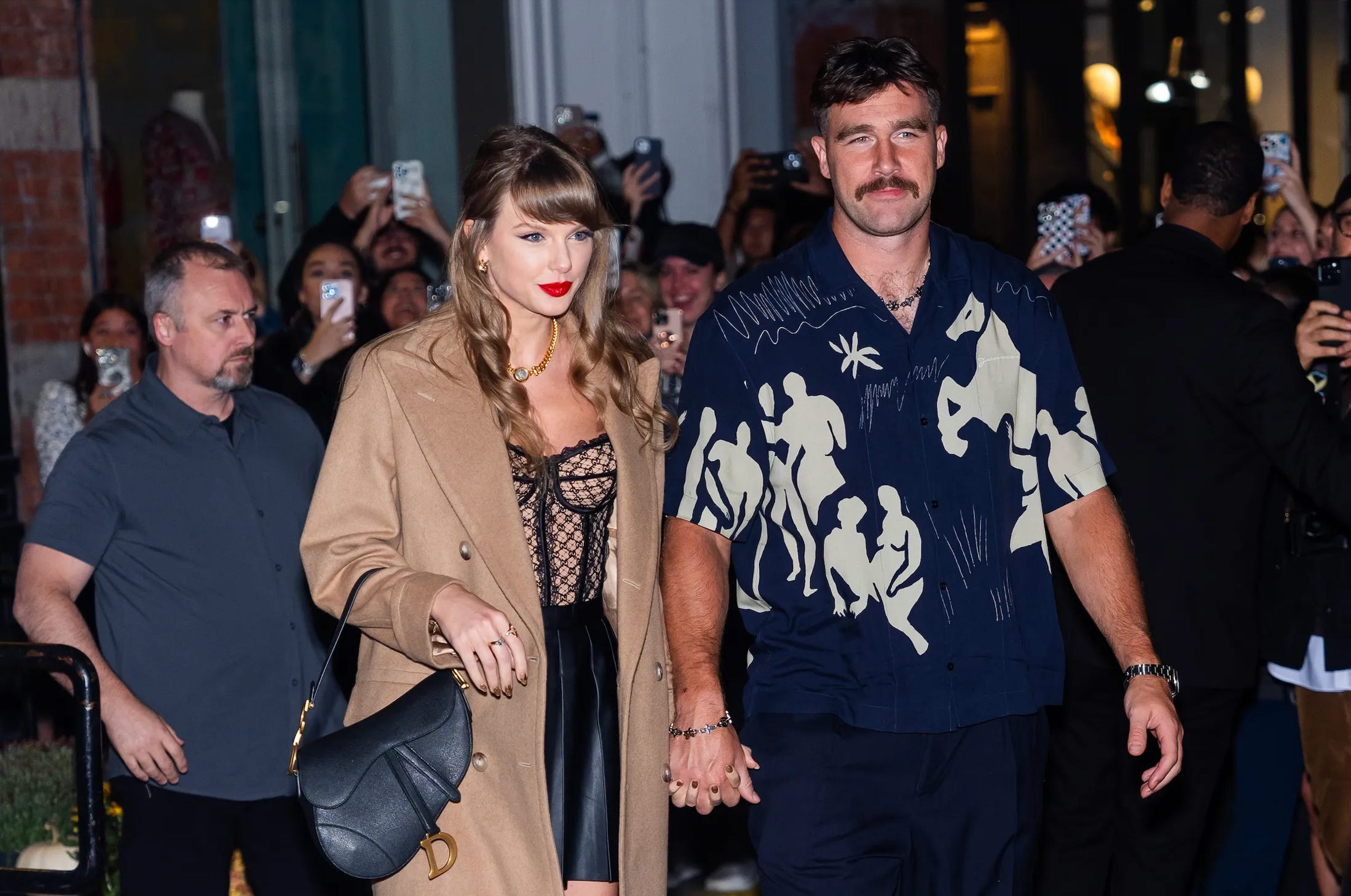
Security was so extensive that guests reportedly signed non-disclosure agreements, phones were banned, and streets surrounding the venue were closed as crews managed logistics, and controlled access. Inside, reports claim that the couple wore custom Christian Dior couture, Adam Sandler officiated, Jason Kelce, Travis’ brother, served as best man, Austin Swift, Taylor’s brother, was “man of honour,” and Stevie Nicks was among those who performed.
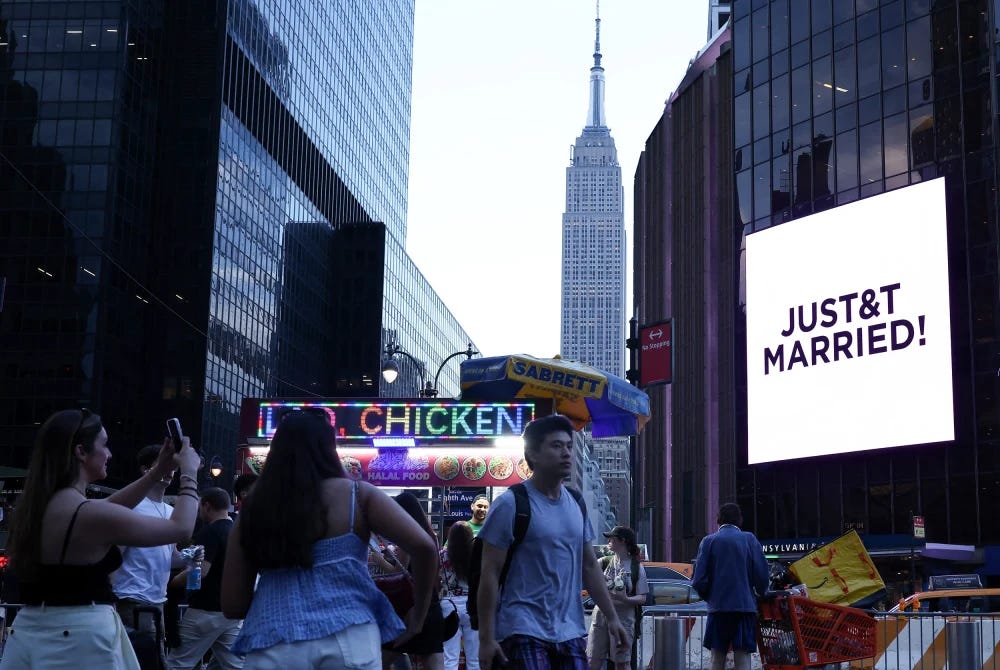
Outside the venue, were all the uninvited guests. Legions of fans gathered to catch a glimpse of who was arriving, what they were wearing, and maybe, just maybe, a glimpse of what was going on inside. One woman whose interview has been going viral, drove herself and her children from Indianapolis, Indiana to New York, to stand outside, in the sweltering heat, to celebrate.
“We drove 12 hours to be here for these celebrations. This is our royal wedding and just a moment that we didn’t want to miss… this is just a moment in history. I’m 38 years old, so I’m a year older than Taylor, and I’ve been following her since 2006 and just thought, you know what? This is a piece of history, and these kids might not appreciate it now in the 100-degree heat, but I feel they will be like, we were outside Madison Square Gardens during Taylor’s wedding and that’s something that they will be talking about for years to come.”
I found the words she used, the words that many have been using across the public sphere quite telling, from “our” to “royal” and “history.”
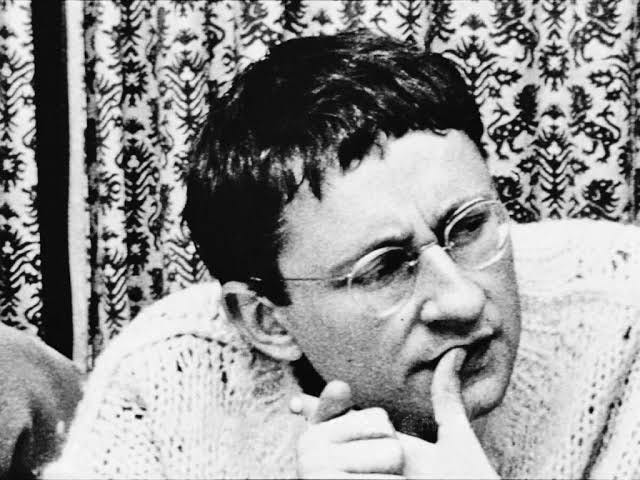
In his 1967 collection of essays The Society of the Spectacle the French Marxist theorist, philosopher, filmmaker Guy Debord explored how authentic life is increasingly being replaced by the representation of it.
He writes:
“The spectacle is not a collection of images; rather, it is a social relationship between people that is mediated by images.”
I couldn’t think of anything more apt to frame Swift’s wedding around. The scale of public attention, the hunger, excitement and disdain for what little information and images have been released is a fascinating window when we think about celebrity, influence, power and the parasocial.
Let’s zoom out for a moment and compare this wedding event to Tom Holland and Zendaya. If you’re trying to conjure a photo or any details of that celebrity wedding, you’ll fail. All you’ll find online are some AI generated wedding images of the couple that went viral which forced Holland to confirm in a June interview with Esquire that he and Zendaya had indeed tied the knot. That’s all we got, a confirmation.
Another celebrity couple, arguably one of the most high-profile couples in pop culture history, Beyonce and Jay Z also wed in secret on 4 April, 2008, with a reported number of only 40 guests. Details of that wedding has leaked over the years, but at the time the public wasn’t privy to much.
What does this tell us? Well, it’s very simple. Even in today’s TMZ, toxically paparazzied, hyper surveyed celebrity landscape, two people can in fact get married, privately, without anyone ever knowing.
The wedding of over 1,000 celebrity guests in the centre of one of the most famous cities in the world during a holiday weekend, is very much a choice. A long-term plan based on previous strategic choices in order to conjure words such as “royal” and “history” within the public conscious.
This is more an observation of Swift rather than a direct criticism of her. We have no idea of her grand plan. One can guess, selling more her IP, songs, albums, merch, and potentially crossing over into film or other capitalistic ventures that, with her influence will most likely only yield fruitful returns, and of course more influence.
We are, of course, neck deep in the culture of influence. It is the ultimate global currency.
Whatever her aspirations are in the entertainment world or beyond that, having this type of wedding is pivotal to the next phase of the Swift brand. Unlike the Ambani wedding whose strategy was the display of wealth, influence, and soft power (more details on that wedding below), where every aspect of the celebrations was documented and released through various funnels of the media, Swift’s wedding tactic was very different.
Many have criticised Swift’s wedding as a tacky and ostentatious. And while there is an argument for that here, I suspect that’s what infuriating people more is not so much the display of let them eat cake wealth, but the audacity of the public disruption without any access to the private celebration. You can’t take up our public sphere, physically and culturally, and not give us what we want, is really what’s beneath the online vitriol.
But unlike the British Monarchy, Swift isn’t indebted to the public in the same way. In fact, she uses this parasocial relationship to establish a boundary while also further fuelling her allure and influence over the public. The wedding is the ultimate way to stamp her place on culture, to settle herself in a position where she can continue to thread the narratives that best serve her goals.
Swift is not alone in this. Weddings, public weddings specifically, have always been the perfect vehicle to display and assert power and influence.
There is a reason Francis Ford Coppola chose to open The Godfather with a wedding, which by the way, is not how the novel by Mario Puzo begins. The novel, published in 1969, opens in a courtroom, which in many ways, makes more sense given the world and themes of the story. However, the 1972 film, starts with the wedding of Don Vito Corleone’s daughter Connie to Carlo Rizzi, in the family home.
Through the opening scene we understand the Corleone business, the family’s influence and Don Vito Corleone’s power. The wedding brings together politicians, relatives, famous musicians, neighbours, and those seeking favours. The viewer understands, from the celebration to the meeting in Don Vito Corleone’s office that there are layers of power and hierarchy.
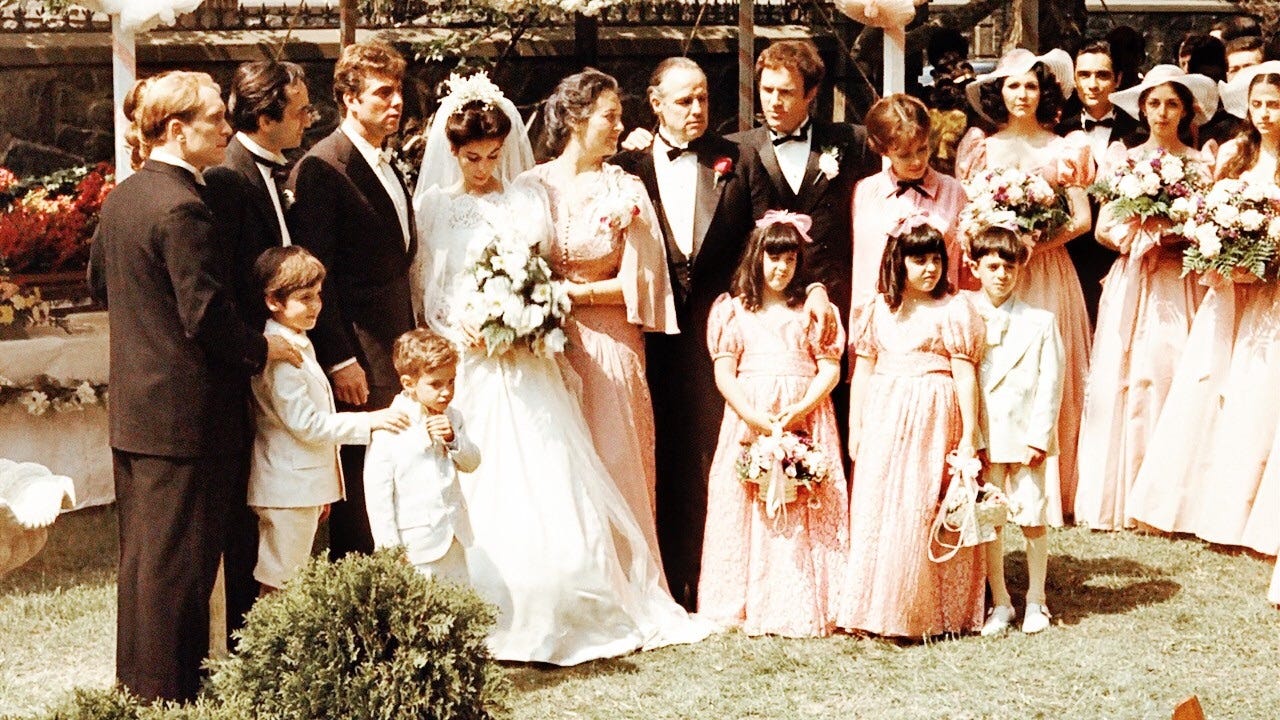
As Michael Corleone is introducing his girlfriend to his family, the wedding tells us everything we need to know about the family at the centre of the story.
A wedding in fiction can act as an accurate portrait of a whole world, and in real life a public wedding is also the means in which to affirm particular narratives. There are so many fascinating examples of this.
Across history, weddings have rarely been only about the couple joining hands, exchanging rings, opening a home. They have united kingdoms, ended wars, forged political alliances, displayed unimaginable wealth, launched fashion trends, and transformed private love into public theatre.
From the mass marriages orchestrated by Alexander the Great or Queen Victoria’s white dress to Grace Kelly’s fairytale wedding and the global media frenzy surrounding Charles and Diana, each era has staged its own version of the “wedding of the century.”
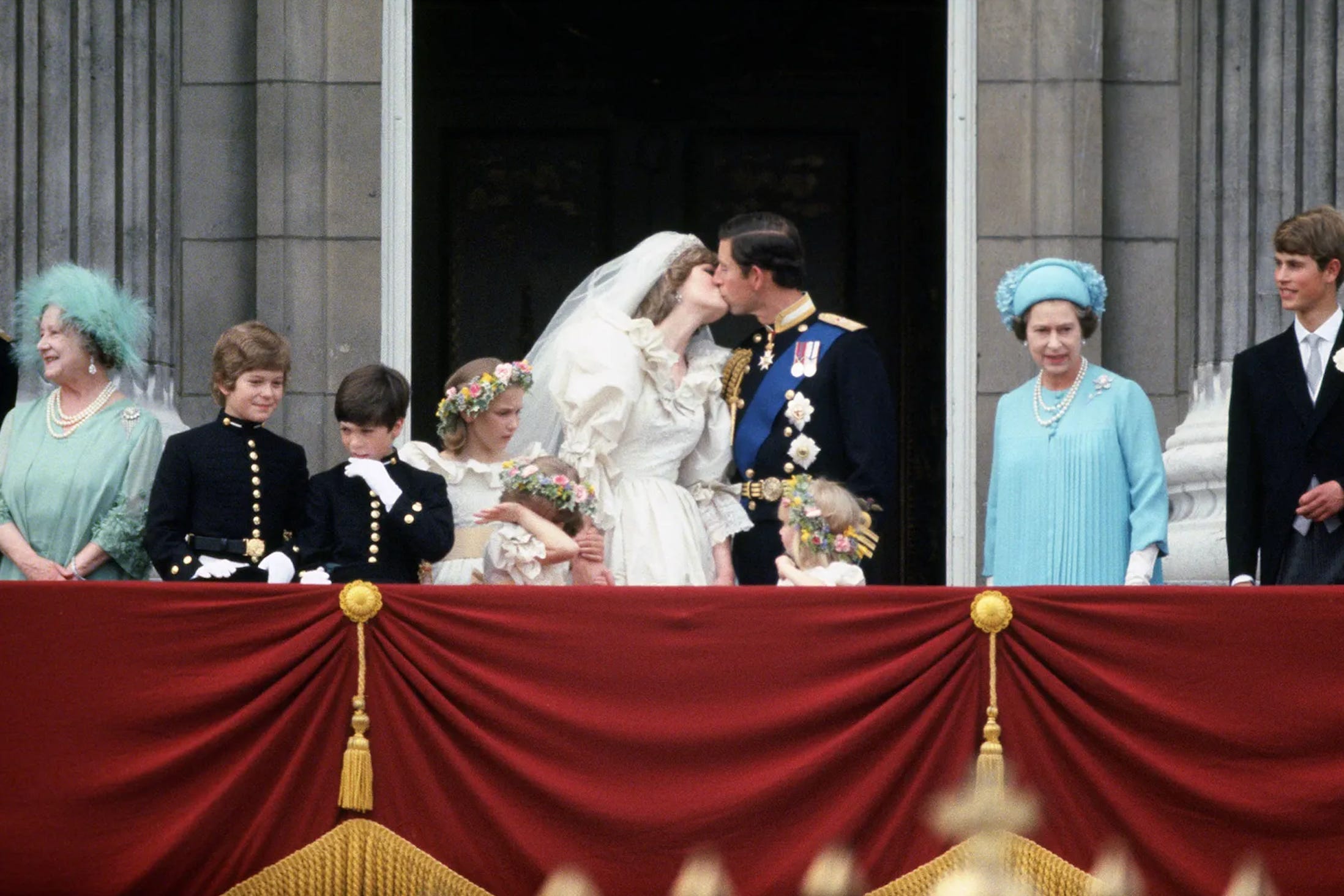
These ceremonies of display have always functioned on dual levels of course.
Declarations of love and demonstrations of power. They strengthen communities by gathering people around a shared idea while drawing clear boundaries between those at the centre of influence and those watching from afar. They can present the grandeur of a society that’s immersed in its traditions while also revealing the appetite people have for performance and sensationalism.
And even with all the cynicism and criticism that accompany massive public weddings, still, for thousands of years after the first royal marriages were recorded, millions of us will stop, listen, watch two people exchange vows.
Whether the bride and groom are royalty, movie stars, or the world’s biggest pop icons, public weddings satisfy something that goes far beyond curiosity about two people in love. Weddings are among humanity’s oldest ceremonies and yet have continued to diverge and adapt to reflect the values of the societies that produce them.
In one age, they represent dynastic power. In another, religious devotion. In ours, they can be enjoyed across television screens, magazine covers, and social media feeds, becoming shared cultural moments that extend far beyond the guest list.
Or in Swift’s case, none of our business while being firmly in our business.
To celebrate, perhaps this my gift to the Swift-Kelces, I’ve accumulated a list of history’s most famous and exuberant public weddings, a list their wedding very much belongs to.
Alexander the Great and Stateira II
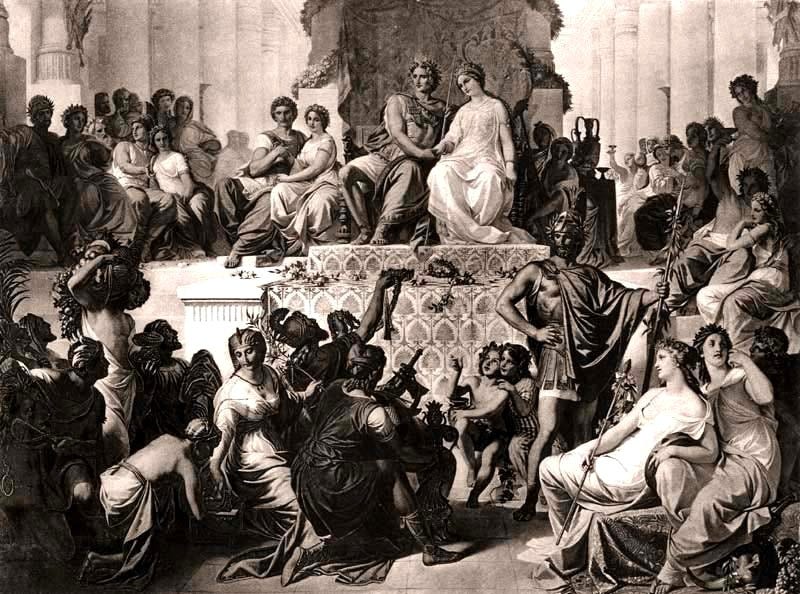
Known as the Susa weddings, Alexander the Great married Stateira II, daughter of Darius III in in 324 BCE, as part of a mass ceremony joining Macedonian officers to Persian noblewomen. Around 80 couples reportedly took part. The event and weddings were imperial strategy: Alexander used marriage to symbolically fuse Macedonian and Persian elites after his conquest of the Achaemenid Empire. It was one of history’s clearest examples of a wedding as political theatre, designed to make empire look like union.
Louis XVI and Marie Antoinette
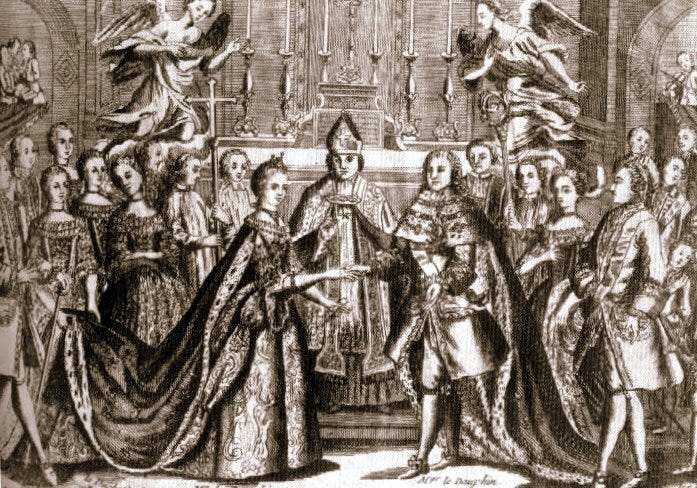
The future Louis XVI and Marie Antoinette married at Versailles on 16 May 1770, sealing a political alliance between Bourbon France and Habsburg Austria. Versailles marked the event with receptions, games, a sumptuous feast in the new Royal Opera House, and the highly ritualised going-to-bed ceremony. Public celebrations in Paris later turned tragic: a fireworks display on 30 May 1770 caused a deadly crowd crush, killing 132 people. The wedding became a symbol of a royal spectacle, political calculation, and, in hindsight, the distance between monarchy and the public.
Queen Victoria and Prince Albert
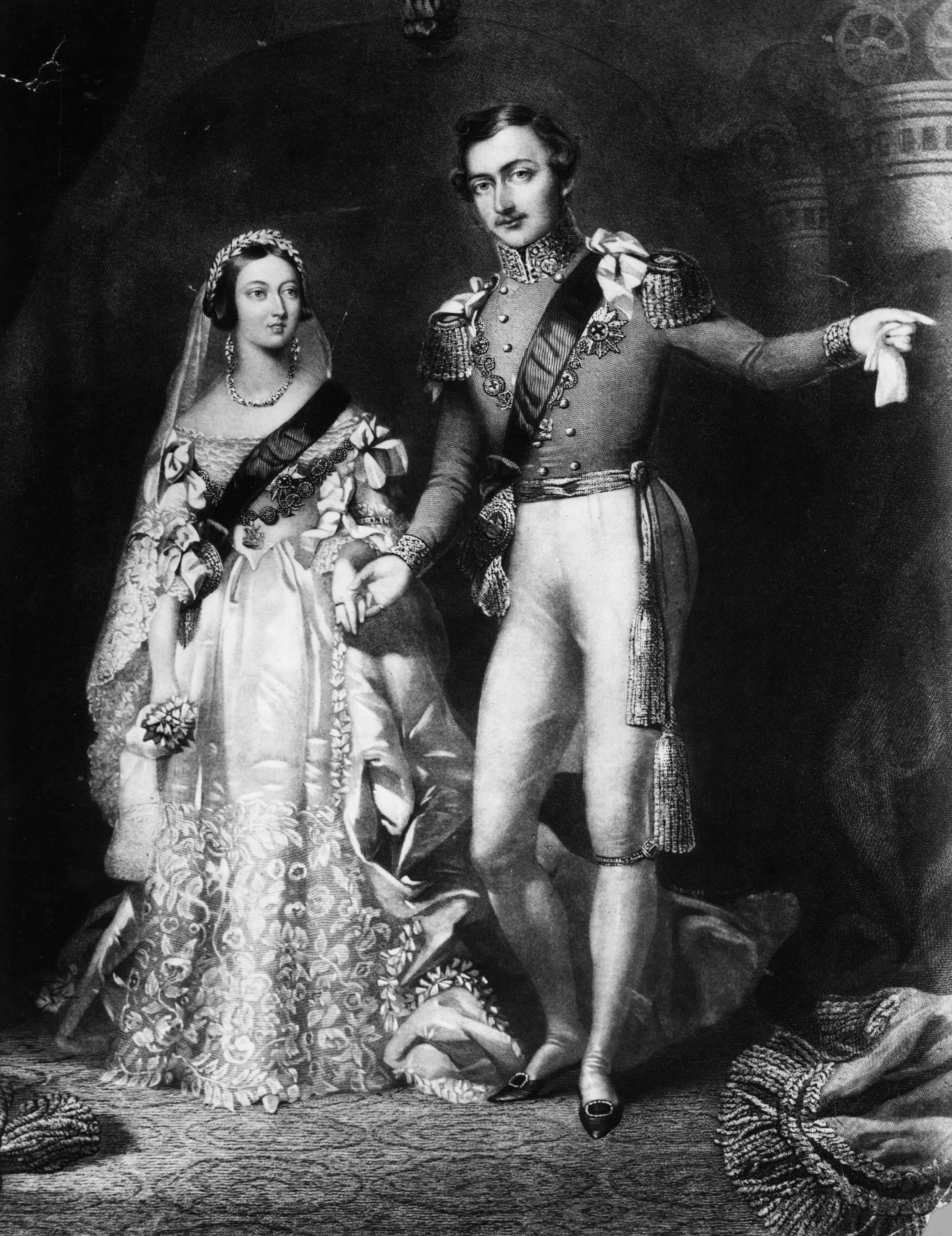
Queen Victoria married Prince Albert at St James’s Palace on 10 February 1840. Her white satin and Honiton lace gown helped transform bridal fashion, even though she was not the first royal bride to wear white. By choosing British-made silk and lace, Victoria turned her dress into a statement of national industry as well as personal taste. The wedding’s influence was enormous: it helped popularise the white wedding dress and shaped the Western ideal of the modern bridal image.
Grace Kelly and Prince Rainier III
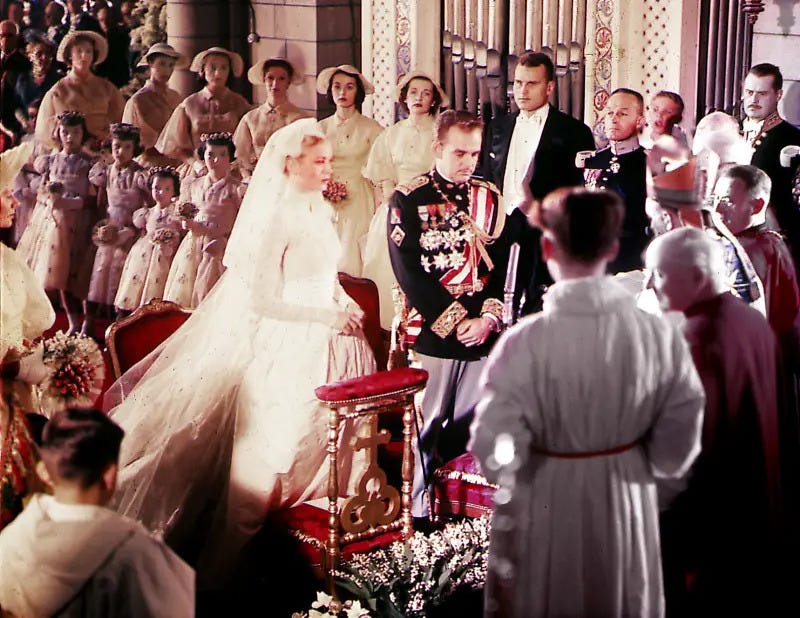
Grace Kelly and Prince Rainier III married in Monaco across two ceremonies: a civil wedding on 18 April and a religious ceremony on 19 April 1956. The Oscar-winning actress wore gowns by MGM costume designer Helen Rose, including an ivory dress made with silk, tulle, and antique lace. Around 700 guests attended the cathedral ceremony, while more than 30 million viewers watched on television. The wedding helped invent the modern media royal wedding, blending Hollywood glamour, European monarchy, fashion, and global broadcasting.
Elizabeth Taylor and Richard Burton
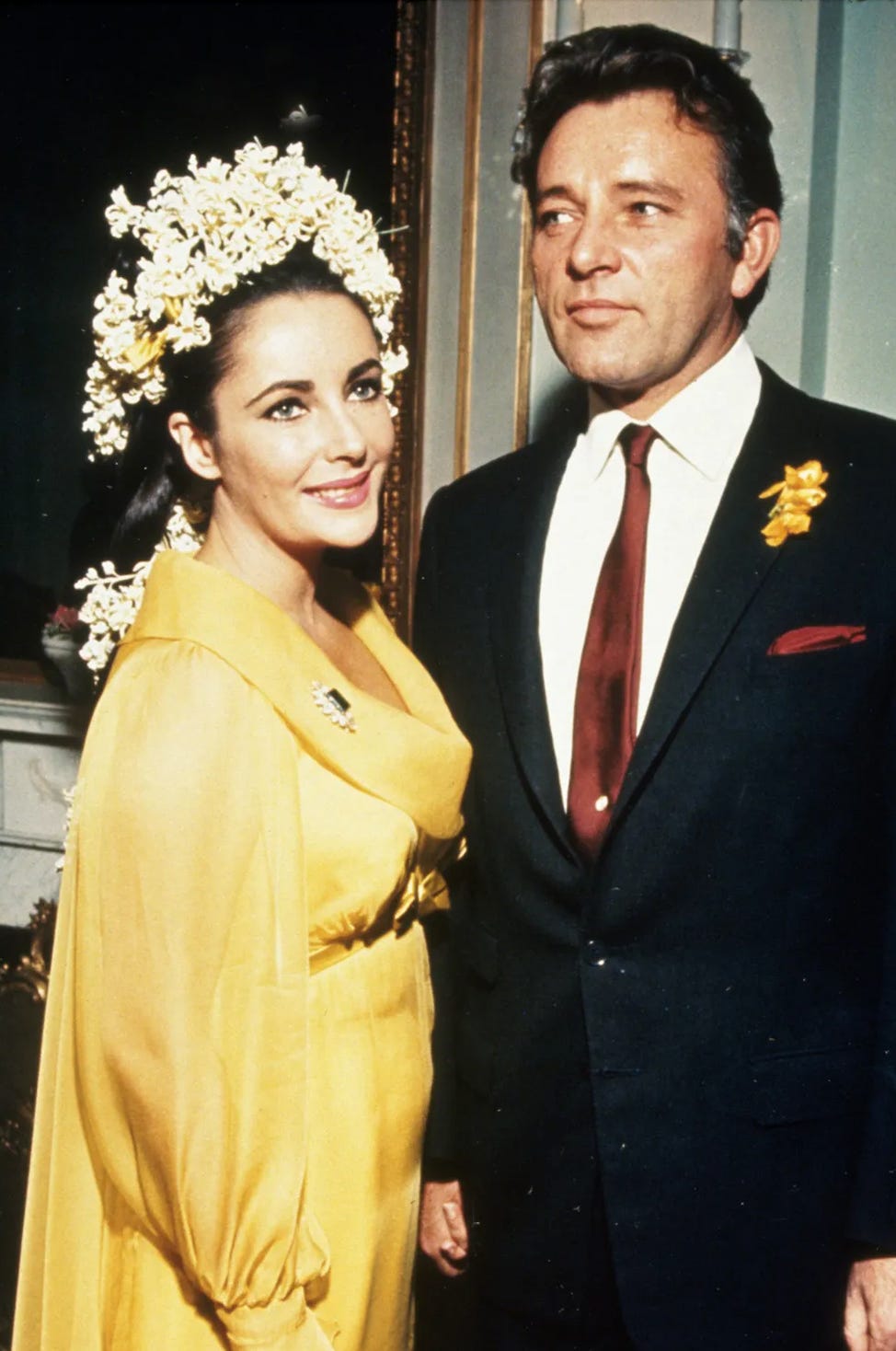
Elizabeth Taylor and Richard Burton married in a private ceremony at the Ritz-Carlton in Montreal on 15 March 1964, just days after Taylor’s divorce from Eddie Fisher was finalised. Compared with many royal weddings, the ceremony itself was relatively intimate, but the romance had already become one of the biggest celebrity scandals of the twentieth century after the pair fell in love while filming Cleopatra.
Taylor wore a yellow chiffon dress designed by Irene Sharaff with hyacinths and lilies of the valley woven through her braided hair. Burton gave Taylor a platinum Bulgari pendant instead of an engagement ring with has an 18.61-carat emerald and diamonds. Taylor wore it as a brooch during the ceremony. The wedding helped redefine celebrity culture, proving that Hollywood stars could command the same global fascination once reserved for royalty.
Charles and Diana
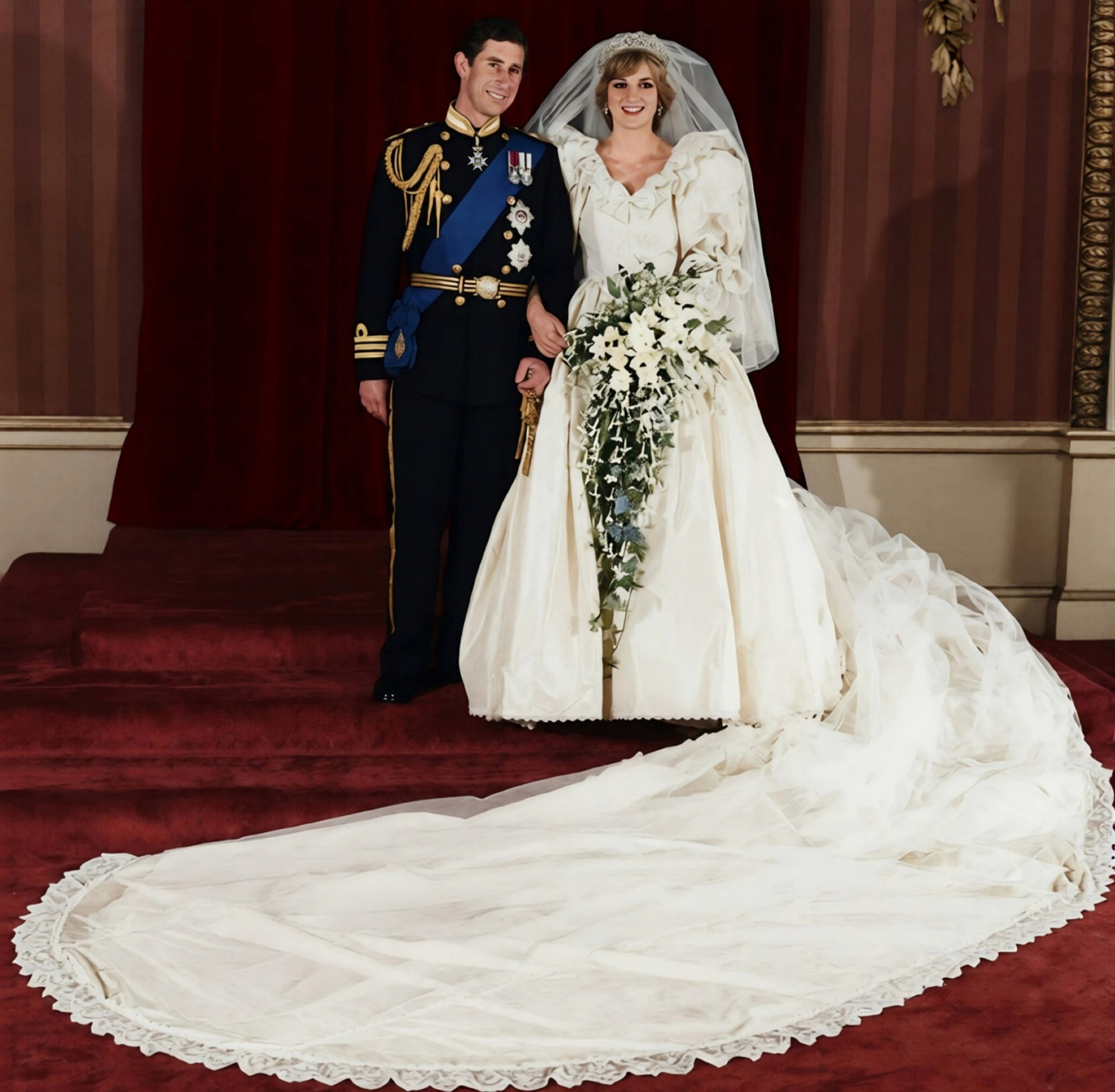
Prince Charles and Lady Diana Spencer married at St Paul’s Cathedral on 29 July 1981. The ceremony had around 3,500 guests and was watched by an estimated 750 million people worldwide. Diana’s ivory silk taffeta gown by David and Elizabeth Emanuel, with its dramatic 25-foot train, became one of the most famous wedding dresses in history. Dubbed “the wedding of the century,” it showed how television could turn a royal ceremony into a shared global fantasy, even as later events complicated that fairytale image.
Donald Trump and Melania Knauss
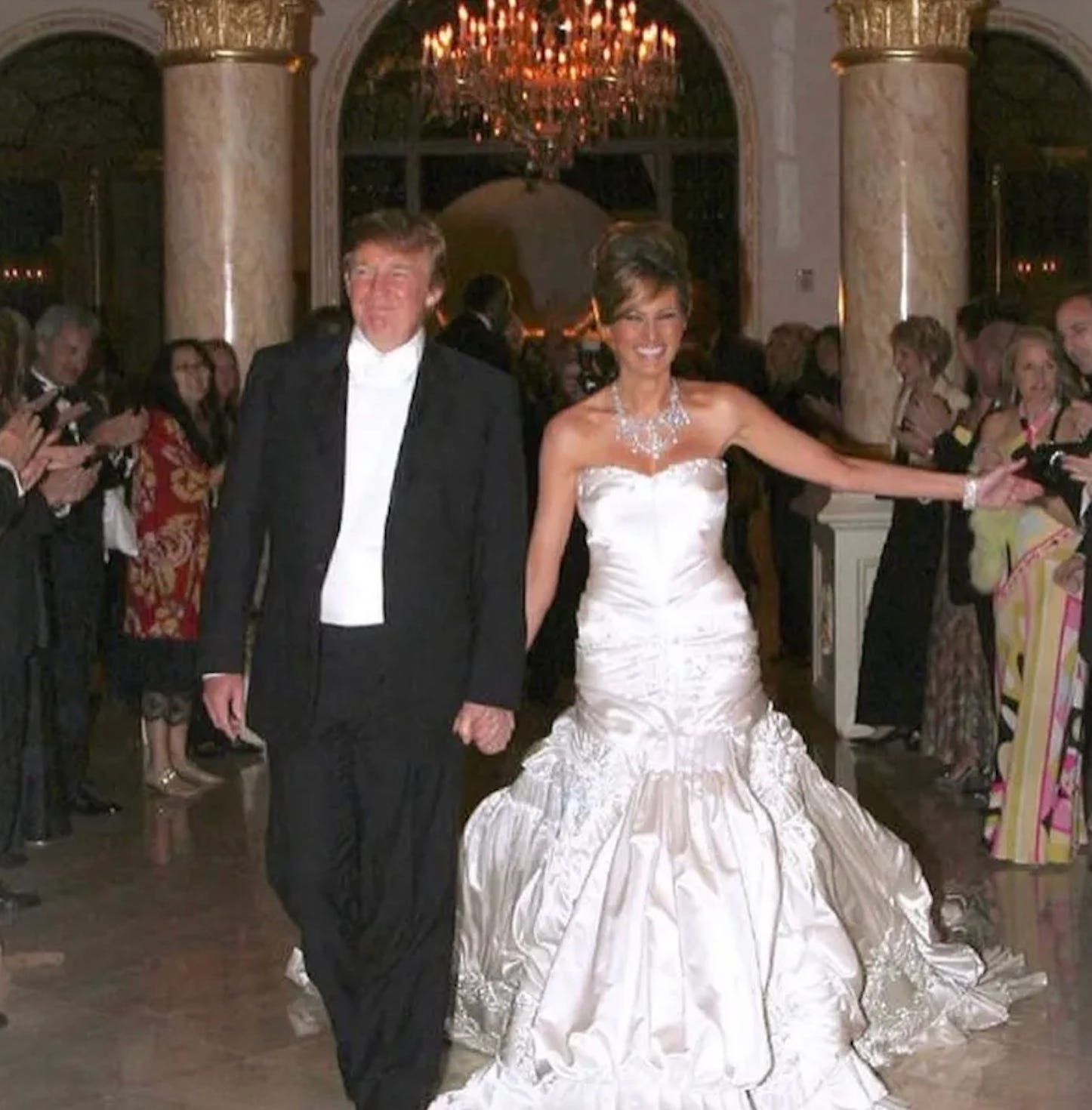
Donald Trump and Melania Knauss married on 22 January 2005 at Bethesda-by-the-Sea in Palm Beach, followed by a reception at Mar-a-Lago. The guest list reportedly included Bill and Hillary Clinton, Barbara Walters, Tony Bennett, Heidi Klum, and other political, media, and entertainment figures. Melania’s Christian Dior couture gown, chosen with help from Vogue editors, appeared on the February 2005 cover of Vogue. With its celebrity guests, private-club setting, and fashion-media packaging, the wedding captured early-2000s wealth and celebrity.
Tom Cruise and Katie Holmes
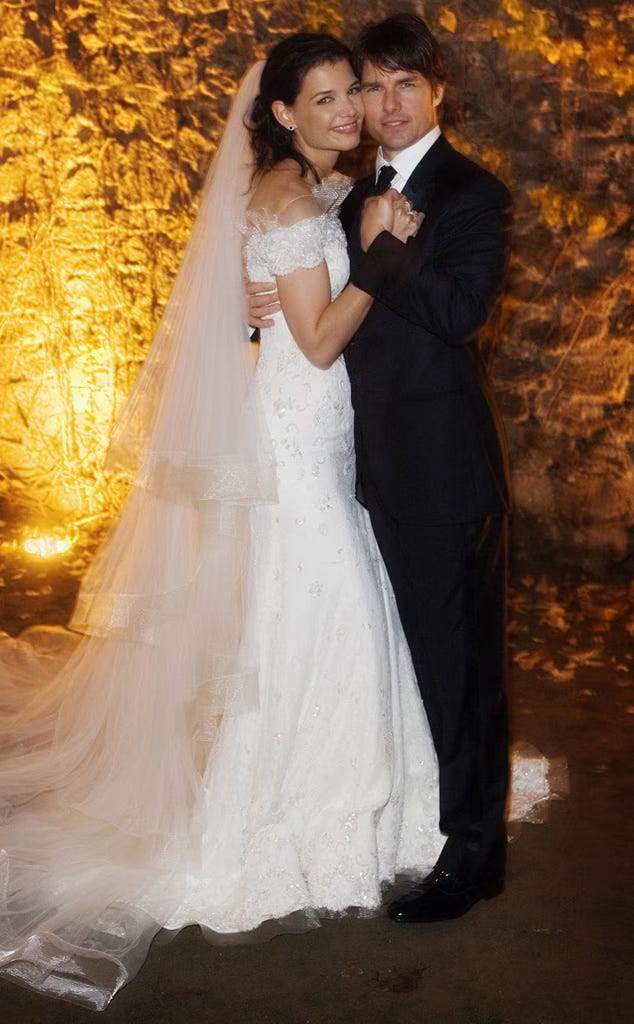
Tom Cruise and Katie Holmes married on 18 November 2006 at the 15th-century Odescalchi Castle near Bracciano, Italy. Various reports put the cost at around $2 million, with guests including Will Smith, Jennifer Lopez, John Travolta, and David Beckham. Andrea Bocelli and Mark Ronson reportedly provided music. The wedding became a peak example of mid-2000s celebrity spectacle: Hollywood glamour, castle fantasy, intense paparazzi attention, and a love story already shaped by tabloid fascination. Guinness World Records later listed it as the most expensive wedding in a castle.
Prince William and Princess Catherine
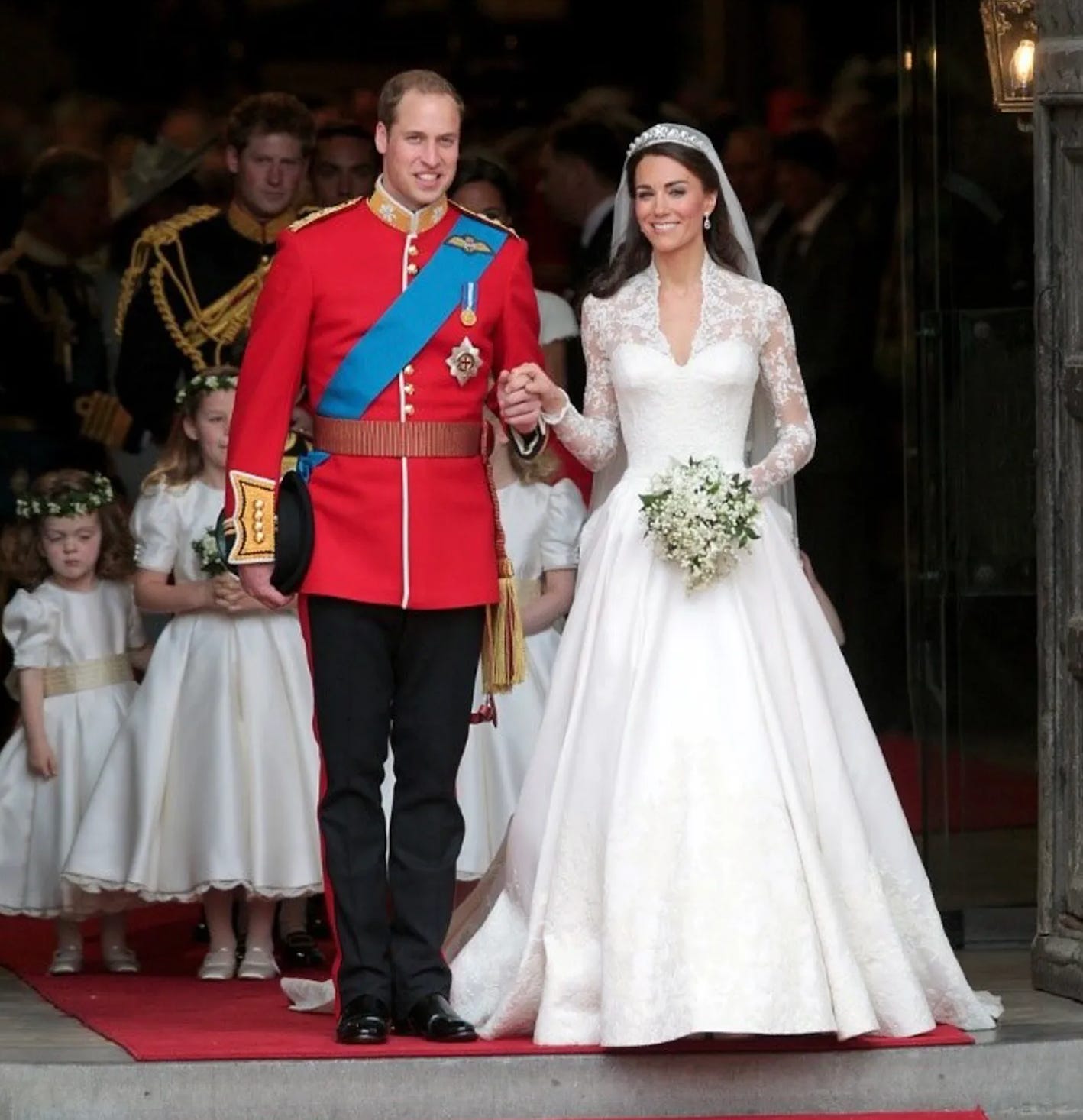
Prince William and Catherine Middleton were married at Westminster Abbey on 29 April 2011. The ceremony was watched by an estimated billion people, while crowds gathered in London and street parties were held across the UK. Catherine’s Sarah Burton for Alexander McQueen dress became instantly influential, combining royal tradition with modern British fashion. The wedding mattered because it updated the royal wedding for the internet age: television, livestreams, social media commentary, public celebration, and global branding all converged around one ceremony.
Prince Harry and Meghan Markle
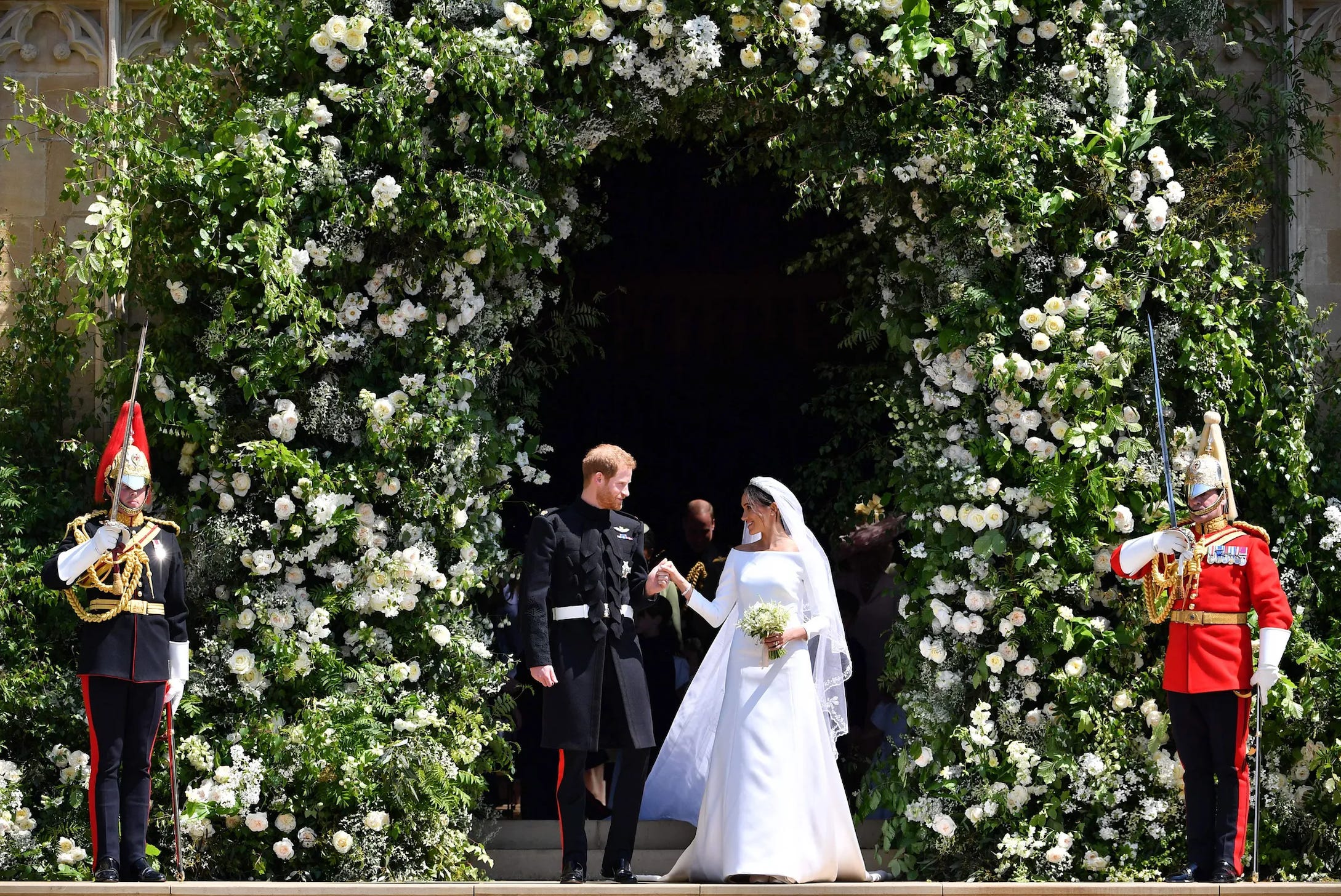
Prince Harry and Meghan Markle married at St George’s Chapel, Windsor Castle, on 19 May 2018 in a ceremony watched by an estimated 1.9 billion people worldwide. Around 600 guests attended, including Oprah Winfrey, George and Amal Clooney, David and Victoria Beckham, Serena Williams, and Elton John, who performed at the lunchtime reception. Meghan’s minimalist Givenchy gown, designed by Clare Waight Keller, and her 16-foot veil embroidered with the floral emblems of the 53 Commonwealth nations reflected a more modern vision of royalty. The wedding was widely celebrated as a symbol of a changing monarchy, while also prompting global conversations about race, representation, tradition, and the future of the British royal family.
Anant Ambani and Radhika Merchant
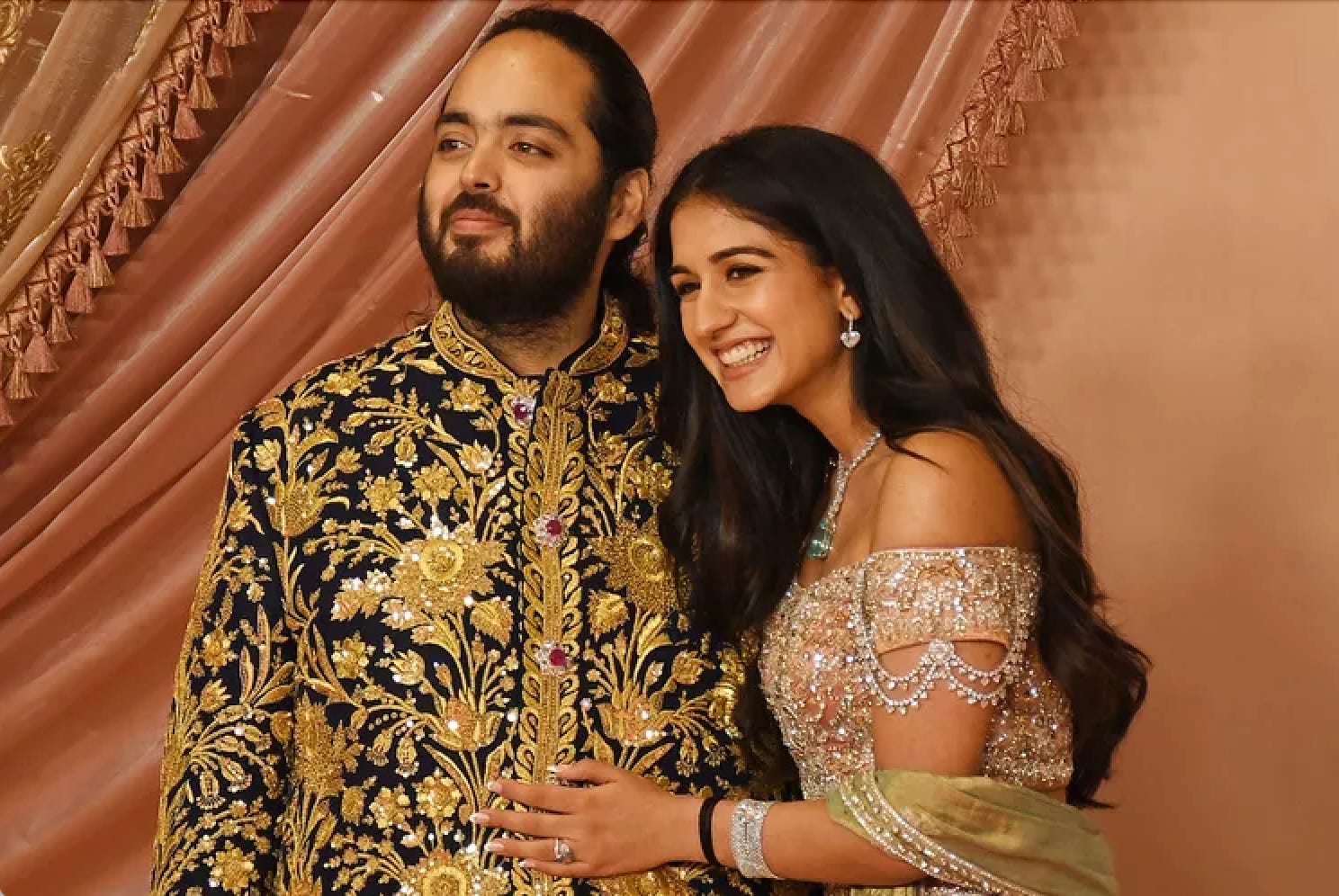
Anant Ambani and Radhika Merchant’s wedding took place in Mumbai from 12 to 14 July 2024, after months of pre-wedding events in Jamnagar and on a Mediterranean cruise. Reported performers across the celebrations included Rihanna, Justin Bieber, Katy Perry, and the Backstreet Boys, while guests included global business leaders, politicians, Bollywood stars, and international celebrities. The wedding became a theatre of wealth and influence, often described as India’s answer to a royal wedding. It also sparked debate about inequality, extravagance, and billionaire soft power.
Jeff Bezos and Lauren Sánchez
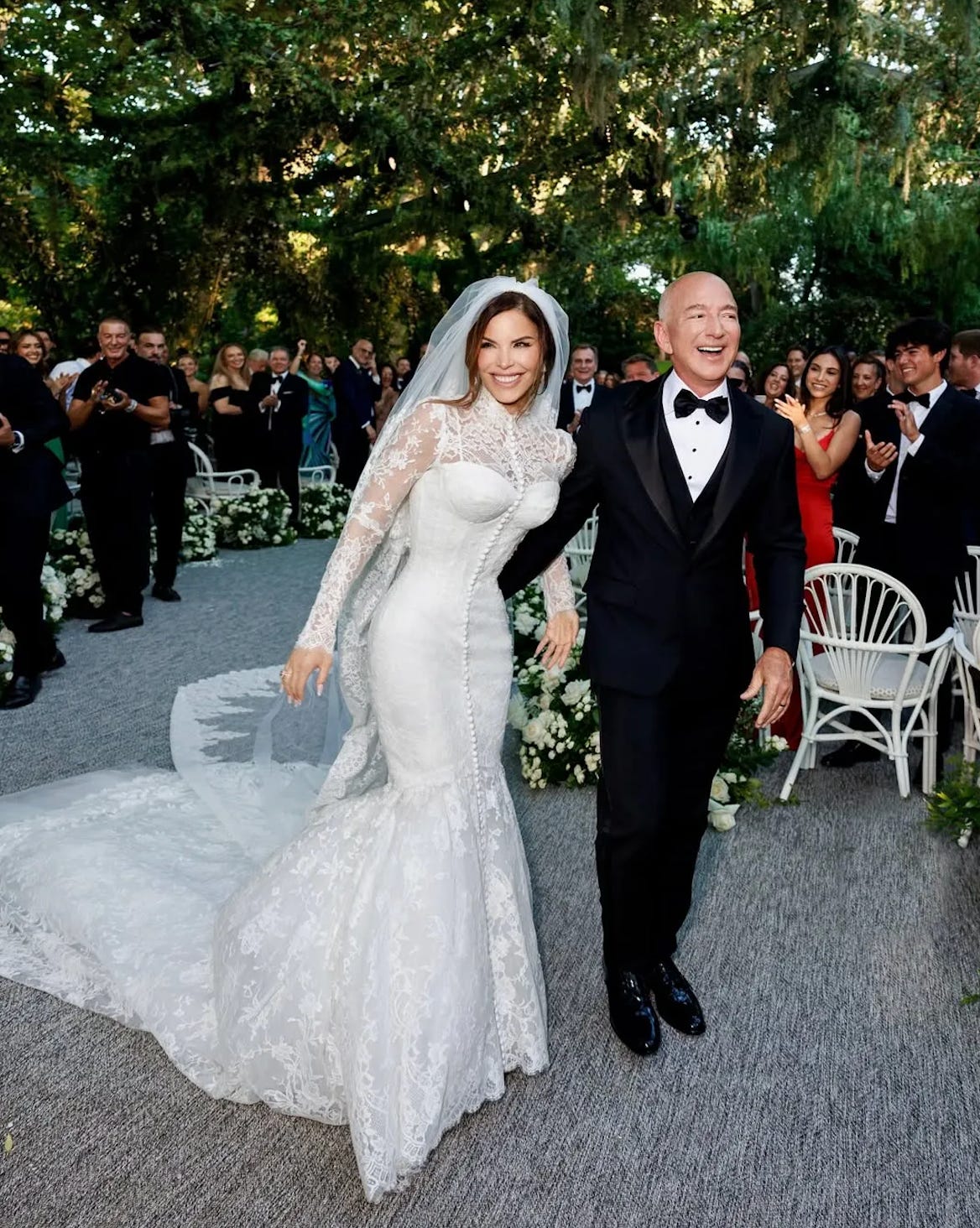
Jeff Bezos and Lauren Sánchez married in Venice on 27 June 2025, during a multi-day celebration involving historic locations, water-taxi arrivals, and a reported guest list of around 200. Vogue covered Sánchez’s bridal fashion, including Dolce & Gabbana, while guests included figures from entertainment, fashion, business, and politics. The wedding became controversial before it even happened, with Venetian activists and Greenpeace protesting what they saw as the city being used as a private stage for billionaire luxury. It was less a wedding than a debate about wealth, public space, and spectacle.