


If you’re expecting another glowing review of Lena Dunham’s Too Much, you’re not going to get it here.
As someone who has obsessively studied the rom-com genre in novels, films, and TV shows, I’m perplexed by the mostly positive reviews of the show. But then again, Dunham is a cultural figure that critics love and most of the public just don’t get.
I never got Girls. I could barely finish the first season.
But I was interested in Too Much from its star Megan Stalter (who I’ve been an avid follower of since her early days as a social media comedian) to the pleasantly familiar rom-com premise.
I was also intrigued by the possibility of understanding Dunham as a writer and director through a genre I adore, especially if she was attempting to reimagine it.
However, after a thorough binge watch, I can conclude that Too Much is not a rom-com. Poorly disguised as one, yes, but that’s not its worse crime. Too Much is a tox-com, a term I’ve come up with after noticing the rise of an odd genre that’s been full actualised in Dunham’s attempt at a rom-com.
A tox-com is a disguised rom-com that leans into emotional dysfunction, centering chaotic relationships, poor communication, and questionable resolutions under the guise of self-discovery, authenticity, and romance. It mimics the structure of a rom-com (meet-cute, conflict, reconciliation) but can replace charm and chemistry with narcissism, unresolved trauma, and characters who probably shouldn’t end up together.
Like Mary Shelly’s Frankenstein, Dunham’s Too Much stitches together too many genres in search of meaning, only to create something quite horrific and monstrous.
If you’re someone who consumes anything within the sphere of or adjacent to a rom-com this should be for you. Only because Too Much tricks the viewer into thinking this is familiar territory with the promise of something different. One will spend most of the show looking for those recognisable patterns, eager to see how creatively they’ve been expressed or reconstructed. An exercise that will only disappointment.
Too Much is also suitable for those who enjoy a hate watch (a sophisticated genre I’ll have you know). This is where the show truly delivers.
For most people I’ve spoken to the show is great if you need something in the background while you scroll through your phone.
I don’t believe though, that Dunham is a writer who wants to create mindless entertainment whether it’s of quality or not. She’s a good a writer and director and there are moments in Too Much where her talent is undeniable. There is something there… but I’m not sure if its diluted or overpowered by Dunham’s own voice.
Dunham prides herself and has been framed through the media as someone who has a point of view, a writer with something important, powerful, and true to say.
In an interview with Quartz when asked the question “what’s your big idea that other people aren’t thinking about or wouldn’t agree with?” Dunham responded:
“That every woman has a story, and that all those stories need to be heard… This involves shedding internalized judgment from men in power and the creative world that tells us our female stories are parlor dramas at best, and unspeakable at worst.”
This is the Dunham the media frames and embraces – a champion of unfiltered female experience. A vision that was lost here through a lens that glorified and romanticised the worst kind of submission to toxic patterns and behaviour and poor storytelling.
Too Much Dialogue Not Enough Story

The semi-autobiographic Netflix series centres around Stalter’s character Jess, a producer who moves from New York to London after a nasty, toxic break up. There, on her first night in the city she meets Felix, played by Will Sharpe, an indie musician, ex addict, with a complicated family.
Their connection is instant and we’re taken through their romance from their insecurities, fights, sexual chemistry, vulnerable moments, obstacles, and a lot of nonsensical stuff too.
Jess is also obsessed with her ex’s new fiancé Wendy Jones (Emily Ratajkowski) and starts creating videos, like diary entries, on a private Instagram account, expressing her rage fuelled thoughts as she works through her evolving breakdown.
Beyond this premise, which on paper has me hooked, there is nothing of substance in the actual story.
There’s a lot of talking. No, rambling. I’d like us to stop this overused style of dialogue where characters fill the air with redundant ranting through deadpan delivery that has no emotional punch.
This seeps into or reflects of the messaging and themes of the narrative. Nothing feels resolved or even at the least satisfyingly explored just unnecessarily stretched.
There is no overarching message, no profound realisations, no story beyond scattered plot points and some rom-com tropes. And even if the point was to be pointless, which can be a powerful in of itself, the story is so undercooked it falls into flat mess of a thing.
London is positioned to the audience as a place and culture that Jess has always been fascinated or obsessed with.
To be fair to Dunham, she doesn’t romanticise London. In fact, Jess is faced with the stark realities of the real city and not the picturesque fantasy that’s been painted through period dramas such as Sense and Sensibility and rom-coms like Bridget Jones Diary, both of which are referenced on the show.
This is not Emily in Paris whose frustratingly cliché depiction of Paris is overly filtered and sickeningly sweet to make up for the lack of story and interesting characters.
Too Much has a good seed of a story and interesting enough characters but none of it has any real charm. And here’s a newsflash, you need some charm if you’re creating a rom-com, whether it’s traditional, modern, experimental or avant-garde.
Too Much Character, Too Little Development
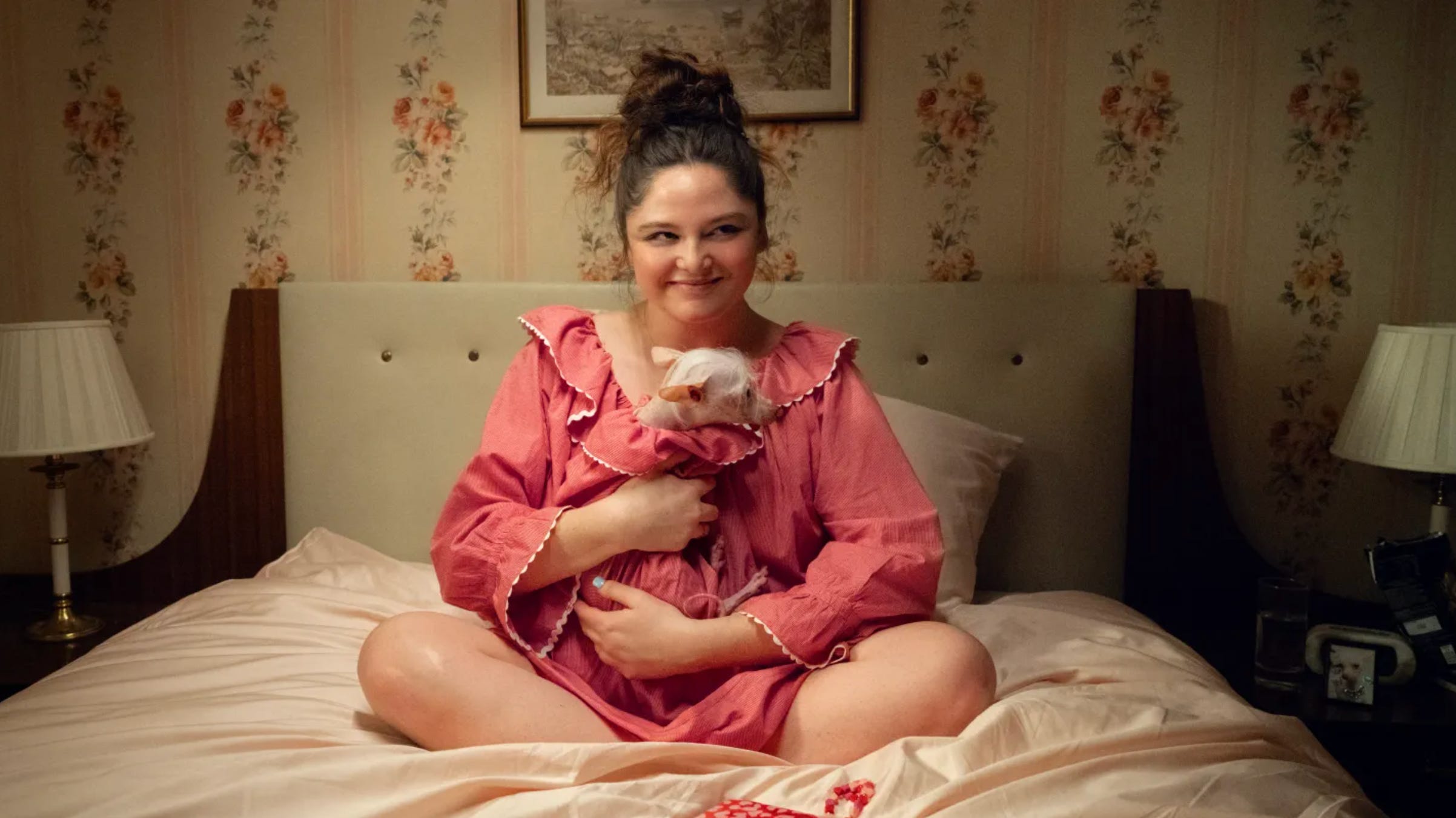
Jess is insufferable. Truly.
There is nothing wrong with that for a romantic lead, if you’re insufferable with redeeming qualities, if you’re insufferable with a character arc that sees you coming into your own, if you’re insufferable but likable or even better, insufferable but loveable.
It seems Jess has no friends in New York, aside from her sister Nora (played by Dunham) and no friends in London aside from her colleagues who don’t seem to respect her. She quickly, annoyingly, toxically attaches herself to Felix, who has problems of his own. None of this is addressed at all.
Jess is barely likeable. Her relationship with her dog Astrid, a hairless Chinese Crested pup, is sweet, but outside of that, it’s incredibly hard to understand, like, or champion her.
And this is where, throughout all facets of the show, I am confused.
Does Dunham want her heroine to be completely unlikeable? Or does she think Jess is infused with enough endearing traits that she can get away with being excruciatingly awful?
Maybe Dunham has no idea that Jess is so unbearable, so unrelatable that she makes Carrie Bradshaw at her worst (it’s a toss-up between Season 3 and Season 6) an absolute delight?
Jess has neighbours, a group of girls she often overhears discussing their love lives in the balcony – they fight over a guy and make up by the end of the show. I believed that at some point Jess would befriend them, not only because even as sketches of characters in the periphery they were fleshed out, but because their story seemed more interesting, their existence and voices on the show more logical and interesting than the characters from Jess’s immediate circle, most of whom were caricatures.
Through Jess, Dunham attempted to create a layered character riddled with oddities, awkwardness, and insecurities. Jess is at a point in her life where she’s unravelling and attempting to gather herself up again. This is a compelling place for a character to find themselves in. But it feels lacking here. So many topics and elements of Jess and her world were only brushed over, never delved into.
Everything from sexual abuse to painful family dynamics, can come across as sensationalist when not addressed to satisfaction within the narrative.
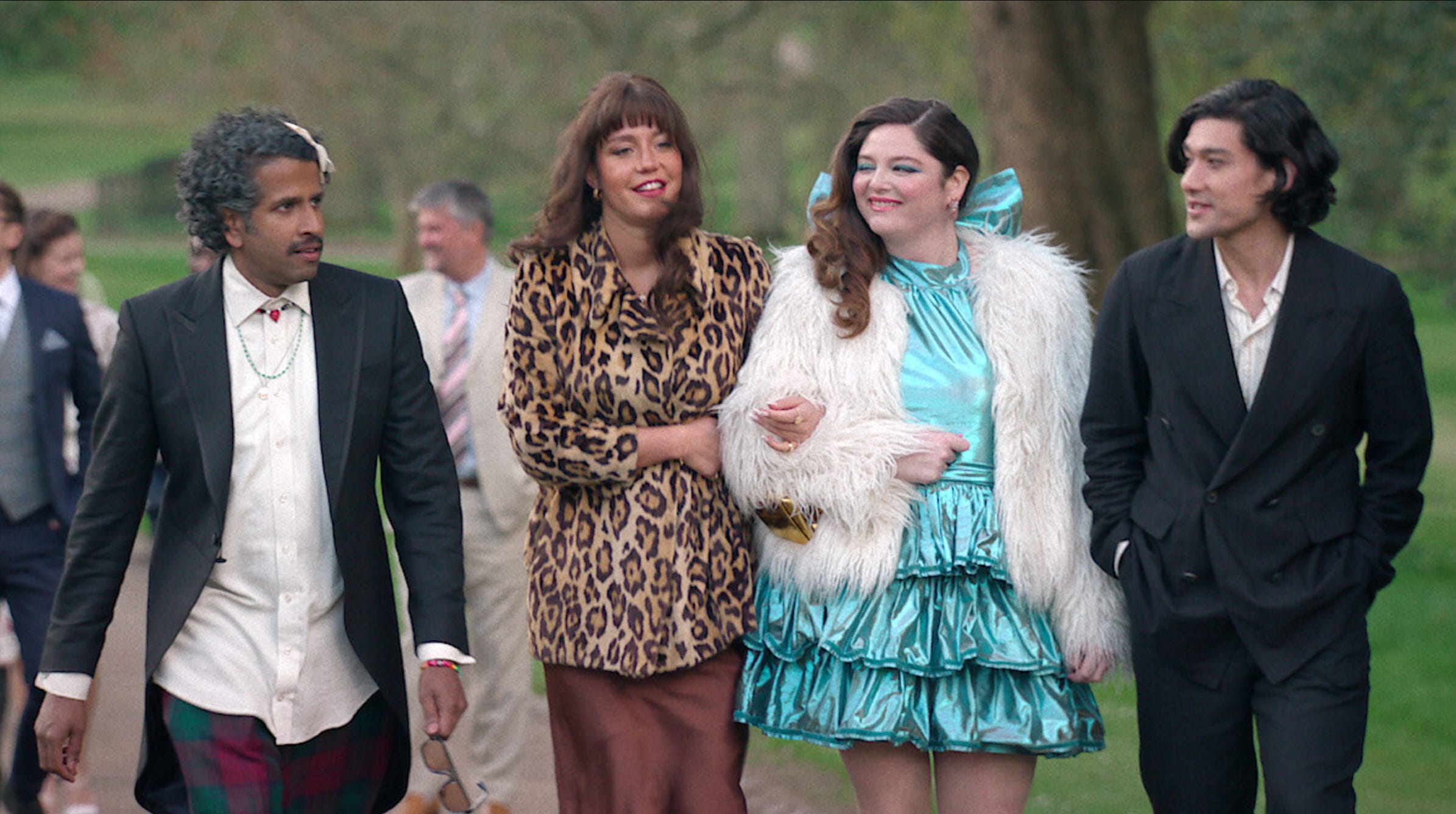
It didn’t matter if you were American, English, French, if you were Jess’ 13-year-old nephew, her twenty something year old colleague, or the arrogant director Jess was working with. Across accents, ages, and cultures, most of the characters sounded the same.
Aside from their accents and vocal mannerisms, everyone spoke with the same refined, self-aware intelligence, filtered through a single voice – Dunham’s’. While there were many scenes where the dialogue was improvised giving actors some control on how the characters come across, this doesn’t negate the lack of nuance in the bones of the characters that Dunham created.
And this is the thing.
Dunham is a talented writer and storyteller, but she only knows one type of character, or a set of characters, from a very particular background. They come from a privileged world that she understands intimately, a world she comes from and goes to from New York to London.
Is this bad? No. Is this entertaining? Debatable.
Write what you know, right? But Dunham takes what she knows, over stylises it and makes it so self-referential that the echo chamber is not only out of reach and unrelatable but annoying and confusing.
Too Much is Not a Rom-Com it a Tox-Com
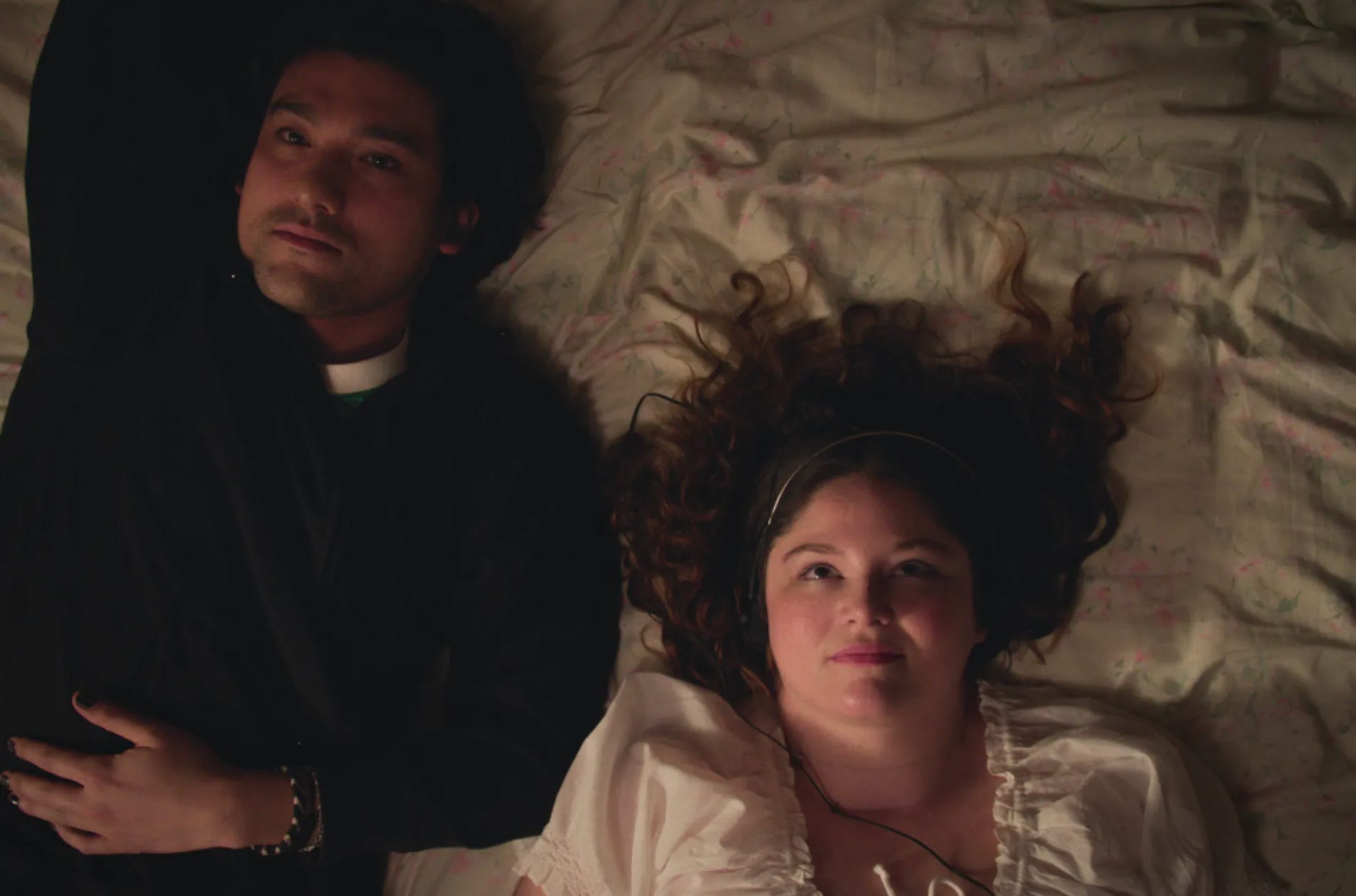
In a Vanity Fair feature about Too Much, Dunham said:
“What would it look like to try to situate something in that rom-com space and then be honest about all of the stuff that’s trailing behind them?”
If Dunham had achieved what she stated there, this would be a very different review.
A familiar premise, but a weird structure, unresolved elements, annoying unrelatable characters and a rushed ending, does not a rom-com make.
Dunham’s attempt to deconstruct the rom-com and fuse it with other genres – drama, melodrama, satire, slapstick, surreal or absurdist comedy – didn’t work. The tones of these genres converge awkwardly through her direction and writing.
There are moments that feel interesting, separate vignettes, likes islands I wouldn’t have minded staying in for a little longer, like when Jess Imagines herself in a period drama or her interactions with her neighbours. Then there are scenes that drag, filled with nothingness where I question why I’m bothering to be watch – when Jess is stuck in the bathroom, hallucinating about her ex-boyfriend, the whole interaction between her and the director.
In her excitement to meld her influences, from Fleabag to Ally McBeal, Four Weddings and a Funeral and a bunch of British rom-coms, Dunham forgot all about cohesion.
One of the most frustrating scenes to watch was when Jess has a sit down with Wendy. This is the moment after Jess’ video rants directed at Wendy have gone viral (a plot hole I don’t have time to get into) and she is face to face with the woman she has poured her rage into, the woman she has made the villain of her story and also ultimately healed through.
Here was an opportunity to express powerful emotional resolution in a scene between two very different people bonding over a traumatic experience. What we got was a rushed anti climatic moment full of exposition and forced humour. It felt like a wonky first draft of what could have been very powerful and moving.
One of the worst offenses in the show however was both the ending and how Dunham took us there.
After Felix relapses and cheats on Jess she leaves him. While Dunham gives us emotional scope and context to understand Felix’s deep-rooted issues, it doesn’t change the fact that as an audience, an audience who is watching something in the “rom-com” space, we need to see, whether through a traditional character arc or something subtle or interesting, a sense of his remorse through action – I’m talking about the grand gesture, of course.
Like an absolute push over though, after her chat with Wendy, Jess realises that the screwed-up guy who just cheated on her isn’t as screwed up as her ex. And so she rushes to him, and proclaims her love while he’s in the middle of an environment protest with his best friend.
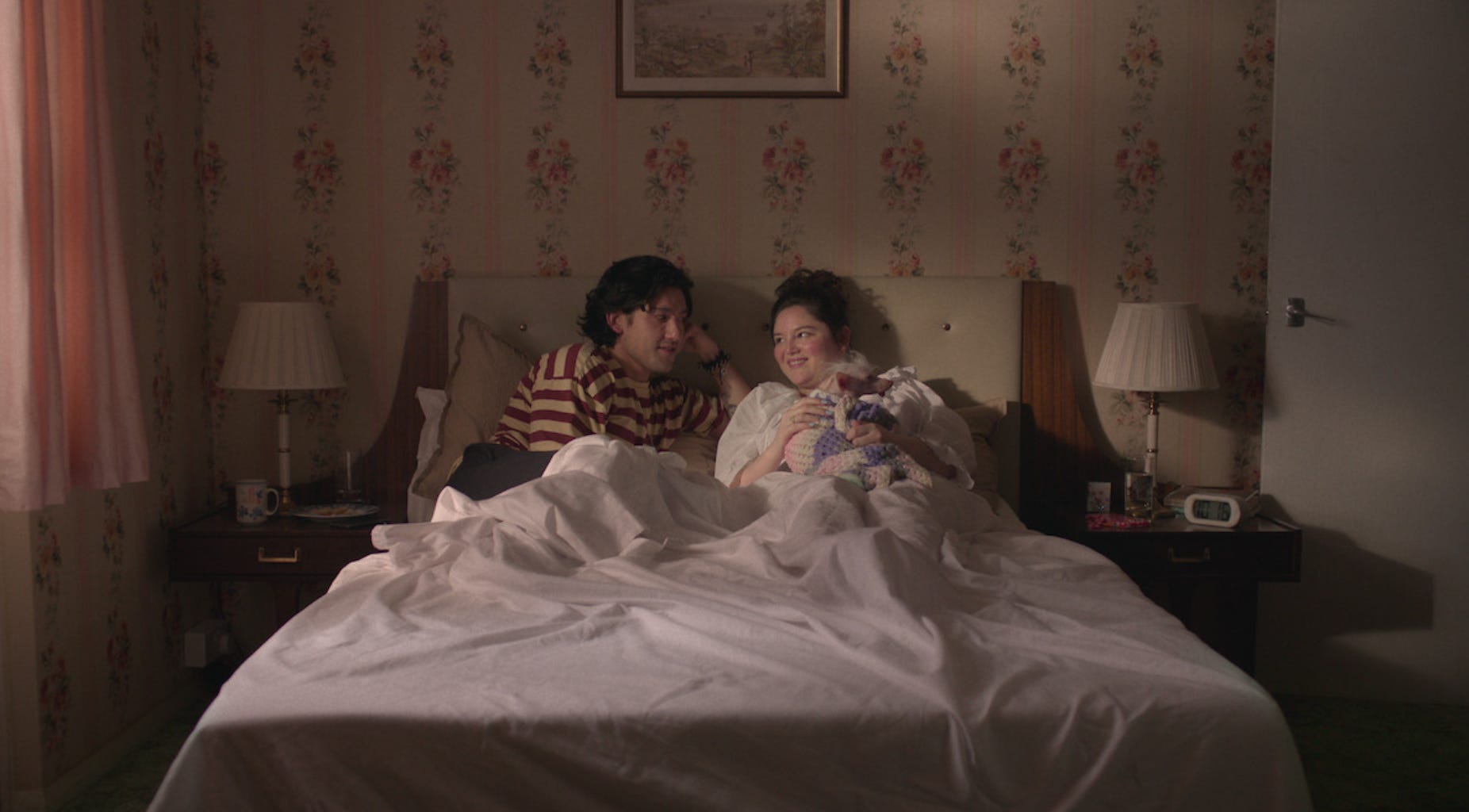
The scene:
Felix: I’m happy to see you.
Jess: I feel like when I’m with you, I’m like, safe. And also it can be scary ‘case I think you the most surprising, amazing, like, brilliant, like, freaky creative alien I’ve ever met. And that can make me feel scared. The idea of losing you is really scary. And so I think I just sped up the process of breaking up. So I think we broke up because of that, though you shouldn’t have fucked that woman.
She goes on to say:
Jess: My time here in London is over, but I wanted you to know before I left… what this time meant to me. I adore you. And I… I don’t wanna live in fear and regret, you know? I don’t wanna live with that, I wanna feel light. And I want to let you know that you’re wonderful. Not despite all of your baggage but because of it. You, like, healed me.
Felix: Are you sure?
They are then arrested but not before Felix responds by proposing to Jess who says yes – to a man with no job, not much talent, no prospects, a man who cheated and lied. A man who doesn’t promise to be or try to be better, a man who is supposed to be the one proving his worth through the grand gesture not the other way around.
Baffling that Dunham presents this as a satisfying resolution. It’s insulting to the integrity of your character, and the intelligence of your audience.
Insanely, Dunham chooses to echo this exact principle with Jess’ sister Nora.
Throughout the show Nora has been dealing with a form of depression, refusing to shower or get out of bed because her husband and father of her child has left her for a couple, both named Cody. He comes back to her, wearing his wedding ring, and tells her “I wanna come home. I want you.”
“But I’m very, very angry at you” Nora cries and then says something about “what if I get so mad I put a screwdriver through your chest” he says that sounds nice and they hug and are back together. There is no real remorse, no expression or evidence of any real change.
What is absolutely insane to me is that Dunham frames these scenes of damaged women doing toxic things as romantic, aspirational, wholesome. It feels irresponsible from a messaging perspective and it’s simply bad, unentertaining storytelling.
Aside from a few moments of amusement, I didn’t get Dunham or world she created. I promise you I tried.
Too Much will only makes sense to someone with a higher tolerance for insufferable characters and tolerable writing that has potential. I’d have much rather been bored with an average rom-com and not left perplexed and frustrated to have watched a story with the worst people, acting in the worst ways packaged as romance, comedy and love.
Thanks for writing so eloquently, I tried to like this show but really failed because Jess is so unlikely and unlikeable. 🤷🏻♀️
I thought I was alone in thinking Jess was insufferable, the plot boring and the dialogue laughably unrealistic - like Dawson’s Creek where teenagers are ridiculously verbose. The messaging is very weird and I’m yet to meet a man who finds irritating and messy women cute unless they have something else going for them, such as charm or 10/10 hotness. I don’t buy it’s two lost souls finding each other. I actually liked Girls. I think the point was they were all meant to be so self-centred and awful that they ruined all their relationships and eventually their friendship group - an anti-SATC. I notice Dunham had co-writers for that. She needs them.