


Before David Hockney, I had studied mostly traditional or popular artistic movements. While important and inspirational, they also felt distant. Hockney’s work felt alive, curious, playful, accessible, aspirational, and deeply human all at once.
At the news of his death, it felt only natural to me, and to many of his fans, to look back at the incredibly body of work that he has left behind for us to enjoy.
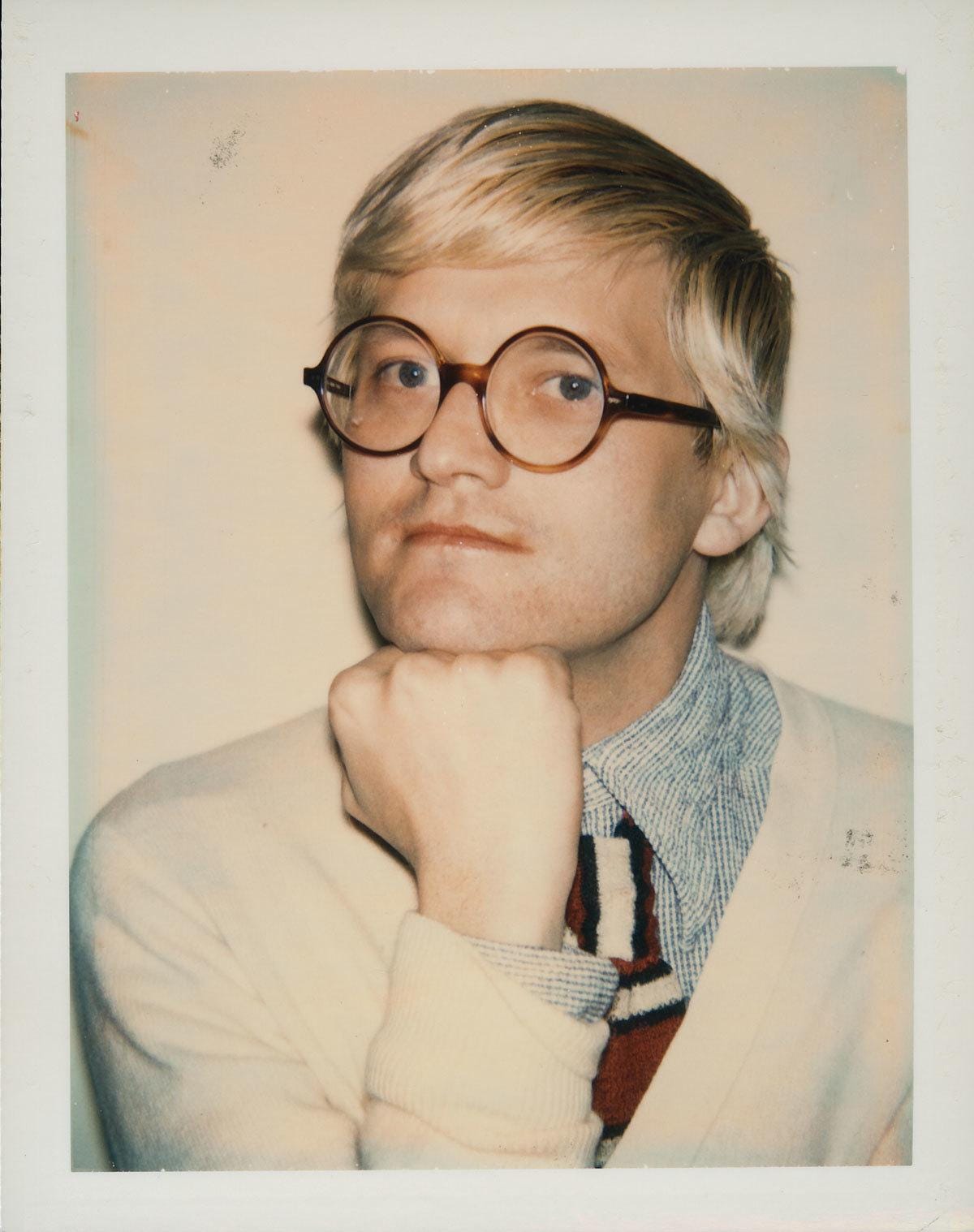
However, the more I looked and read about his paintings and life, revisiting some of my favourite eras and works, I realised that it’s impossible to narrow down Hockney’s legacy, influence, talent, work ethic, and his profound contributions to art.
Born in Bradford in 1937, Hockney emerged as one of Britain’s most influential artists and became a leading figure of the Pop Art movement. But it feels unfair ways to confined him to one movement.
Over seven decades, Hockney never stopped experimenting, working, creating incredible art. He was much bigger than a single movement, his work, perspective and sense of style, became part of mainstream culture without ever becoming loosing that rare quality of feeling interesting, unique, present, but also beyond.
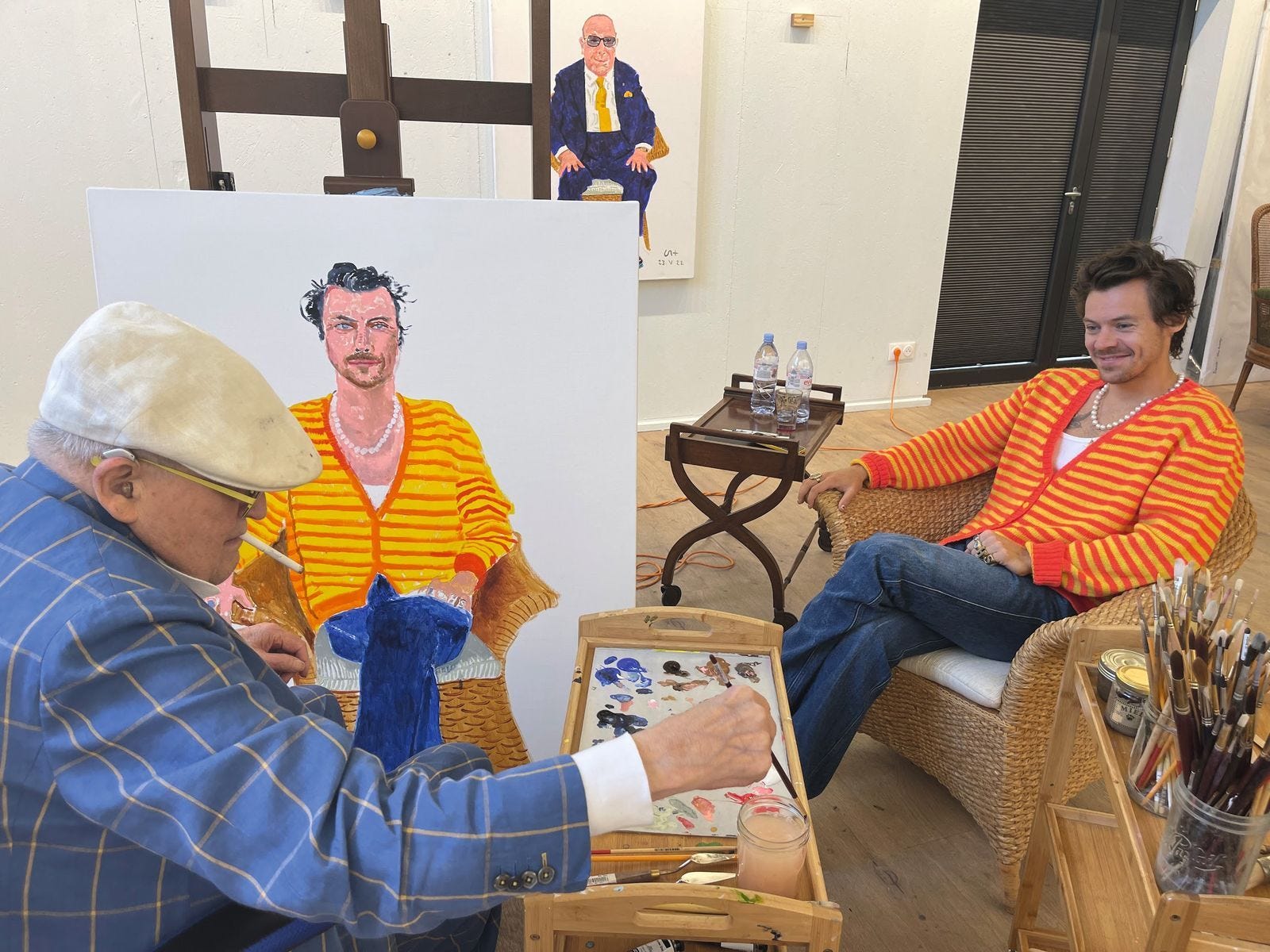
A great sign of Hockney’s brilliance was his effortless ability to make the ordinary feel extraordinary. Whether it be the splash of water in a swimming pool, a portrait and the relationships they reveal, paintings of his dog, Hockney revealed things we take for granted, giving them new life and meaning.
Here are some of my favourite works by an artists who gave so much and yet (selfishly for me) not enough to satisfy my appetite.
A Bigger Splash (1967)
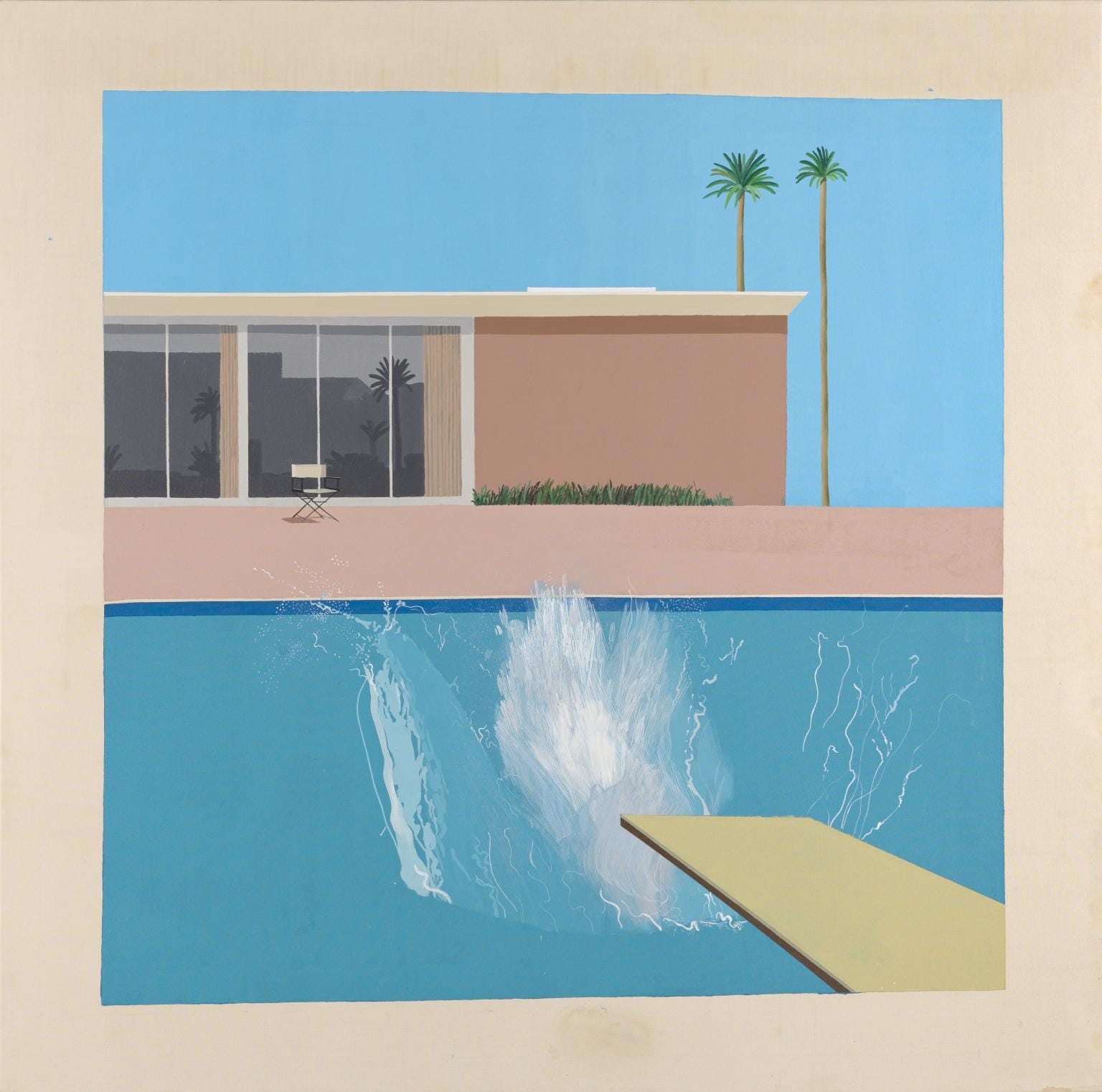
A painting of a Californian swimming pool moments after someone has dived beneath the surface. The person is gone, only the splash remains.
Hockney explained: “When you photograph a splash, you’re freezing a moment and it becomes something else. I realise that a splash could never be seen this way in real life, it happens too quickly. And I was amused by this, so I painted it in a very, very slow way.”
Mr and Mrs Clark and Percy (1970-71)
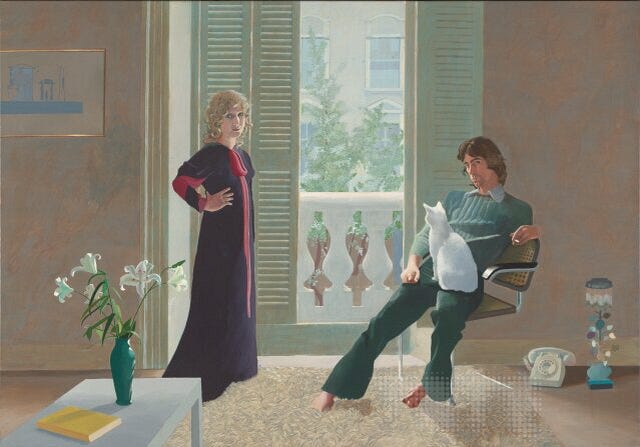
One of the great portraits of the twentieth century. A painting about marriage, identity, style, intimacy, and the distance that can exist between two people standing in the same room. It feels like a whole novel!
Hockney explained that while working on the painting his aim was to “achieve … the presence of two people in this room. All the technical problems were caused because my main aim was to paint the relationship of these two people.”
My Parents (1977)
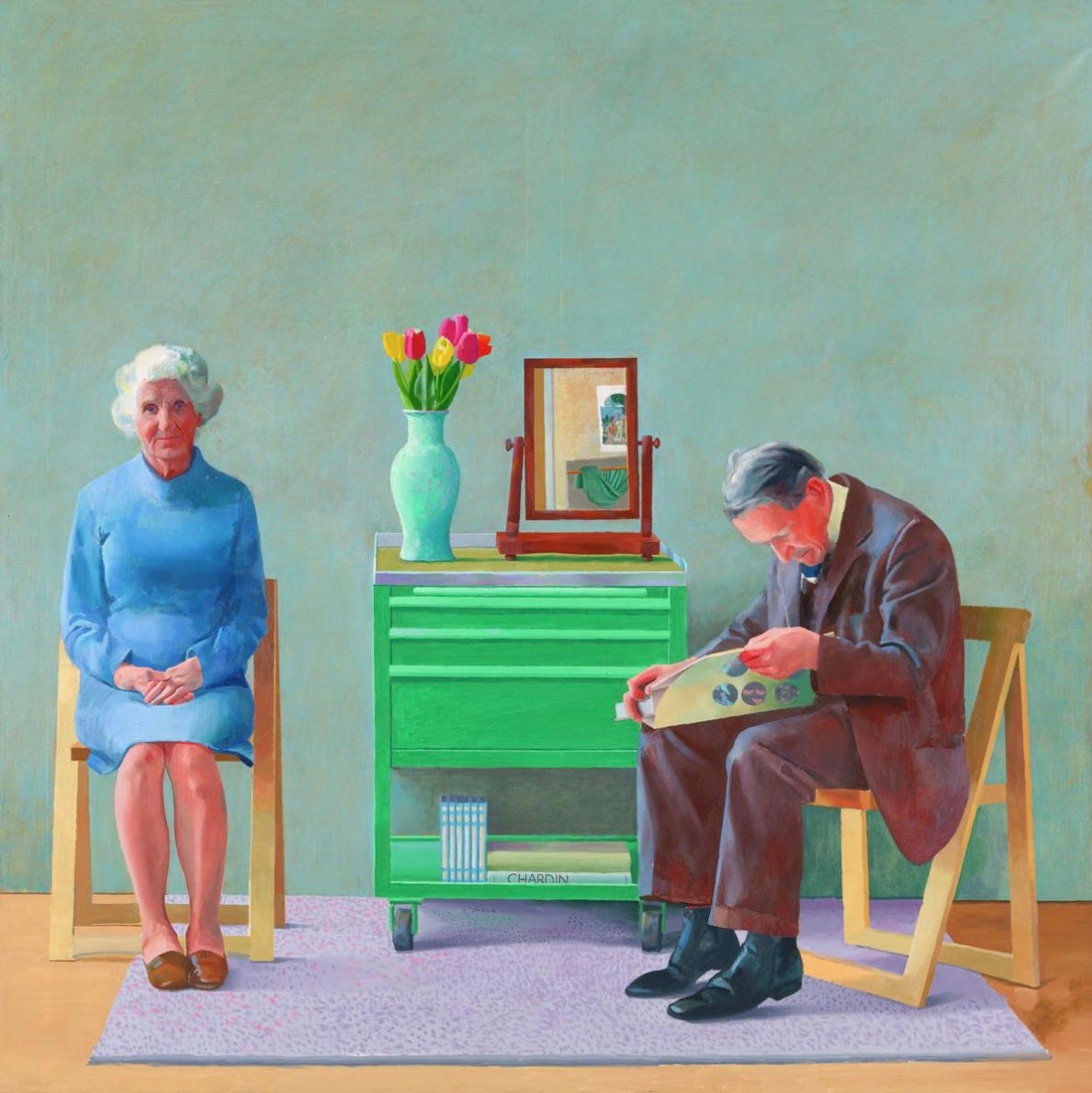
One of my favourites. Few paintings by Hockney feel as personal as My Parents. Hockney spent months working on the portrait, capturing his father reading and his mother sitting quietly beside him. The painting reveals an extraordinary amount about who they were.
Bigger Trees Near Warter (2007)
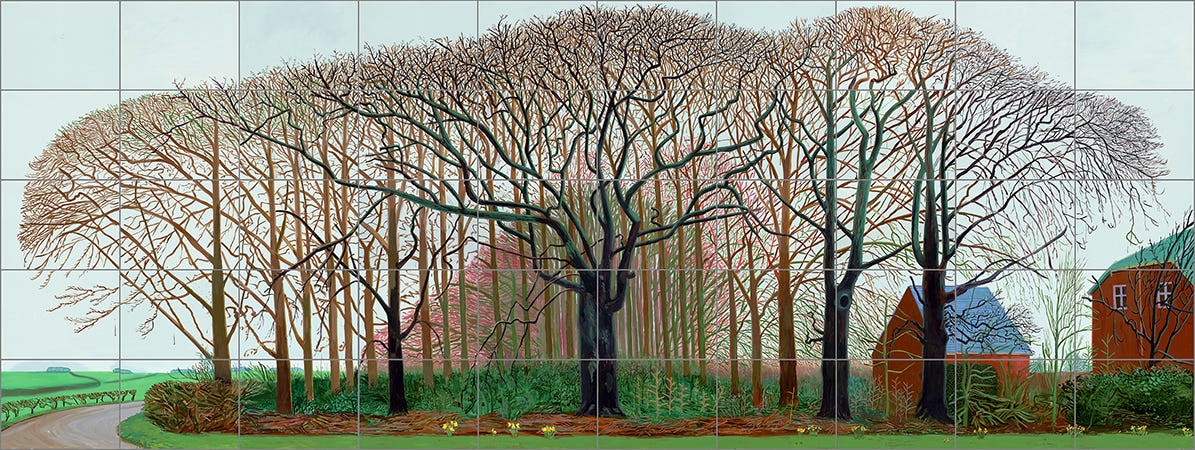
Hockney largest painting, this monumental landscape is made up of fifty separate canvases. The work transforms a stretch of countryside into something vast, immersive, and almost cinematic.
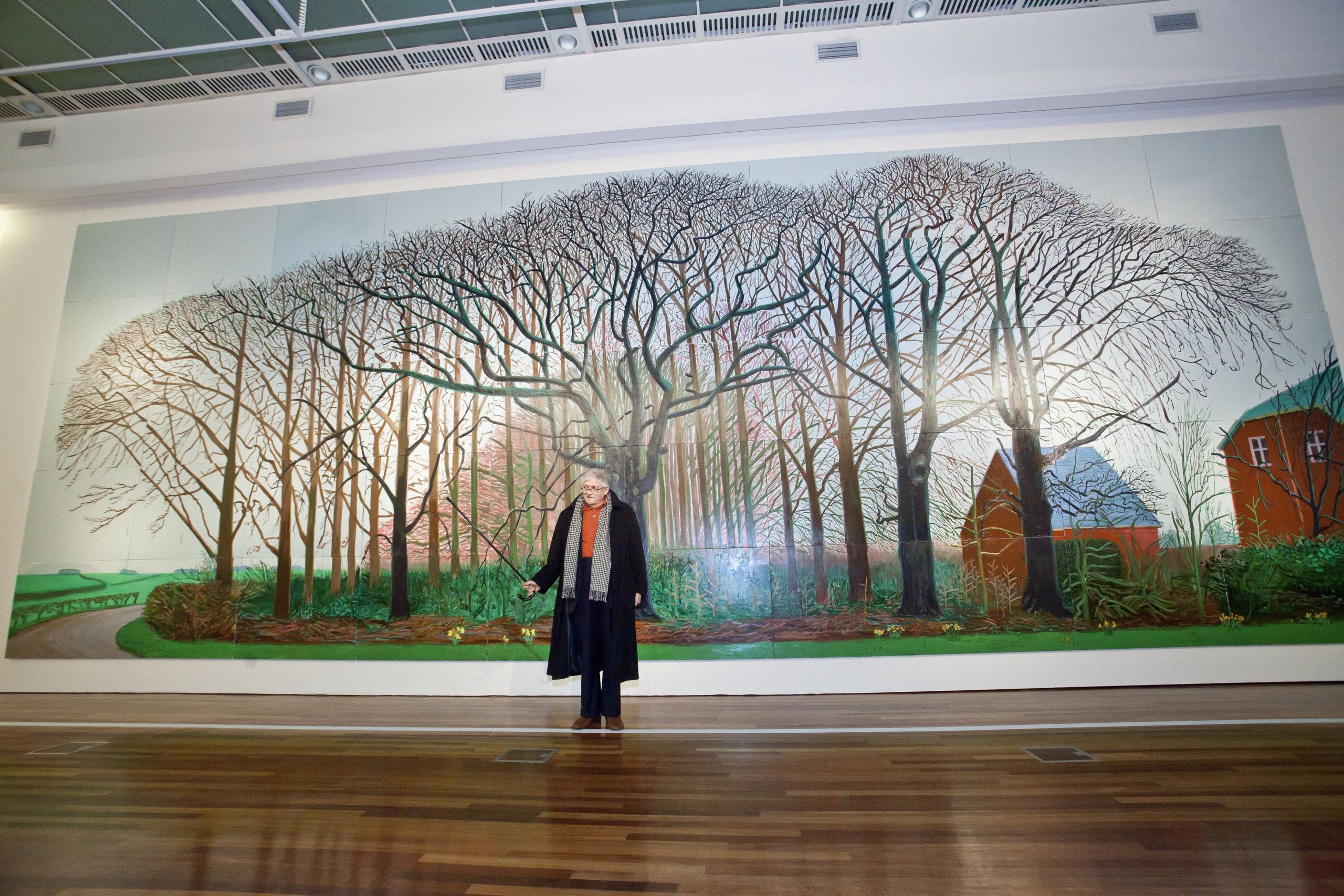
He explains: “Trees are like faces. Every one is different. Nature doesn’t repeat itself... You have to observe carefully; there is a randomness.”
Hockney’s legacy will include more than his physical works. But his perspective as well. If we look at Hockney’s work ethic and how he navigated the world he reminds us to slow down, to notice, to expand our way of seeing.
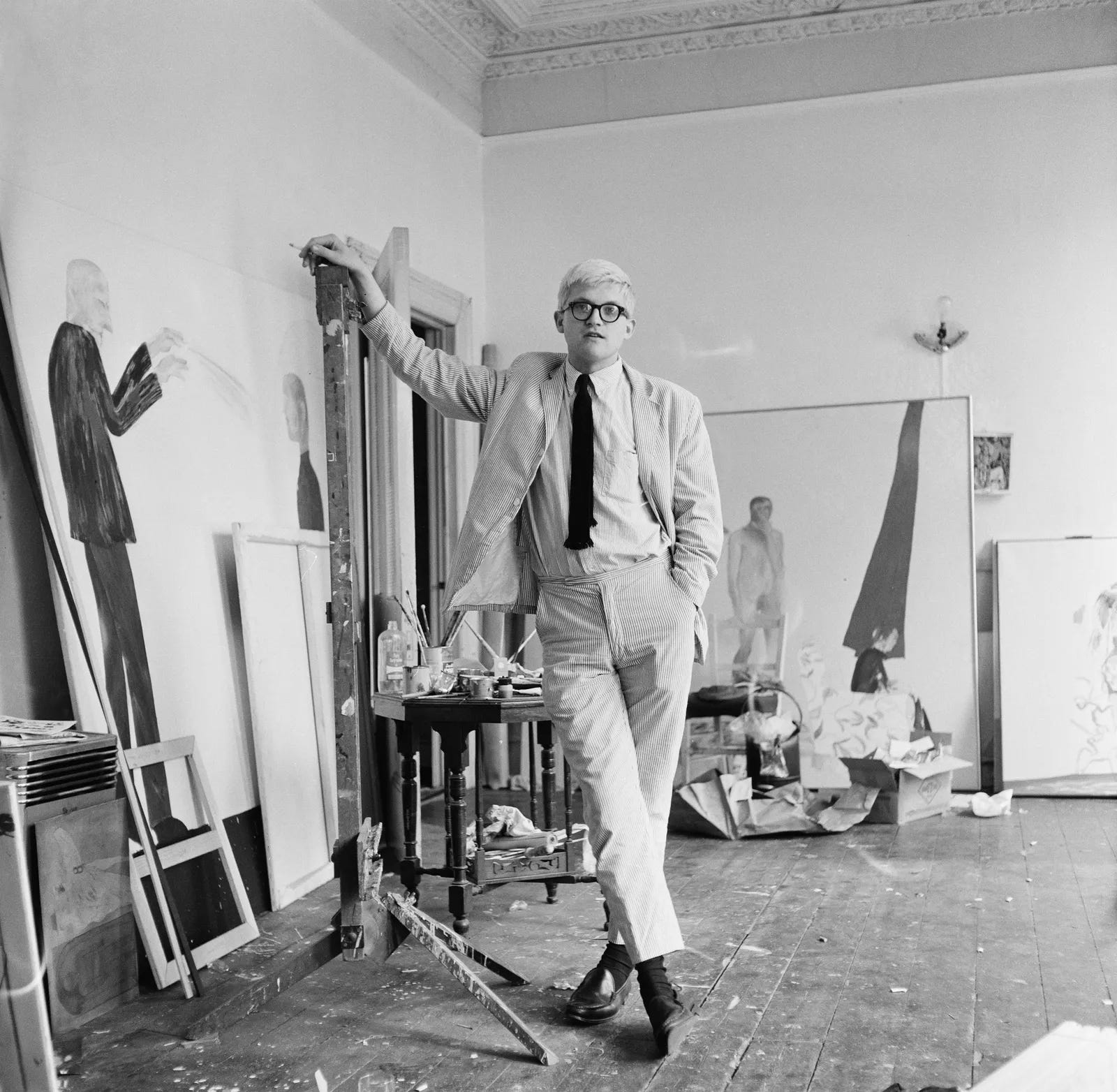
“The world is very, very beautiful if you look at it. But most people don’t look very much. They scan the ground in front of them so they can walk, but they don’t really look at things incredibly well, with intensity. I do, and I’ve always known that.” - David Hockney
Hockney and Fashion
Was Hockney a fashion icon? That shouldn’t even be a question. Hockney was one of those rare artists whose sartorial style was an extension of his aesthetic principles as an artist.
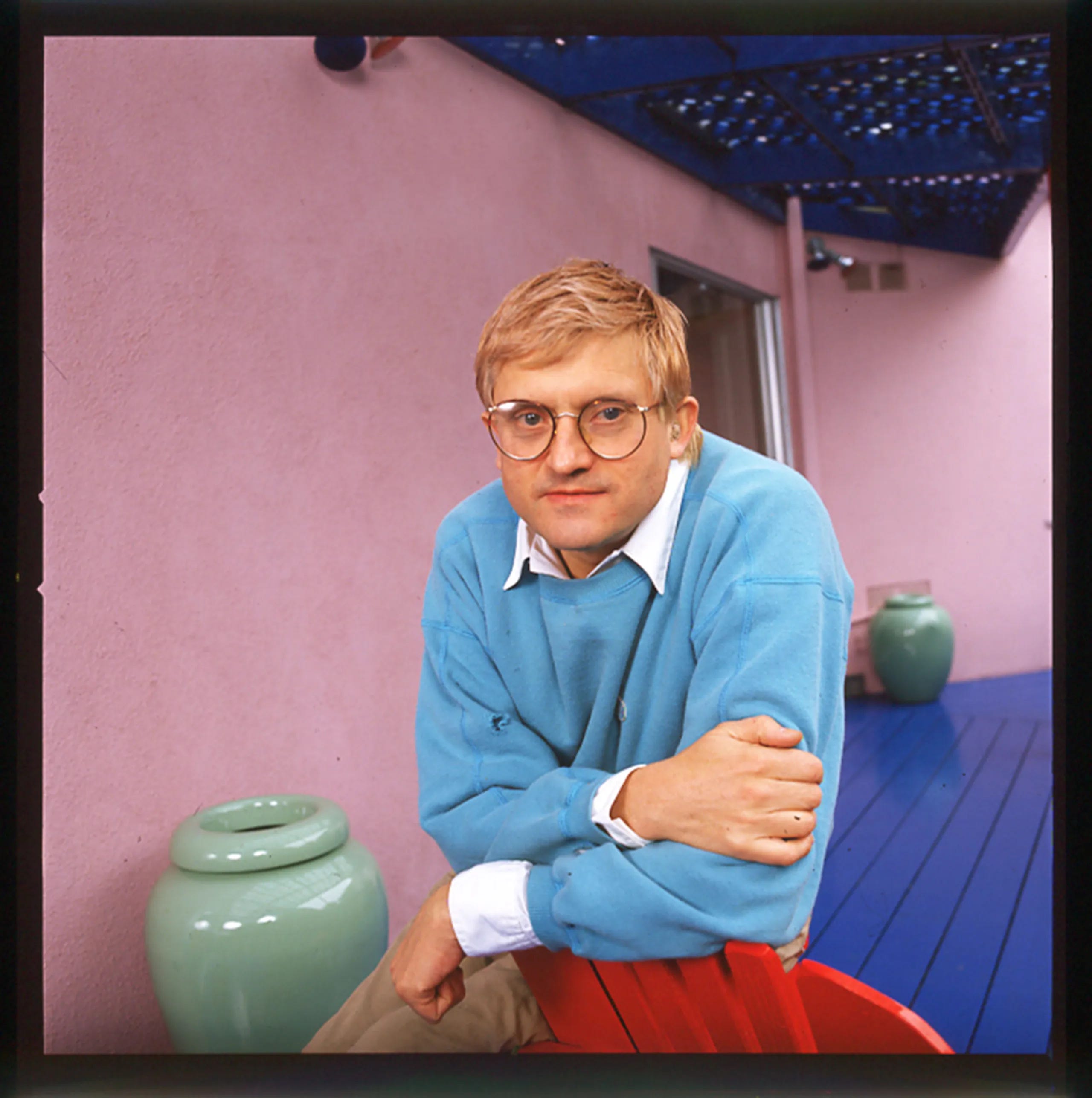
Bright, playful, he rarely dressed in black, his colourful suits, patterned ties, round spectacles, and signature bleached blond hair, were unique but never performative, accessible while also being aspirational.
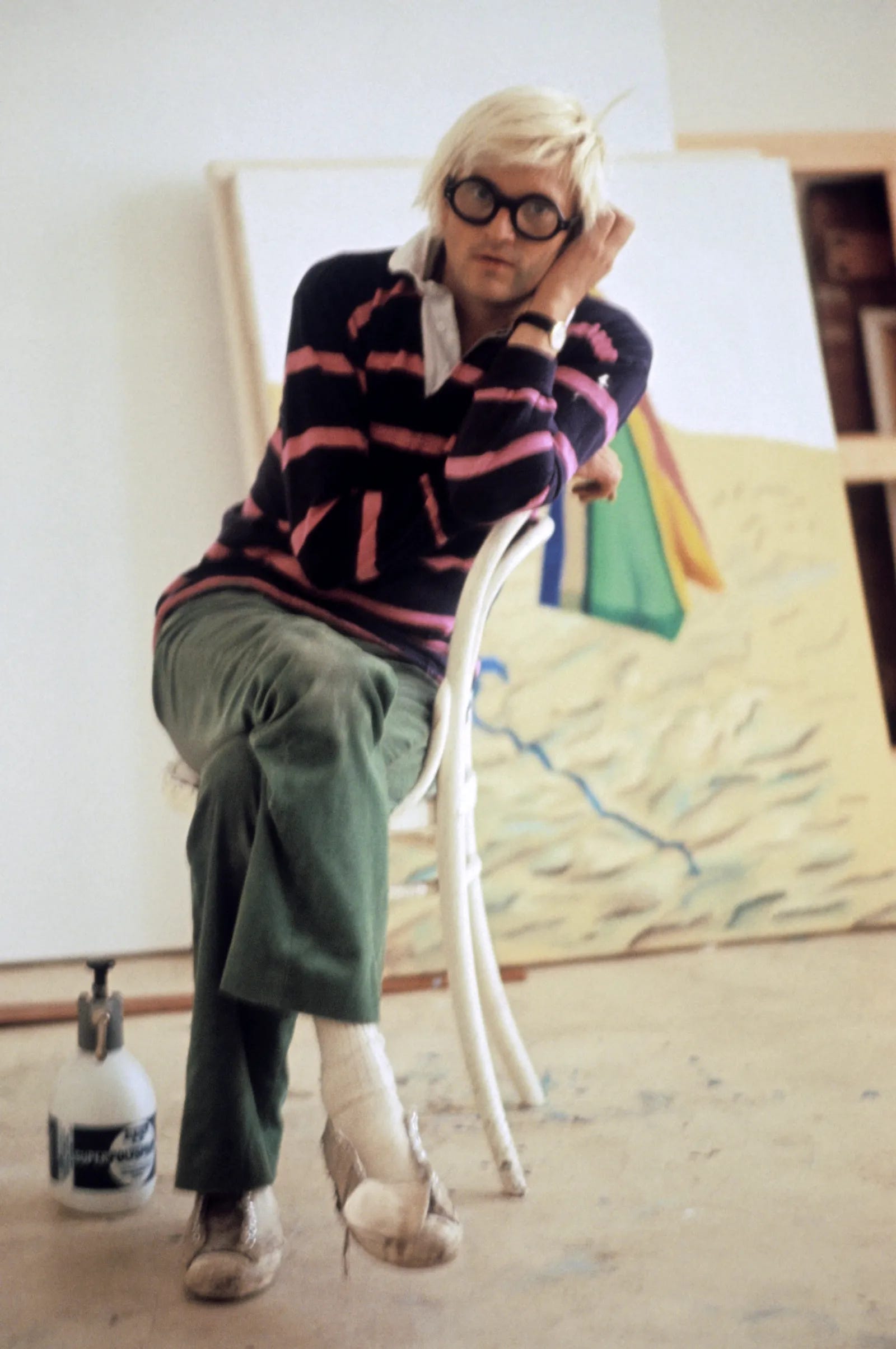
His clothes reflected the same optimism and bold use of colour found in his art, often mixing classic British tailoring with unexpected combinations of stripes, checks, and vivid hues.
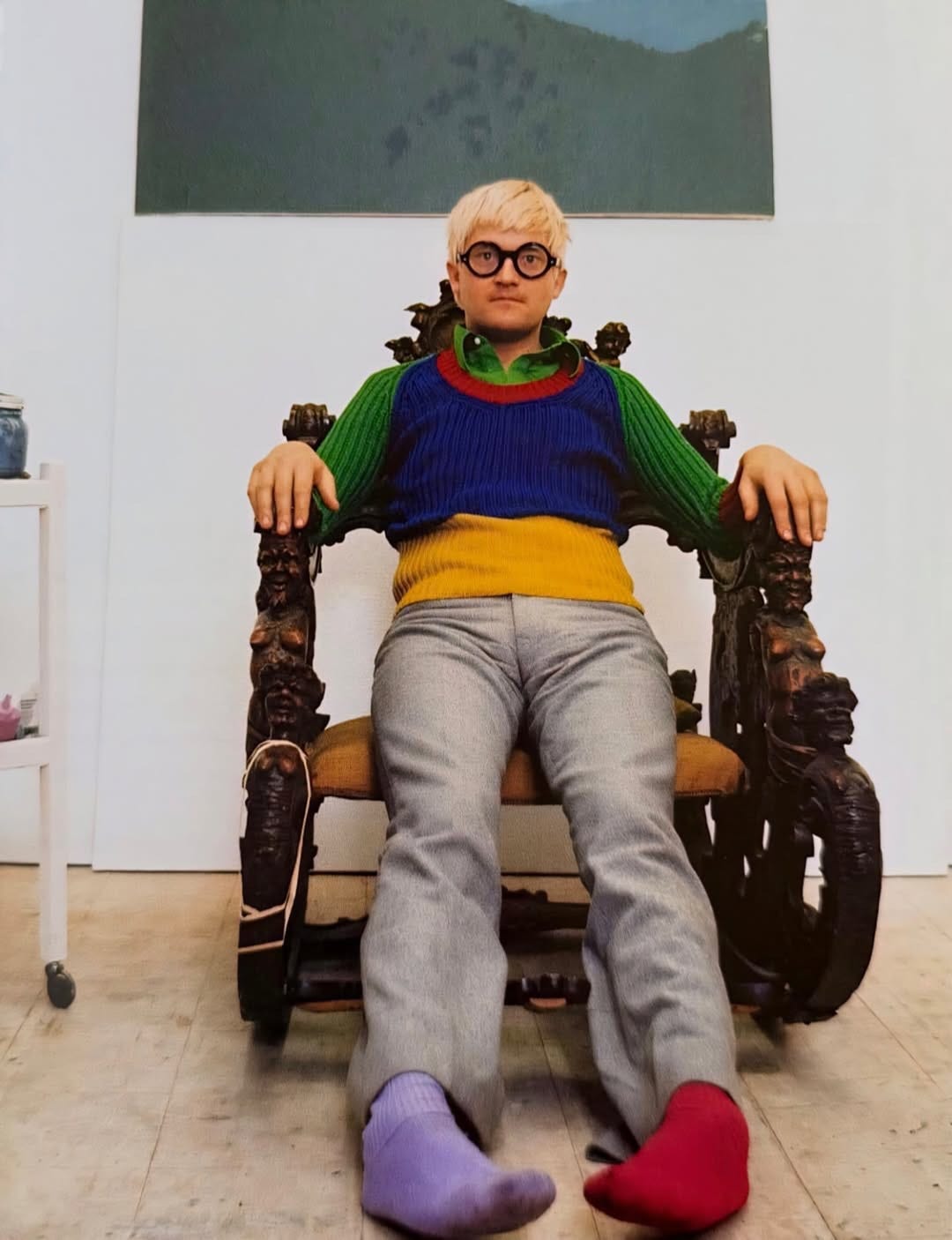
Hockney treated fashion as another form of self-expression. He was thoughtful about fashion without ever taking it too seriously, a similar approach to his work I like to think.
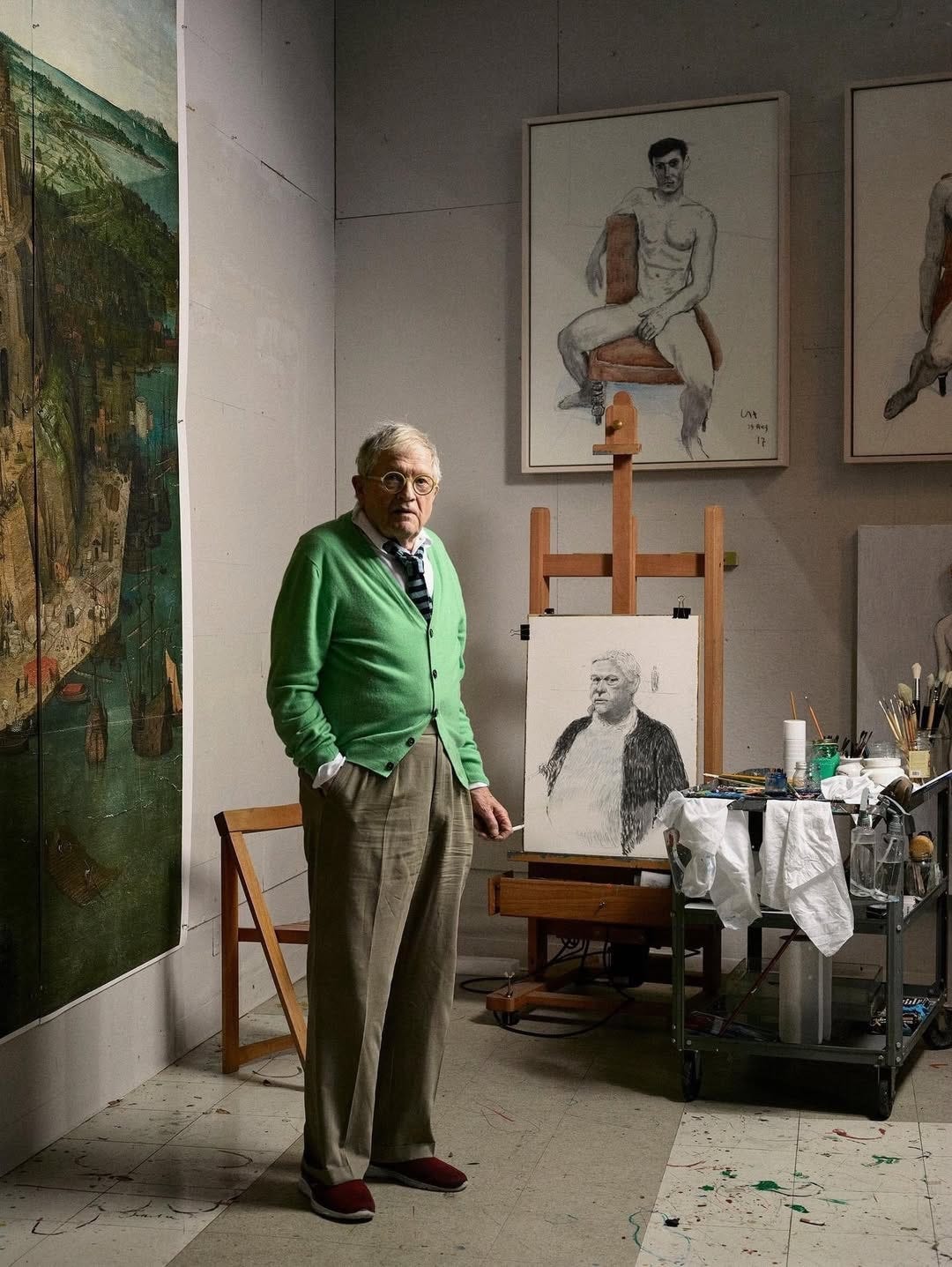
Hockney’s style felt natural to him as opposed to being part of a “brand” or strategy, He crafted an image that was instantly identifiable. Like his paintings, his personal style celebrated individuality, joy, and an invitation to see the world differently.