


I was once at a pitch meeting discussing a story idea I had about the iconic Egyptian singer and actor Abdel Halim Hafez.
“So, he was like the Frank Sinatra of Egypt?” an editor, who was not Arab, asked.
No, I explained and deep dived into Halim Hafez’s film career, detailing the legendary love story between him and the Egyptian actress Soad Hosny.
“So, an Elvis and Priscilla Presley sort of thing?”
No, it wasn’t that either, I said and tried a different route.
This type of exchange has been common throughout my career. Even when editors are informed, there’s always the attitude that cultural figures must be positioned in an “accessible” way to audiences.
“Soad Hosny is the Marlin Monroe of the Arab World.”
“Dia al-Azzawi is the Pablo Picasso of Iraq.”
“Umm Kulthum is the Maria Callas, the Edith Piaf, the Aretha Franklin of the Middle East!”
Whether aimed at a regional or an international audience, the writing, videos and discussions around cultures and cultural figures have often been placed through this lens.
While tempting and often well meaning, these comparisons are incredibly lazy, and also not true.
Comparisons can unintentionally flatten the story, legacy, and impact of an artist and their work. They suggest that cultural value needs translation through the West to be legible or appreciated or even understood.
It places the West as the centre, as a means by which to measure all things.
More importantly, comparisons can overlook the rich visual languages, historical references, and personal experiences of these artists and how their work exists within its own terms.
What can serve an audience better, as a shortcut to understanding specific cultural touch points, is context not comparison.
Context invites us to ask several things:
What is this artist responding to?
What cultural and historical forces shaped who they are and their work?
What ideas are they pushing forward?
Comparisons simplify narratives, context deepens them.
Context creates a space for artists to be understood within their own creative ecosystems, rather than through the echo of something else.
Take Dia Azzawi as an example. Labeling him the “Picasso of Iraq” overlooks the specific histories and visual languages that define his work from the influence of Mesopotamian iconography to his role in the rise of pan-Arab resistance aesthetics. His work doesn’t reflect Picasso’s, it builds an entirely different visual vocabulary rooted in collective memory, displacement, and national identity.
And yet, I can understand why comparisons persist.
They offer a familiar path for audiences navigating unfamiliar terrain. But those paths are challenging when they’re used not as entry points, but as the entire frame.
Instead of asking, “Who is this artist like?” we can ask, “What is this artist saying?”
Instead of asking, “Who do they remind me of?” we can ask, “What legacy are they contributing to?”
There is, of course, nuance here.
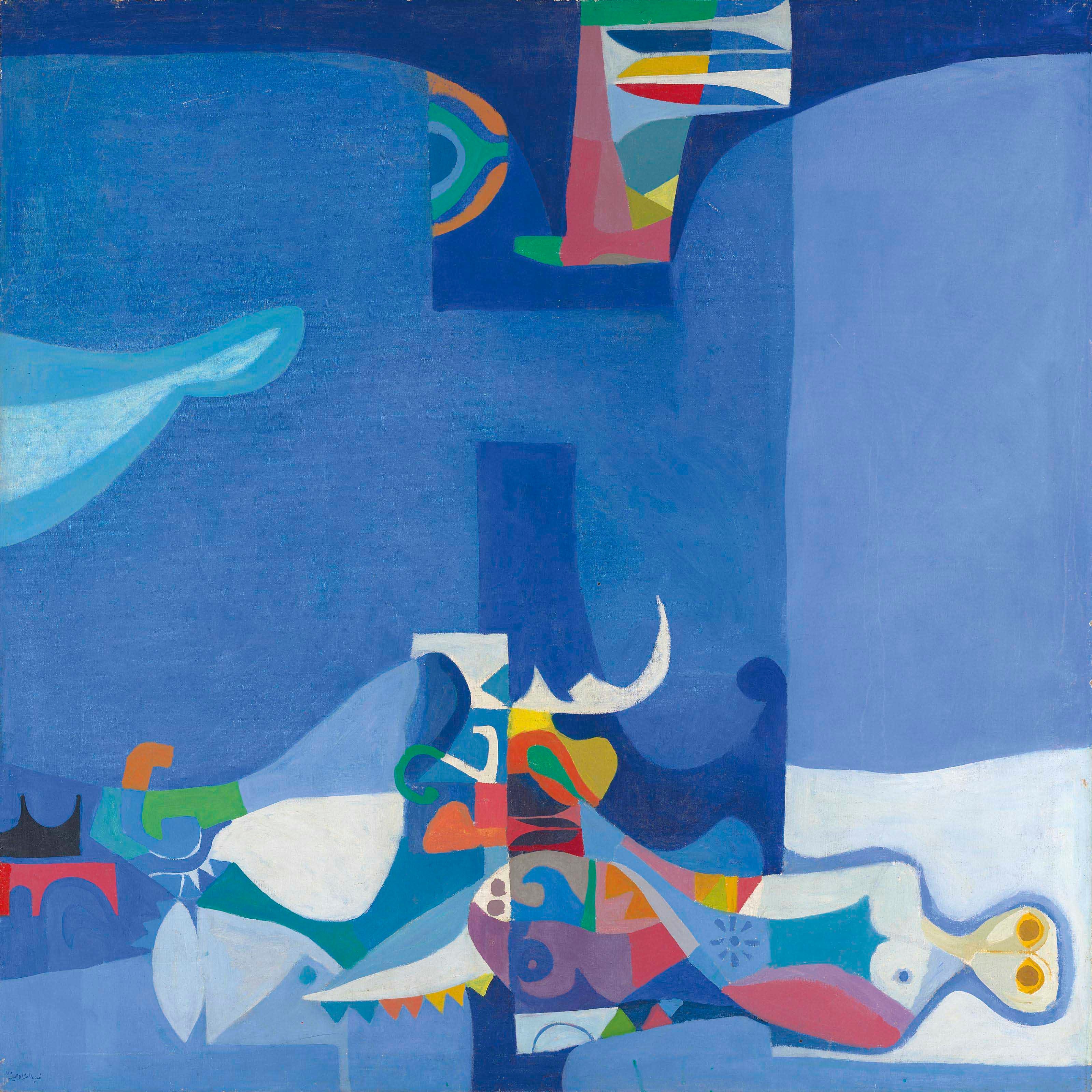
Thoughtful comparisons can be useful when they widen our scope and understanding of a new or unfamiliar subject. Comparisons can help open up ideas but only when they are in service of the story, not as a substitute for it.
In many cases, the tendency to compare is driven not just by audience familiarity, but unfortunately, by deeper structural imbalances - the global dominance of Western cultural narratives, the lack of documentation of artists from the region and the editorial pressure to get more and quicker clicks for a story.
This is why good journalism, publishing and communication matters.
This is why storytelling is important.
This is why writers and storytellers play such a key role not just in telling stories, but shaping how those stories exist in the world.
Arab creatives, like all creatives, don’t need to be “the someone from somewhere else.” They carry their own references, movements, and trajectories that are valuable and compelling in their own right.
As writers, editors, and storytellers, we bear the responsibility to thoughtfully frame these narratives and create space where audiences can truly connect with our stories.
Love this! I always thought comparisons like the "Picasso of Iraq" actually stemmed from the arts world instead of media. Not sure I'd ever use a comparison like that if it wasn't something that already existed (i.e. "widely referred to as the Picasso of Iraq") - but I have also taken comparisons like those to signify a person's significance to a movement or a country, rather than a like-for-like, if that makes sense - but, of course, like you said, the fact that Picasso is the dominant global narrative in the first place is because of the West's historical dominance in cultural conversations and by not using these monikers anymore, or at least reframing them, we can hopefully start to shift that imbalance!
Who's the Dia Azzawi of the US?
Love this perspective Maan, it's a lazy short-cut but we've all done it at some point to get an idea across quickly.